






Definition: Earned media, sometimes referred to a unpaid media or organic media coverage, is publicity you do not pay for or control. It is one of the most powerful forces in modern communications.
When journalists write about your brand. When customers recommend you. When creators review you without pay. When your campaign becomes a conversation. That is earned media at work.
Contents
What is earned media?
Why it matters now more than ever
Earned media vs paid media vs owned media
Real earned media examples across industries
Why earned coverage is so powerful
How to earn media coverage
How earned media actually spreads today
How to measure earned coverage properly
Earned media and reputation risk
The impact of AI search
What recent data shows
How Onclusive helps
Frequently asked questions
What is earned media?
Earned media is any publicity, coverage, or attention your brand receives that you did not pay for and do not control. It is created when third parties choose to talk about your brand.
This includes:
- News articles, media coverage, podcasts
- Product and service reviews
- Social media mentions and shares
- Word-of-mouth recommendations
- Unpaid influencer mentions
- Forum discussions and community posts
Unlike paid or owned media, earned media cannot be bought or published directly. It is shaped by reputation, relevance, and the strength of your story.
That is what makes it so powerful — and unpredictable.
Why it matters now more than ever
Trust in digital information is eroding. Audiences are more skeptical of what they see online, more selective about what they believe, and far less willing to take brand messages at face value.
According to the Reuters Institute’s Digital News Report 2025, trust in online information remains fragile across markets, with growing concern about misinformation, commercial influence, and the credibility of content distributed through digital platforms.
As confidence in paid and owned channels weakens, people increasingly rely on independent validation to decide what, and who, to trust.
People trust:
- Journalists more than ads
- Creators more than brands
- Other customers more than marketing
Earned media sits at the intersection of credibility, reputation, and influence.
It:
- Builds trust faster than advertising
- Scales your message without scaling spend
- Shapes brand perception in ways you cannot script
- Drives real business outcomes, not just awareness
- Influences buyers at every stage of the funnel
Earned media’s role in AI discovery and visibility
Earned media no longer influences only people. It increasingly influences machines. As outlined in Onclusive’s Coverage to Capital whitepaper, third-party media coverage plays a growing role in how brands are surfaced, summarized, and recommended by AI-powered systems. When brands lack credible earned media, they are increasingly invisible in AI answers and discovery experiences.
Earned coverage feeds:
- AI overviews and summaries (Google AI overviews)
- LLM answers (ChatGPT, Claude, Gemini etc.)
- Recommendation engines (AI-driven vendor suggestions and product recommendations)
- Discovery systems (AI-curated feeds and proactive content discovery surfaces)
If your brand does not exist in third-party media sources, it increasingly will not appear in AI answers or recommendations.
Earned media vs paid media vs owned media
Modern communications and marketing use three types of media: earned, paid, and owned.
Here’s a direct comparison:
| Media type | What it is | Who controls it | How you get it | Examples | Why it matters |
| Earned media | Publicity you do not pay for or control | Third parties | You earn it through stories, reputation, and relevance | News coverage, reviews, unpaid influencer mentions, social shares | Builds trust, shapes reputation, influences buyers, fuels AI visibility |
| Paid media | Promotion you pay to distribute | You | You buy placement and reach | Search ads, social ads, sponsored content | Scales reach quickly, guaranteed distribution |
| Owned media | Channels you own and manage | You | You create and publish it | Website, blog, email, social accounts | Controls narrative, supports SEO |
In short: Paid media buys attention. Owned media hosts it. Earned media builds trust.
Real earned media examples across industries
Here are common ways brands get unpaid media coverage:
- Technology: A journalist covers your product launch after it trends on social platforms.
- Consumer products: A YouTuber reviews your product without sponsorship, leading to wider pickup.
- B2B services: A LinkedIn thread from a customer gets shared by industry leaders and cited in trade press.
- Campaigns: A creative campaign trends on TikTok and gets covered by marketing outlets.
- Thought leadership: Your CEO is quoted in an industry trends article, boosting credibility.
- Community-driven: A Reddit discussion about your sustainability approach influences buyer perception.
- Research-driven: Your annual report gets cited across multiple publications.
None of this is paid. None of it is owned. All of it shapes perception.

Why earned coverage is so powerful
Earned coverage works because it:
Builds trust
People trust third parties more than brands.
Extends reach
Your story travels further than your owned channels.
Improves efficiency
One strong story can outperform months of paid spend.
Shapes reputation
Earned media defines public perception, not your own narrative.
Fuels AI visibility
AI systems often prioritize authoritative third-party coverage in summary answers, citations, and recommendations.
How to win earned media coverage
Today, media coverage must be engineered, not random. PR teams succeed by combining authentic storytelling with robust forward planning. This approach is grounded in how journalists actually work, what they value, and what earns their attention — something we explore in our guide, What Makes Journalists Tick: Six Media Relations Rules to Live By.
Find newsworthy angles
- Identify what makes your story timely
- Connect to trends and industry conversations
- Use data and research to create citation-worthy content
Build journalist relationships
- Understand what reporters cover
- Provide value before you need coverage
- Be responsive and reliable
Create shareable moments
- Design campaigns worth talking about
- Make it easy for others to tell your story
Strategic timing
- Newsjack relevant moments
- Plan around industry cycles
Measure and optimize
- Track what earns coverage and why
- Double down on what works
How earned media actually spreads today
Stories no longer move in straight lines.
The typical pattern now looks like this:
- A story appears on social media
- Journalists pick it up
- Creators react
- Communities remix it
- Search and AI systems surface it
- The narrative evolves in real time
This is why earned and social media can no longer be analyzed separately. They are one system.
How to measure earned media coverage properly
Counting clips of coverage is not enough. Modern media measurement should include:
Activity metrics
- Mention volume
- Reach
- Share of voice
Quality metrics
- Outlet authority
- Message pull-through
- Prominence of spokesperson
Narrative metrics
- Theme analysis
- Sentiment and tone
- Narrative framing
Impact metrics
- Brand awareness
- Consideration
- Website traffic
- Business outcomes
This moves earned coverage from output to strategic signal that can influence decision-making.
Earned media and reputation risk
Earned coverage cuts both ways.
The same system that builds trust can also:
- Amplify crises
- Accelerate misinformation
- Cement negative narratives
Leading teams now use earned media as:
- A reputation radar
- An early warning system
- A decision intelligence layer
Not just a PR output.
The impact of AI search
AI systems and large language models such as ChatGPT and Perplexity do not just read your website.
They read:
- News coverage
- Reviews
- Analyst commentary
- Social discussion
- Forums
- Wikipedia
In other words, AI learns what your brand means from your earned media footprint.
That footprint increasingly determines:
- How AI describes your brand
- Whether you are recommended
- Whether you are trusted
- Whether you appear at all
If you want visibility in AI answers, you need visibility in earned coverage. This trend is reshaping strategies for PR, comms, and marketing teams. For a practical guide to how AI systems use third-party signals and what brands can do about it, see our Generative Engine Optimization (GEO) guide.
What recent Data Shows
The relationship between media coverage and business outcomes is shifting dramatically.
According to Onclusive’s 2026 Trends Report, which surveyed 300+ PR and communications practitioners globally:
More than half (52%) of practitioners identify connecting PR and communications efforts to revenue and business growth as a top challenge.
This measurement pressure comes as earned media’s role expands. The same research found:
- 58% of agency practitioners and 50% of in-house practitioners prioritize brand building as their top communications goal.
- 47% of agency practitioners prioritize securing earned media coverage, recognizing its impact on trust and visibility.
- Nearly half of agency practitioners expect communications investment cuts during economic uncertainty, making ROI demonstration even more critical.
The Digital PR Evolution
According to Reflect Digital’s 2026 digital PR trends analysis, the year marks a turning point where “digital PR and earned media are now core to search visibility, credibility and trust—far beyond simple placement metrics.”
Their analysis identifies key trends shaping media strategy:
- AI-powered content discovery is changing how journalists and creators find stories worth covering.
- Search visibility increasingly depends on earned media footprint across news, reviews, and social platforms.
- Trust signals from third-party sources now feed recommendation engines and AI answer systems.
What This Means for PR Teams
The implication is clear: media strategies must now integrate with search, narrative intelligence, and reputation management.
Success in 2026 and beyond requires:
- Moving beyond vanity metrics to impact measurement
- Connecting coverage to business outcomes
- Understanding how earned media fuels AI visibility
- Treating organic publicity as both outcome and competitive advantage
Common mistakes to avoid
- Counting clips without measuring impact
- Ignoring negative coverage
- Separating social and traditional monitoring
- Not tracking narrative shifts
- Focusing on outputs instead of outcomes
How Onclusive helps
Modern media management requires monitoring tools that offer:
- Unified news + social monitoring
- Real-time narrative detection
- AI-powered enrichment
- Sentiment and impact analysis
- Risk and reputation tracking
- Measurement frameworks that link to outcomes
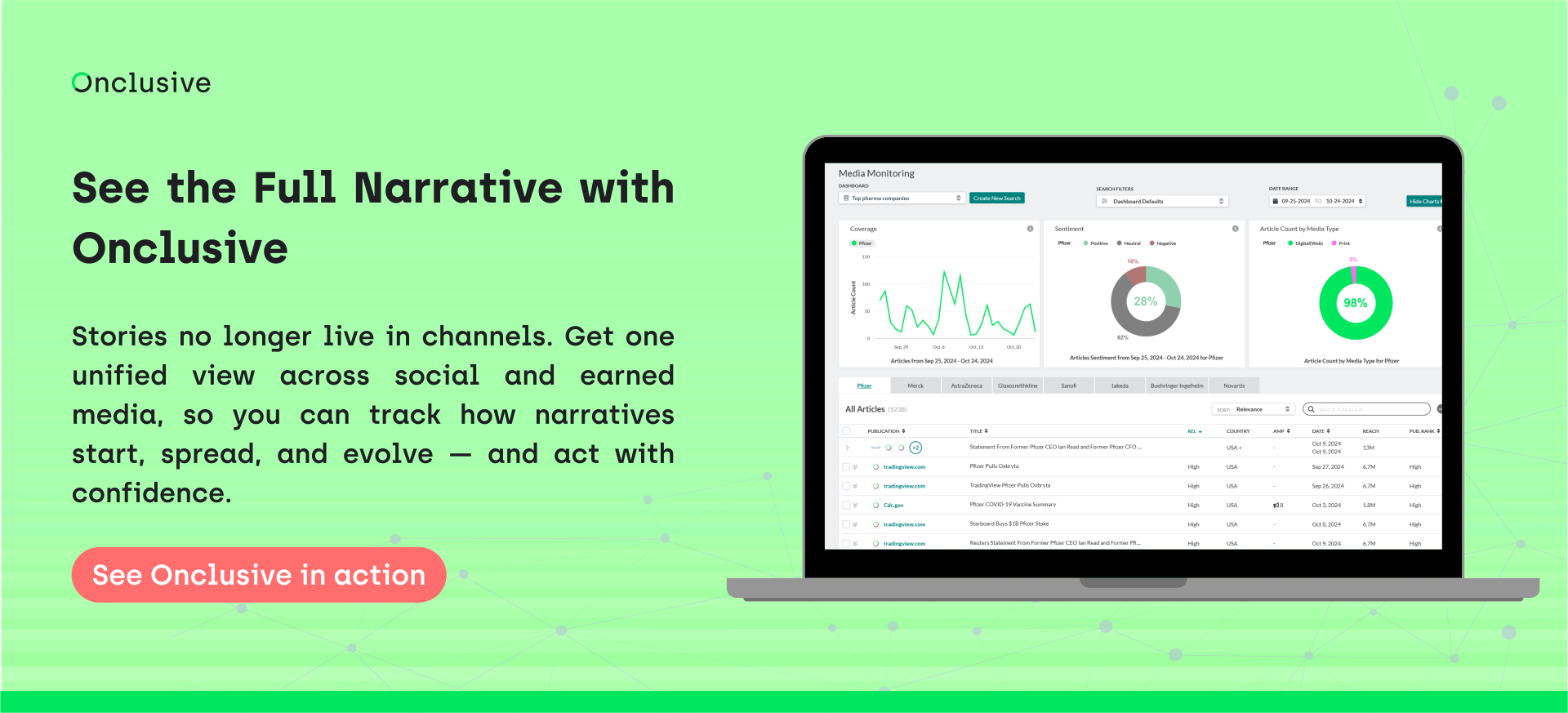
This is exactly what Onclusive is built for.
Not just to collect media coverage. But to turn it into actionable intelligence.
Key takeaways
- Earned media is attention you do not pay for or control
- It is the most trusted and influential media type
- It shapes brand, reputation, and AI visibility
- It moves across social and news as one system
- It must be measured by impact, not volume
- It is now a core part of growth, risk, and search strategy.
Frequently asked questions
What is earned media in simple terms?
Earned media is publicity and attention your brand receives that you don’t pay for or directly control. This includes news coverage, product reviews, organic social media mentions, word-of-mouth recommendations, and unpaid influencer posts. You earn this coverage through strong products, compelling stories, and positive reputation rather than paying for placement or publishing it yourself.
What is the difference between earned media and paid media?
Paid media is advertising and sponsored content you pay to distribute, such as social ads, search ads, or sponsored posts. Earned media is coverage and attention you receive organically without paying for placement—like news articles, reviews, or organic social mentions. Paid media gives you control over messaging and placement, while earned provides third-party credibility and trust.
Is social media earned media?
Social media can be all three types. Your own posts on brand accounts are owned media. Paid social ads are paid media. When others mention, share, or discuss your brand organically on social platforms without payment, that’s earned media. The distinction depends on who creates the content and whether payment was involved.
Why is earned media important?
Earned media builds trust faster than advertising because people trust third parties more than brands. It extends reach beyond your own channels, improves marketing efficiency, shapes brand reputation authentically, and influences buying decisions more credibly than paid promotion. Today, earned media also feeds AI search engines and recommendation systems that define brand visibility.
How do you measure earned media?
Modern media measurement examines four layers: activity metrics (what’s being discussed), quality metrics (coverage caliber), narrative metrics (story themes and framing), and impact metrics (business outcomes). This goes beyond counting clips to analyzing sentiment, narrative shifts, reputation impact, and connections to business results like awareness, consideration, and conversion.
Can earned media be negative?
Yes. Earned media includes all unpaid coverage and mentions, whether positive or negative. Crises, criticism, negative reviews, and misinformation are all forms of earned media. This is why monitoring coverage for early warning signals, tracking narrative shifts, and having response strategies ready are critical components of modern reputation management and communications strategy.