




Unified media intelligence platforms are an integrated systems that combine media monitoring, AI-powered analysis, reporting, and communications workflow tools within one connected environment.
For years, PR and comms functions have relied on a collection of specialized media intelligence tools: one system for monitoring, another for analytics, a separate database for journalist outreach, and manual reporting layered on top.
That model worked when coverage cycles were slower and reporting expectations were lighter. Today, in a faster and more complex media landscape, it is increasingly difficult to sustain.
- Brand narratives now move instantly across print, online, broadcast, podcasts, and social channels.
- Executive leadership expects measurable impact and defensible reporting.
- Organizations are rethinking the foundation of their communications technology.
The unified media intelligence platform is emerging as the next stage in that evolution.
What is a unified media intelligence platform?
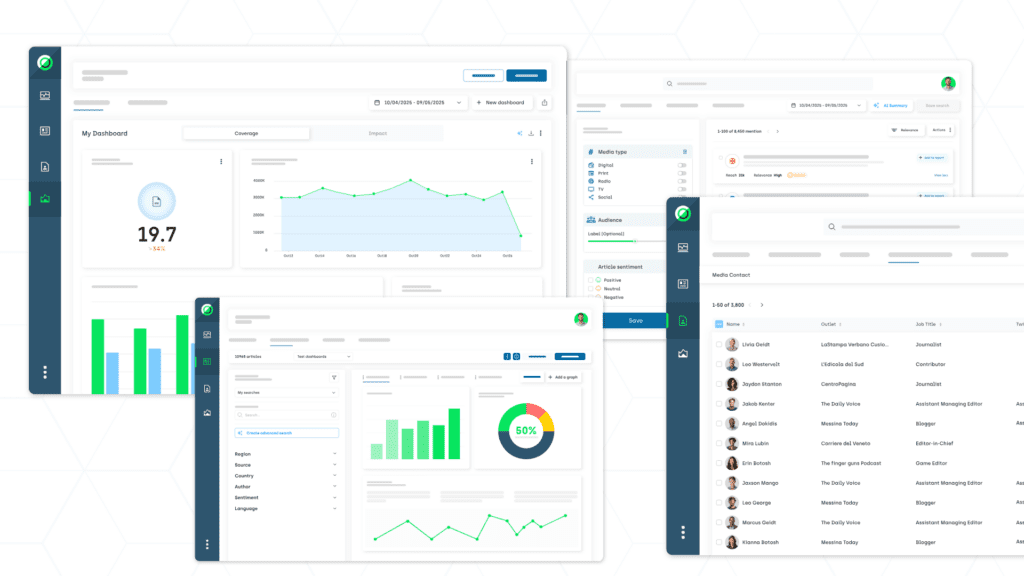
A unified media intelligence platform is an integrated system that combines monitoring, AI-powered analysis, reporting, and communications workflow capabilities within a single connected environment.
Unlike standalone media intelligence software that focuses on one function, a unified platform connects multiple capabilities through a shared data backbone and typically includes:
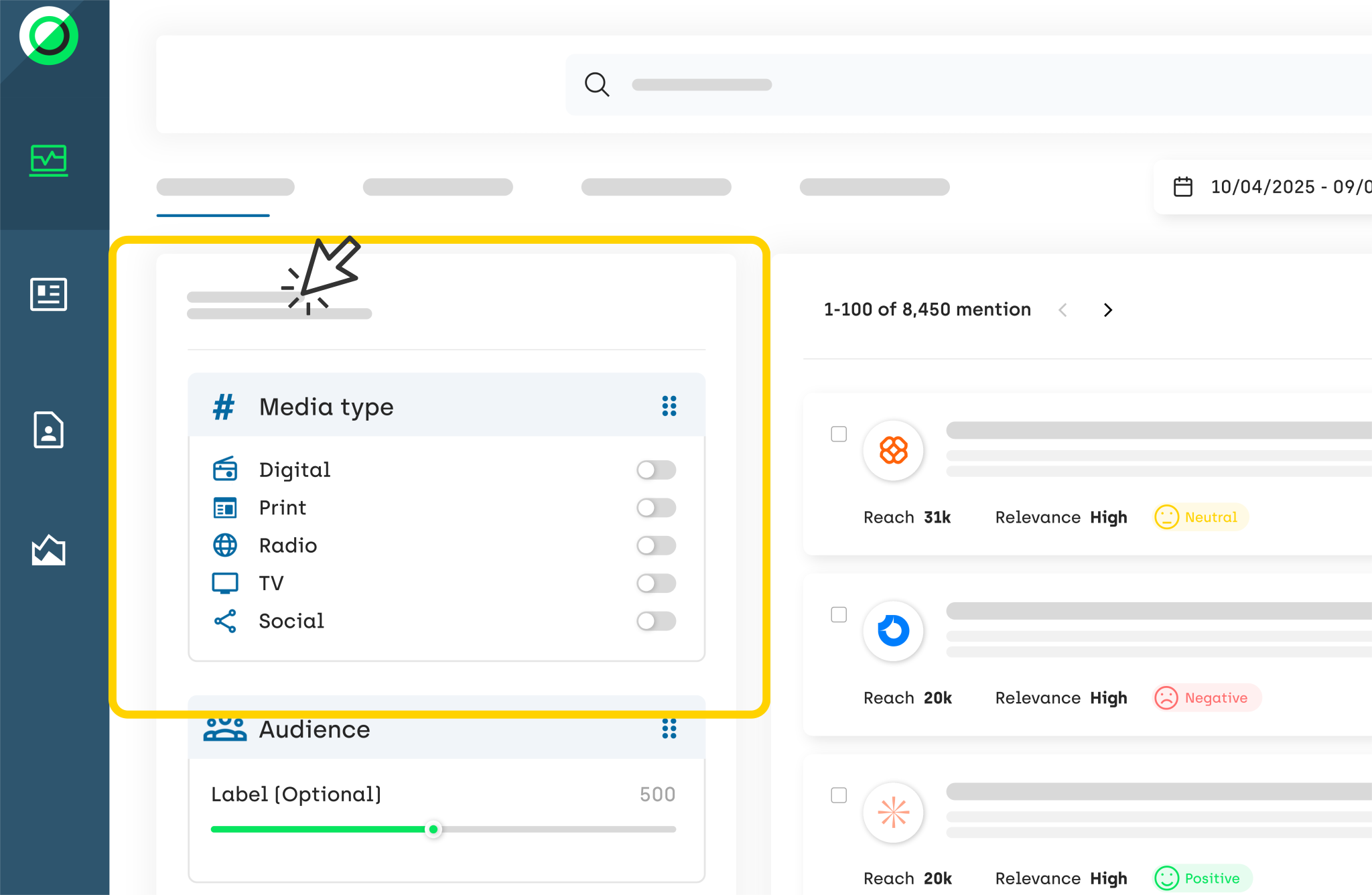
- Cross-channel monitoring across print, online, broadcast, podcasts, and social media
- AI-powered sentiment, theme, and entity enrichment
- Share of voice and competitive benchmarking
- Custom dashboards and executive reporting
- Workflow tools such as press review management and journalist engagement
Every module operates from the same underlying dataset, creating a single source of truth for communications performance.
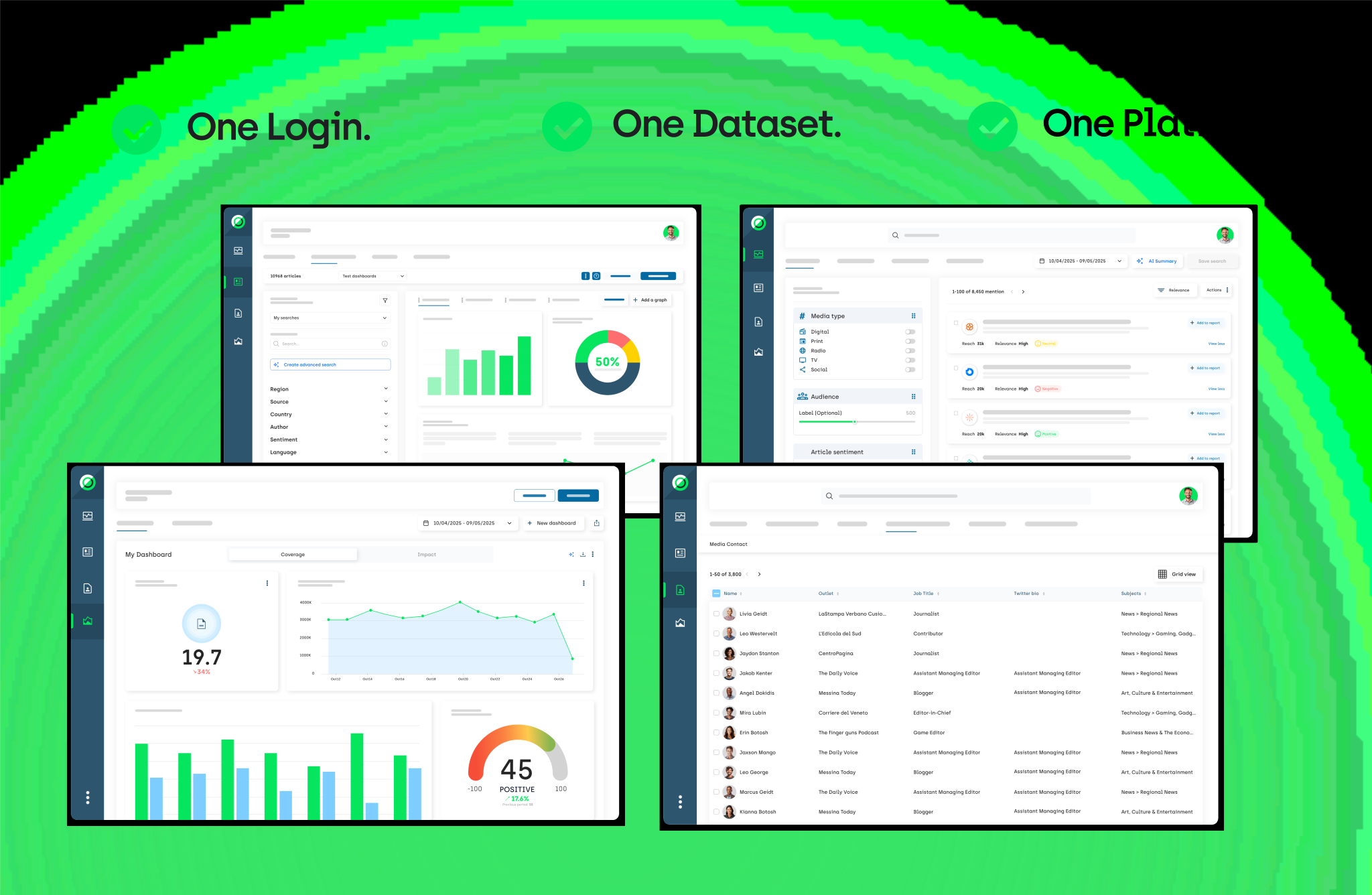
Media monitoring remains foundational. It provides essential visibility into brand coverage across channels. However, research explaining why media monitoring is not PR measurement makes clear that volume-based tracking alone cannot deliver the strategic insight leaders require. A unified platform builds on that foundation by connecting monitoring with workflow, journalist engagement, AI-powered enrichment, and performance analytics within one system.
Instead of switching between systems to discover coverage, curate press reviews, engage media contacts, and measure impact, teams operate within a connected environment designed around their day-to-day needs.
The result is not just visibility, but operational clarity, reporting confidence, and stronger strategic focus.
Integrated vs unified: What’s the difference?
The terms integrated and unified are often used interchangeably, but they are not the same.
An integrated media intelligence platform typically connects multiple tools through APIs or shared workflows. While data may move between systems, each module may still operate on separate datasets or enrichment models.
A unified media intelligence platform is built on a single data backbone. Monitoring, analytics, workflow, and reporting operate from the same underlying dataset, using consistent enrichment standards and metrics.
Integration connects tools. Unification consolidates infrastructure.
Why fragmented media intelligence tools become a liability
Many comms teams still operate across multiple vendors and disconnected media intelligence tools. A typical stack may include:
- A monitoring solution
- Separate social tracking software
- A journalist contact database
- An analytics dashboard
- Manual spreadsheet reconciliation for reporting
Each tool may perform effectively on its own. Together, they create friction.
Common challenges include:
- Multiple logins and constant system switching
- Conflicting metrics across platforms
- Inconsistent sentiment scoring
- Manual data exports before executive reporting
- Reduced confidence in dashboards
In an environment where speed and credibility matter, these inefficiencies accumulate. A unified platform reduces these risks by centralizing monitoring, measurement, and workflow within one connected system.
Fragmented stack vs unified media intelligence platforms
| Fragmented media intelligence tools | Unified media intelligence platform |
| Separate logins | Single login |
| Multiple datasets | Shared data backbone |
| Manual reconciliation | Consistent enrichment standards |
| Disconnected workflows | Integrated experience |
| Conflicting metrics | Single source of truth |
The difference is not simply operational efficiency. It is strategic clarity and trust in reporting.
The core capabilities of a unified media intelligence platform
A true media intelligence platform is built around unification rather than isolated features. While capabilities vary, most enterprise-grade solutions include the following.
Cross-channel coverage
Comprehensive monitoring across print, online news, broadcast, podcasts, and social platforms ensures narrative shifts are captured wherever they occur.
AI-powered enrichment
Automated classification of sentiment, themes, entities, and relevance transforms raw media data into structured insight.
AI-driven media intelligence tools reduce manual tasks, speed up analysis, and identify risks or opportunities more quickly.
A single dataset
A shared dataset creates a true single source of truth. This eliminates discrepancies between monitoring results, press reviews, and reporting dashboards.
Integrated workflows
A unified platform allows teams to move seamlessly from:
- discovering coverage
- to identifying journalists
- to creating reports
- to measuring the impact of communications.
In other words, unification reduces tool fatigue and improves operational efficiency.
Flexible media intelligence service options
In addition to software capabilities, many providers offer managed media intelligence services. These may include:
- Curated press reviews
- Analysis and benchmarking
- Strategic advisory and support
This flexibility allows organizations to scale based on internal resources and reporting requirements.
Why unified media intelligence matters more in 2026
Reputation cycles are faster
Narratives now spread simultaneously across channels. Delays caused by disconnected media intelligence tools slow down response times and increase reputational risks.
A unified platform supports real-time visibility, faster interpretation, and more coordinated action across teams.
Executive scrutiny is higher
Communications leaders are expected to demonstrate measurable impact through structured reporting. Yet, recent 2026 industry research tells us that more than half of communications professionals still struggle to connect PR efforts to revenue and growth, and nearly half cannot confidently prove impact beyond basic metrics. As executive expectations rise, consistent data standards and unified reporting are becoming essential rather than optional.
A unified platform improves data consistency and strengthens confidence in reporting.
The growing impact of AI
Automated summaries and AI-assisted analysis are increasingly influencing how media narratives are interpreted.
To understand these dynamics, teams need:
- structured data
- consistent enrichment
- cross-channel analysis.
A unified media intelligence platform provides this foundation.
Who benefits most from unified media intelligence?
While smaller teams may operate effectively with standalone media intelligence software, a unified platform is particularly valuable for:
- Enterprise communications teams
- Global brands managing multi-market visibility
- Agencies reporting across multiple clients
- Public sector organizations with complex governance requirements
As reporting expectations increase, unified infrastructure becomes foundational rather than optional.
The future of media intelligence platforms
Media intelligence is evolving from a reporting function into core strategic infrastructure.
The next generation of the media intelligence platform will prioritize:
- Faster AI enrichment and processing
- Broader cross-channel coverage
- Deeper workflow integration
- Stronger governance and compliance standards
- Modular scalability
Organizations are moving away from fragmented media intelligence tools toward unified, connected environments designed to support the full communications lifecycle.
The rise of the unified media intelligence platform signals a broader shift: communications technology is no longer just about tracking mentions. It is about building the infrastructure required to interpret narratives, manage risk, and demonstrate measurable value with clarity, consistency, and speed.
FAQs about unified media intelligence platforms
What is a unified media intelligence platform?
A unified media intelligence platform is an integrated system that combines media monitoring, AI-powered analysis, reporting, and communications workflow capabilities within one connected environment. It operates from a shared data backbone, ensuring consistent insight across earned and social media channels and creating a single source of truth for communications performance.
How is a media intelligence platform different from media intelligence software?
Media intelligence software may refer to a single-function solution such as monitoring or analytics. A media intelligence platform integrates multiple capabilities, including monitoring, reporting, workflow tools, and benchmarking, into one unified system.
All platforms are software, but not all media intelligence software solutions provide full platform-level integration.
What is a media intelligence service?
A media intelligence service refers to managed or analyst-led support layered on top of technology. This may include curated press reviews, campaign analysis, benchmarking reports, or strategic advisory.
Many providers offer both self-service media intelligence software and managed service options within a unified platform environment.
What should organizations look for in a media intelligence platform?
Organizations evaluating a media intelligence platform should consider:
- Cross-channel monitoring coverage
- AI-powered sentiment and theme enrichment
- A shared data backbone for consistent reporting
- Integrated workflow tools
- Customizable dashboards and benchmarking
- Scalable service options
Integration across these capabilities is the defining characteristic of a true media intelligence platform.
How much does a media intelligence platform cost?
The cost of a media intelligence platform varies depending on coverage scope, number of users, data volume, integration needs, and level of support. Enterprise platforms typically offer tiered pricing models that range from self-service subscriptions to fully managed media intelligence service solutions.
When evaluating cost, organizations should consider operational efficiency gains, reduced vendor complexity, and improved reporting accuracy alongside license fees.
How difficult is it to migrate from fragmented media intelligence tools to a unified platform?
Migration complexity depends on the number of systems being consolidated and the degree of customization required. Most modern media intelligence platforms provide onboarding frameworks to support data consolidation, workflow configuration, and reporting alignment.
While implementation requires planning, long-term benefits include reduced reconciliation work, improved data consistency, and streamlined reporting processes.
Who benefits most from a unified media intelligence platform?
A unified media intelligence platform is particularly valuable for enterprise communications teams, global brands managing multi-market visibility, agencies reporting across clients, and public sector organizations with complex governance requirements.
As reporting expectations and stakeholder scrutiny rise, unified infrastructure becomes foundational.