

London Fashion Week FW26 (Fall/Winter 2026) ran from 19 to 23 February, closing with Burberry’s headline show on the final evening. Over five days, more than 100 designers presented their autumn/winter collections in a city that continues to prove its unique ability to blend heritage craftsmanship with cultural disruption. But as with New York Fashion Week before it, the numbers tell a story that extends far beyond the collections themselves.
At LFW FW26, the front row was not a backdrop. It was the story. Three celebrities, all from Asia, generated over 90% of all celebrity mentions on social media. A single brand captured more than 91% of all brand share of voice. And hashtags in Korean, Thai, and English dominated the global conversation simultaneously. This analysis breaks down what happened, what it means, and what communications and marketing professionals should take away from it.
All data is collected from 18 to 23 February 2026, sourced from Onclusive 360 (mainstream media monitoring) and Onclusive Social (social media listening services).
Key takeaways from London Fashion Week FW26
- Burberry‘s near-total dominance: With 91.10% share of voice among 114 brands tracked, Burberry did not just lead the conversation at LFW FW26. It was the conversation, driven by a triple ambassador strategy combining K-pop, Thai entertainment, and K-pop royalty in the form of Girls’ Generation.
- Three Asian celebrities, 90%+ of celebrity SOV: Stray Kids’ Seungmin (43%), Thai actor Bright Vachirawit (26.60%), and Girls’ Generation’s YoonA (20.70%) collectively dominated the celebrity conversation – a remarkable concentration of social influence around a single brand.
- King Charles III made history: The first reigning British monarch to attend LFW in a front-row capacity, the King’s presence at the Tolu Coker show on 19 February dominated day-one mainstream media coverage globally – CNN, AFP, the BBC, and the entire UK press. Combined with the simultaneous Royal Family news cycle around Prince Andrew, this created a media collision that elevated the week’s mainstream mentions well above a typical LFW edition.
- Fan armies as precision media instruments: The LFW hashtag ecosystem was engineered by organised fandoms operating in Korean, Thai, and English simultaneously. The result was a multi-script, multi-platform amplification machine that no paid media strategy can easily replicate.
- The rest of the field: Beyond Burberry, the remaining 113 brands shared just 8.9% of voice, with Tolu Coker (1.56%) – boosted by the royal visit – Harris Reed (0.76%), and Erdem (0.65%) leading a group of largely UK-based independent designers.
- Mainstream media remained global: With Daily Mail, WWD, Elle, Vogue UK, and Vogue US in the top five by influence score, LFW FW26 generated sustained international press interest well beyond the social media cycle.
- LFW’s peak moment: Social mentions peaked on 23 February at 101,200, coinciding directly with the Burberry show – underlining the brand’s ability to convert a live fashion event into a real-time global media moment.
See also:
New York Fashion Week FW26
Milan Fashion Week FW26
Paris Fashion Week FW26
London Fashion Week FW26 by the numbers
Between 18 and 23 February, London Fashion Week FW26 generated a substantial media footprint across both social and mainstream channels. The social media figures below are sourced from Onclusive, covering X (formerly Twitter), Instagram, TikTok, Facebook, and other platforms tracked during the data collection window.
| Social media metric | Figure |
| Total social media mentions | 1.30 million |
| People talking about LFW | 850,200 |
| Social media reach | 124.3 million |
| Peak day mentions (23 Feb – Burberry show) | 101,200 |
| Mainstream media mentions (18-23 Feb) | 10,588 |
Reading the numbers
The 1.30 million social mentions were concentrated in ways that are analytically significant. The 850,200 people talking figure reflects unique accounts generating at least one mention, while the 124.3 million reach measures the total potential audience exposed to those conversations, including re-shares, quote posts, and algorithmic distribution.
On the mainstream media side, the week generated 10,588 mentions across print, digital outlets, television, radio, and podcasts – reflecting sustained editorial interest from fashion, lifestyle, and news outlets spanning the UK, US, Europe, and Asia-Pacific.
Who owned London Fashion Week FW26: the brand power ranking
Among 114 fashion brands analyzed during LFW FW26, the distribution of share of voice was more concentrated than at any other fashion week this season. One brand, Burberry, absorbed 91.10% of all brand-related social conversation. What remained was split among 113 designers, most of them independent British names with loyal but comparatively small followings.
| Brand | Share of voice (%) Data by Onclusive |
| Burberry | 91.10% |
| Tolu Coker | 1.56% |
| Harris Reed | 0.76% |
| Erdem | 0.65% |
| Richard Quinn | 0.50% |
| Simone Rocha | 0.50% |
| Paul Costelloe | 0.48% |
| Julien Macdonald | 0.22% |
| Chopova Lowena | 0.22% |
| Masha Popova | 0.20% |
| Joseph | 0.19% |
| Emilia Wickstead | 0.16% |
| Annie’s | 0.16% |
| Raw Mango | 0.15% |
| Natasha Zinko | 0.13% |
| Pauline Dujancourt | 0.12% |
| Topshop @ John Lewis party (EE) | 0.11% |
| Patrick McDowell | 0.11% |
| Karoline Vitto | 0.11% |
| Mithridate | 0.11% |
The 20 most prominent brands at London Fashion Week FW26 by share of voice. Among 114 fashion brands analyzed.
What the ranking reveals
Burberry’s dominance is not simply a function of being the biggest British luxury house at LFW. It is the direct result of a deliberate celebrity strategy that brought three Asian stars, each with massive, globally organised fan communities, to the same runway at the same time. The result was a media event that functioned less like a fashion show and more like a coordinated global activation.
The distance between first and second place is striking: Burberry at 91.10% versus Tolu Coker at 1.56%. This gap illustrates the structural challenge facing emerging and independent designers at LFW: without celebrity partnerships that activate large-scale fan communities, even critically acclaimed collections struggle to generate measurable social conversation.
The brands that did register meaningful mentions share a common thread: distinct creative identity and sustained media relationships. Harris Reed, Erdem, Simone Rocha, and Richard Quinn all benefit from years of editorial coverage and loyal followings within fashion media. But in a landscape now defined by fan-driven amplification, editorial credibility alone has limits.
A note on methodology: SOV and EMV (earned media value) are two fundamentally different ways of measuring the impact of ambassadors and celebrities. SOV measures conversation dominance, while EMV assigns monetary value to media exposure. Both are valuable but answer different questions. Asian Entertainment and Culture channel posted an hour-long video explaining the differences between SOV and EMV (Starting at 7 min 30 sec).
The Asian celebrity effect: when K-pop and Thai entertainment meet London’s runways
If NYFW FW26 established that Asian entertainment stars are the primary driver of fashion week social impact, London Fashion Week FW26 confirmed it with even greater force. At LFW, the top three most-mentioned celebrities on social media were all from Asia, and together they accounted for more than 90% of all celebrity share of voice among 89 personalities tracked.
This was not a coincidence. It was the outcome of Burberry’s decision to invite three of the most followed and most fervently supported celebrities in the K-pop and Thai entertainment ecosystems to its AW26 show. What followed was a real-time demonstration of what happens when organised fandoms collide with a global luxury brand on the world’s most watched fashion stage.
| Celebrity / Ambassador | Share of voice (%) Data by Onclusive |
Note |
| SEUNGMIN (김승민) -Stray Kids | 43.00% | Asian – K-pop |
| BRIGHT VACHIRAWIT (วชิรวิชญ์ ชีวอารี) | 26.60% | Asian – Thai |
| LIM YOONA (임윤아) | 20.70% | Asian – K-pop |
| King Charles III | 5.23% | |
| Stella McCartney | 1.95% | |
| Joe Locke | 0.85% | |
| Lily Collins | 0.18% | |
| Laura Weir | 0.18% | |
| Little Simz | 0.13% | |
| Gugu Mbatha-Raw | 0.12% | |
| Nicky Hilton | 0.11% | |
| Mel B | 0.07% | |
| Keira Knightley | 0.07% | |
| Lily James | 0.06% | |
| Ben Whishaw | 0.06% | |
| Skepta | 0.05% | |
| Helen Mirren | 0.04% | |
| Sandra Choi | 0.04% | |
| Glenn Close | 0.04% | |
| Anais Gallagher | 0.04% |
Celebrity share of voice: top 20 at LFW FW26. The top 20 most mentioned ambassadors and celebrities on social media during London Fashion Week FW26. Share of voice among 89 analyzed.
Seungmin (Stray Kids): 43% SOV – the phenomenon
Stray Kids member Seungmin commanded 43% of all celebrity social conversation at LFW FW26, an extraordinary concentration of attention. The #SeungminxBurberry hashtag generated 136,535 mentions, while the Stray Kids fandom hashtag #스트레이키즈 reached 142,498 mentions – the third most used LFW hashtag overall. The fandom tag #YouMakeStrayKidsStay added a further 69,532 mentions, demonstrating how K-pop fandoms extend their activism beyond artist-brand pairings into broader solidarity messaging.
Seungmin’s impact is inseparable from the mobilisation infrastructure of Stray Kids’ global fanbase, STAY. Operating across X (formerly Twitter), Instagram, and Weibo simultaneously, STAY transformed a fashion show attendance into a coordinated global event, complete with trending hashtags in multiple countries.
Bright Vachirawit: 26.60% SOV – Thai star power arrives in London
The precedent for this impact is well established. At London Fashion Week SS24, just three Instagram posts from Bright generated an estimated $3.2 million in media value for Burberry. At LFW FW26, operating within a triple-ambassador strategy alongside Seungmin and YoonA, his contribution to the brand’s 91.10% share of voice was structural rather than incidental. He is Thai, of Thai-Chinese-American heritage, holds 17 million Instagram followers at @bright, and was included in the BoF 500 list of people shaping the global fashion industry – a profile that gives Burberry genuine access to markets and audiences well beyond its traditional European and North American base.
For communications professionals, Bright’s performance at LFW confirms that Thai entertainment is not a secondary or emerging market. Its fanbases operate at a scale and organisational sophistication that matches K-pop, and they have been active in luxury fashion spaces consistently since 2022. Brands looking to replicate Burberry’s strategy should note that Bright’s impact at LFW FW26 is the product of a four-year relationship, not a one-off placement.
Lim YoonA: 20.70% SOV – Girls’ Generation’s lasting global reach
Girls’ Generation member YoonA (임윤아) completed Burberry’s triple Asian celebrity strategy, generating 20.70% of celebrity SOV. Three dedicated hashtags, #LimYoonA (29,498), #윤아 (28,637), and #임윤아 (26,635), together with #YoonA (25,474), #YOONAxBurberryWinter2026 (17,436), and #YOONAxLFW2026 (16,899), created a hashtag constellation that kept YoonA visible across the entire week.
YoonA’s presence underlines an often-underestimated dynamic: legacy K-pop acts from groups like Girls’ Generation retain globally organised fanbases that activate at scale for major brand moments, even years after a group’s commercial peak. For luxury brands, this represents a durable, long-term partnership opportunity rather than a trend-dependent gamble.
Beyond Burberry: the rest of the celebrity field
Stella McCartney (1.95%) and Joe Locke (0.85%) led the Western celebrity contingent, followed by Lily Collins, Little Simz, Gugu Mbatha-Raw, and Keira Knightley – a roster that reflects LFW’s traditional strength in connecting British cultural life with fashion. Their presence generated meaningful media coverage, particularly in UK-based outlets, but their social media footprint was dwarfed by the Asian celebrity trio at the top.
The royal factor: when King Charles III made history at London Fashion Week
Among the 89 celebrities and ambassadors tracked at LFW FW26, one figure stood in a category entirely his own. King Charles III’s attendance at the Tolu Coker show on 19 February was not simply a celebrity appearance. It was a moment of genuine historical significance – the first time a reigning British monarch had attended London Fashion Week in a front-row capacity. That distinction, combined with a remarkable news environment surrounding the Royal Family that week, made the King the single most consequential mainstream media story of the entire fashion week.
A monarch at the front row: the political and cultural context
Charles III arrived at 180 Strand on the afternoon of 19 February, taking his seat at the Tolu Coker show on a ceremonial gold cushion – a subtle but photographically irresistible detail that appeared in news coverage from CNN and AFP to the Daily Mail and every major UK broadsheet. He was seated next to Stella McCartney, who serves as an ambassador for the King’s Sustainable Markets Initiative, and Laura Weir, CEO of the British Fashion Council.
His visit was not improvised. The King’s Foundation has long supported traditional craft skills in fashion – couture, embroidery, millinery – and Charles used the occasion to meet artisans and apprentices working under the Foundation’s programmes. Before taking his seat at Tolu Coker’s show, he visited a Stella McCartney exhibition at 180 Strand focused on British sustainable innovation, showcasing materials including plant-based feather alternatives and plastic-free sequins. He also met designers from Brand63Africa, a social enterprise promoting ethical and sustainable fashion practices.
Queen Camilla added a second royal dimension to LFW’s opening day: she met Anna Wintour to mark London Fashion Week, wearing a black silk coat with a heart-shaped brooch. Two royals, engaged with fashion week simultaneously, on a day when the Royal Family was already dominating international news for a very different reason.

The most commonly used expressions and concepts in digital media to cover King Charles III’s visit to London Fashion Week on February 19.
The Prince Andrew factor: a news collision that amplified LFW coverage
The timing of King Charles’s LFW appearance coincided with one of the most significant Royal Family news events in recent years: the widely reported circumstances surrounding Prince Andrew that dominated UK and international media on 19 February. The result was a collision of news cycles that produced a volume of mainstream media coverage of LFW that no fashion-focused story alone could have generated.
For media monitoring professionals, this dynamic is analytically important. The 5.23% celebrity SOV attributed to King Charles III in social media data captures only part of his actual impact on the week’s overall coverage. His mainstream media footprint, particularly on day one of LFW, was substantially larger. Articles, segments, and broadcasts that covered the Royal Family story inevitably referenced LFW as the setting, creating a halo of LFW mentions in outlets, and from audiences, that would not ordinarily engage with fashion week content at all. CNN International, AFP newswires, the BBC, Sky News, and virtually every major UK daily ran LFW-dateline stories on 19 February with the King as the central subject.
Tolu Coker: the royal adjacency effect
The direct beneficiary of the royal visit, in brand terms, was Tolu Coker. A relatively young and independent British designer, Coker received coverage in outlets that had never previously written about her label, simply because King Charles was in her front row. Her 1.56% share of voice – the highest of any non-Burberry brand at LFW FW26 – is in significant part a function of this royal adjacency.
The parallel with Khaite at NYFW FW26 is instructive. Just as Kazuha’s presence propelled Khaite from 0.18% to 15.13% SOV in a single season, King Charles’s attendance at the Tolu Coker show generated a step-change in the brand’s media visibility that editorial quality alone would not have achieved. For competitive intelligence professionals, this is a reminder that SOV spikes are not always driven by ambassador strategy or brand investment. Sometimes a single unexpected placement – whether a K-pop idol or a monarch – transforms a brand’s media position overnight.
A methodological note for monitoring professionals
The King Charles effect at LFW FW26 introduces a consideration for analysts using share of voice data to benchmark this edition against previous seasons. A portion of the mainstream media mentions attributed to LFW during the 18-23 February window were generated by Royal Family news that used LFW as its backdrop, rather than by fashion content in which royals appeared incidentally. Brands and agencies using the mainstream media mention volume as a baseline for future LFW editions should account for this exceptional day-one uplift when drawing season-over-season comparisons.
For PR professionals, however, this is less a caveat and more a strategic insight: the intersection of major cultural or news moments with fashion week creates disproportionate mainstream coverage opportunities. Brands that positioned themselves near the royal narrative on 19 February – through show invitations, sustainability partnerships, or adjacent events – received earned media reach that no paid strategy could have replicated at equivalent cost.
Hashtag intelligence: three languages, one conversation
The hashtag landscape at LFW FW26 is a masterclass in multilingual, multi-platform fan coordination. The top 20 hashtags span English, Korean (Hangul), and Thai script, with fan communities operating seamlessly across all three simultaneously.
| Hashtag | Mentions. Data by Onclusive |
| #burberry | 227,284 |
| #bbrightvc | 178,116 |
| #스트레이키즈 (Stray Kids) | 142,498 |
| #SeungminxBurberry | 136,535 |
| #BurberryxBright | 74,378 |
| #BurberryAW26xSeungmin | 69,687 |
| #YouMakeStrayKidsStay | 69,532 |
| #BurberryAW26xBRIGHT | 59,244 |
| #Seungmin | 55,800 |
| #승민 (Seungmin) | 38,699 |
| #LimYoonA | 29,498 |
| #윤아 (YoonA) | 28,637 |
| #임윤아 (LimYoonA) | 26,635 |
| #YoonA | 25,474 |
| #BurberryAW26 | 23,838 |
| #YOONAxBurberryWinter2026 | 17,436 |
| #YOONAxLFW2026 | 16,899 |
| #straykids | 13,471 |
| #lfw | 9,407 |
| #소녀시대 (Girls’ Gen. eration/SNSD) | 7,430 |
Top 20 hashtags at London Fashion Week FW26. By usage volume. Excludes hashtags massively generated by bot accounts.
Several patterns stand out. First, the #burberry hashtag (227,284 mentions) led all LFW hashtags, but it was immediately followed by #bbrightvc (178,116), a fan-created account handle, not a brand tag. This inversion, where fan infrastructure outperforms official brand communication, is a recurring pattern in celebrity-fandom-brand dynamics.
Second, the Korean-script hashtag #스트레이키즈 (Stray Kids) reached 142,498 mentions, outperforming English-language celebrity hashtags like #Seungmin (55,800) by a factor of more than two. This is a critical data point for social media monitoring professionals: tracking only romanised or English-language terms will miss the majority of K-pop fan activity, which is primarily conducted in Hangul on X and in Chinese characters on Weibo.
Third, the hashtag #소녀시대 (Girls’ Generation/SNSD) with 7,430 mentions illustrates how fandom identity, not just celebrity-brand combinations, drives organic amplification. YoonA’s fans were not just tagging #YoonA and #Burberry; they were activating their group fandom identity as part of a broader cultural statement.
For social media listening professionals: effective monitoring of LFW required simultaneous tracking of English hashtags, Korean Hangul, and Thai script (and also Chinese fashion, according to the ambassadors present at Fashion Week). Any single-language configuration captured a fraction of the actual conversation volume.
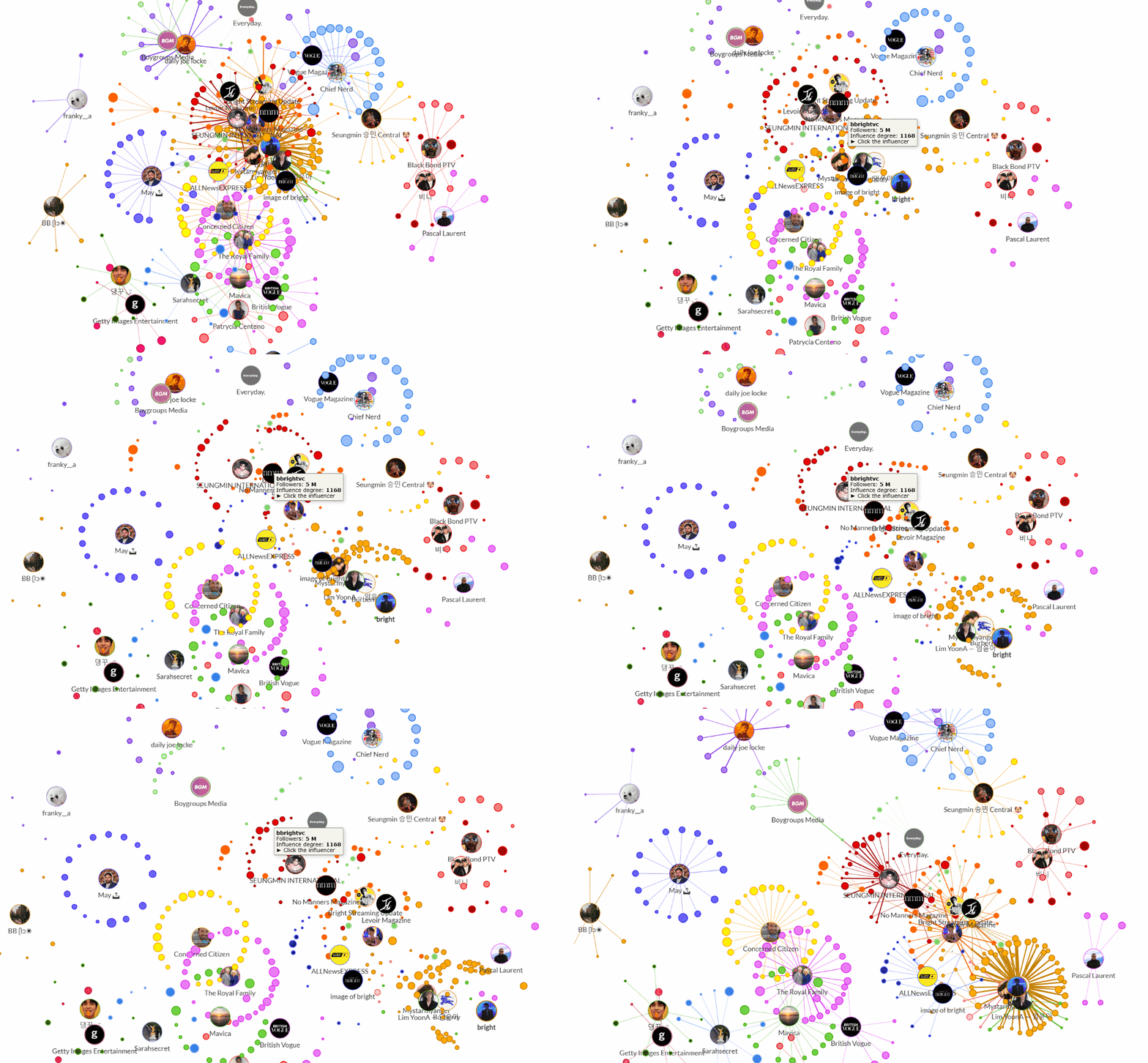
The interactive map of influential accounts on LFW reveals, as with NYFW, a powerful ecosystem of fans devoted to K-pop and Thai entertainment, generating high-volume organic amplification. For LFW, it is primarily the Burberry brand that benefits from the ecosystem of fan armies. Dataviz by Social Media Listening platform.
The media landscape: which outlets led LFW FW26 coverage
Beyond social media, London Fashion Week generated substantial mainstream media coverage. The influence score below is based on ranking, audience size, and number of mentions, providing a composite view of each outlet’s impact on the LFW conversation.
| Media outlet | Influence score | Country Data by Onclusive |
| dailymail.co.uk | 480 | United Kingdom |
| wwd.com | 208 | United States |
| elle.com | 198 | Taiwan |
| hellomagazine.com | 162 | United States |
| vogue.co.uk | 160 | United Kingdom |
| vogue.com | 153 | United States |
| hypebae.com | 119 | United States |
| lofficiel.com | 104 | Switzerland |
| thenational.scot | 96 | United Kingdom |
| fashionunited.uk | 85 | United Kingdom |
| harpersbazaar.com | 81 | Spain |
| hypebeast.com | 81 | United States |
| vogue.fr | 80 | France |
| fashionunited.com | 78 | United States |
| irishnews.com | 72 | United Kingdom |
| smh.com.au | 72 | Australia |
| townandcountrymag.com | 64 | United States |
| wmagazine.com | 63 | United States |
| milanofinanza.it | 56 | Italy |
| stylist.co.uk | 56 | United Kingdom |
Top 20 web outlets covering LFW FW26 by influence score. Influence score based on ranking, audience, and number of mentions.
Daily Mail led with an influence score of 480, nearly double that of second-placed WWD (208), reflecting its combination of broad audience reach and high volume of LFW-related content. The presence of Elle.com listed under Taiwan, Vogue UK, Vogue US, and Vogue France underscores LFW’s genuinely international media footprint.
The appearance of Hypebae (119) and Hypebeast (81) in the top 15 reflects the crossover between fashion week coverage and streetwear/youth culture media, a growing segment that operates with significant digital reach and younger audience demographics. For PR professionals pitching LFW coverage, these outlets represent valuable alternatives to traditional fashion glossies, particularly for brands targeting Gen Z.
The presence of thenational.scot and irishnews.com in the top 20 is a reminder that LFW’s positioning as the UK’s fashion capital generates interest across the devolved nations, not just in London-centric media.

Contact us today to learn how Onclusive’s platform can help you track, analyse, and respond to media coverage with precision and ease.
Implications for PR, communications, and marketing professionals
For PR and communications teams
The Burberry playbook at LFW FW26 offers a replicable template, but it requires strategic commitment well in advance of fashion week. Securing Asian celebrity attendance is not simply a booking exercise. It involves understanding which artists have the most activated fan communities, which brand aesthetics align credibly with the celebrity’s existing identity, and how to seed hashtag ecosystems before a show day to maximise the organic amplification window.
The gap between Burberry and the rest of the LFW field also signals a risk for brands that have not yet developed this capability. As the concentration of social voice becomes more extreme, the cost of invisibility in the LFW conversation increases. Brands that generate 0.20% or less of SOV are effectively absent from the global conversation during the most media-intensive week in British fashion.
For competitive intelligence professionals
Monitor ambassador announcements in the six to eight weeks before fashion week. The Seungmin, Bright, and YoonA partnerships were signalled in advance through social media activity, and tracking these signals early provides lead time to assess competitive positioning. SOV can shift dramatically in a single season. Monitoring changes between LFW FW26 and LFW SS26 next September will reveal whether Burberry’s strategy is sustainable or whether competitors are beginning to mobilise comparable celebrity relationships.
For social media professionals
Multi-script configuration is now a baseline requirement for fashion week monitoring. At LFW FW26, Korean Hangul and Thai script hashtags generated tens of thousands of mentions that English-only monitoring would have missed entirely. For social media intelligence platforms like Onclusive, this means building query sets that include romanised celebrity names, native script names, group affiliations in native script, and branded hybrid hashtags in all relevant languages.
Additionally, fan account handles should be tracked alongside official brand and celebrity accounts. The #bbrightvc handle becoming the second most-used LFW hashtag is a clear signal that fan infrastructure, not official channels, often drives the largest share of organic conversation.
Frequently asked questions: London Fashion Week FW26
| Question | Answer |
| When did London Fashion Week FW26 take place? | LFW FW26 ran from 19 to 23 February 2026, closing with the Burberry show on 23 February. Data collection covers 18 to 23 February. |
| Which brand dominated LFW FW26? | Burberry dominated overwhelmingly with 91.10% share of voice among 114 brands analyzed, driven by its partnerships with Stray Kids’ Seungmin, Thai star Bright Vachirawit, and Girls’ Generation’s YoonA. |
| Why did King Charles III attend London Fashion Week? | King Charles III attended the Tolu Coker show on 19 February in his capacity as a supporter of British craft and sustainable fashion through The King’s Foundation. He also visited a Stella McCartney sustainable innovation exhibition and met designers from Brand63Africa. It was the first time a reigning British monarch had attended LFW in a front-row capacity. Queen Camilla met Anna Wintour on the same day to mark the opening of fashion week. |
| Why did Asian celebrities dominate LFW FW26? | K-pop and Asian entertainment stars bring highly organised, globally distributed fandoms that generate massive organic amplification. At LFW FW26, the top three celebrity SOV positions were all held by Asian stars, collectively accounting for over 90% of celebrity mentions. |
| What does share of voice (SOV) mean? | SOV measures the proportion of total conversation a brand or celebrity commands relative to peers tracked in the same dataset. It reflects real-time cultural relevance and audience attention. |
| How many brands and celebrities were tracked? | Onclusive monitored 114 fashion brands and 89 ambassadors and celebrities across social media and mainstream media during LFW FW26. |
| What tools were used for this analysis? | Data was sourced from Onclusive 360 for mainstream media monitoring and Onclusive Social for social media listening and analytics. |
| What is the influence score for media outlets? | The influence score is based on ranking, audience size, and number of mentions. It indicates the relative influence of a media outlet on a specific topic. |
As the fashion calendar moves to Milan and Paris, the patterns at London Fashion Week FW26 provide a clear benchmark. Burberry has demonstrated what a fully committed Asian celebrity strategy looks like at scale. The question for Milan and Paris is whether the major houses, from Gucci to Chanel to Dior, will respond in kind, or whether their existing ambassador ecosystems will generate comparable social impact. We will be tracking the data across all four fashion weeks. Stay tuned for our Milan and Paris Fashion Week analyses.
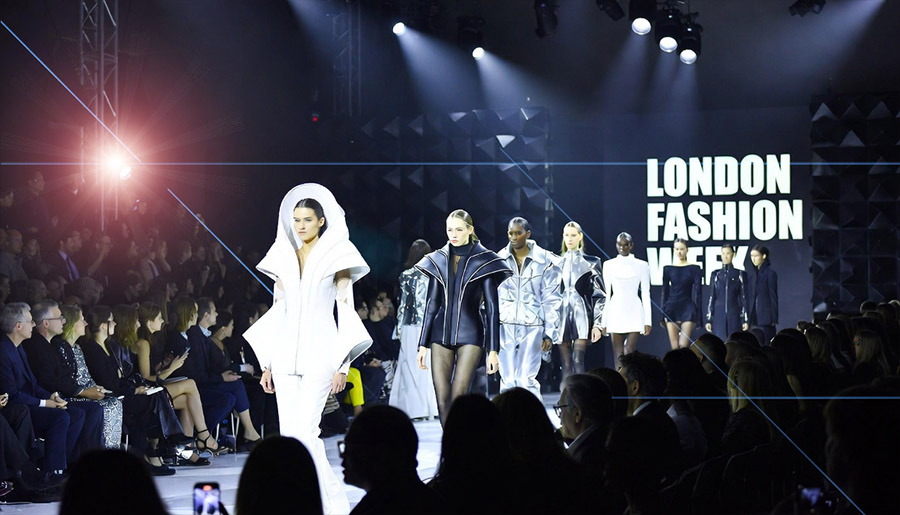
The cover image (cover, above) was generated by a generative AI tool for illustrative purposes.
Data sourced from Onclusive 360 and Onclusive Social, February 2026.