


Introduction
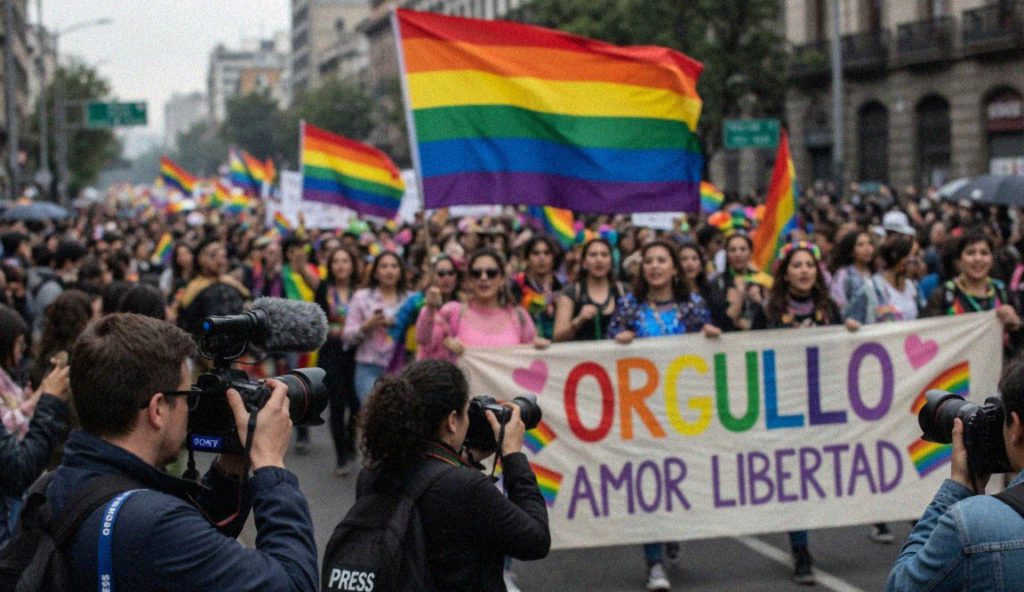
Pride Month 2026 has officially drawn to a close, but the celebration of LGBTQ+ pride and visibility continues. While June marks the official Pride Month, many major parades are scheduled for later in the summer, with events like Brighton Pride (UK) and WorldPride Amsterdam lighting up celebrations throughout July and August.
What makes this year’s Pride Month particularly noteworthy is the level of media attention and social media engagement recorded across digital platforms. This analysis examines the media landscape, social conversations, brand participation, and emerging issues that defined Pride Month 2026.
Overview: Social media and media reach comparison
Record-breaking social media engagement
The data tells a compelling story of growth and increased visibility for LGBTQ+ conversations:
Pride Month 2026 (May 1 – June 30)
- Social media mentions: 9.17 million
- Total reach: 201.9 million impressions
- Active audience: 5.45 million people engaged
Pride Month 2025 (Same Period)
- Social media mentions: 7.65 million
- Total reach: 141.5 million impressions
- Active audience: 4.51 million people engaged
Key Growth Metrics
- 20% increase in mentions year-over-year (9.17M vs 7.65M)
- 42.6% growth in reach (201.9M vs 141.5M)
- 20.8% growth in active participants (5.45M vs 4.51M)
These statistics represent a quantitative growth, and also a qualitative shift in how Pride Month conversations are happening across digital spaces. The amplification effect is particularly significant – reach grew at double the rate of mentions, suggesting that Pride Month content is reaching larger audiences with each post and conversation.
Traditional Media Coverage
The traditional media landscape remained robust, with 185,191 mentions across digital news outlets, blogs, and press releases. This represents significant editorial coverage from mainstream news organizations, indicating that Pride Month 2026 was treated as a major cultural event worthy of journalistic attention.
The Pride events dominating global conversations
Not all pride parades receive equal media attention. The analysis of 126 pride events across the globe reveals a concentrated pattern of coverage, with certain events capturing significantly higher share of voice.
Top 15 Pride events by media and social share
| Rank | Event | Share of Voice |
|---|---|---|
| 1 | Philadelphia Pride | 17.2% |
| 2 | Seoul Pride | 8.9% |
| 3 | Toronto Pride | 8.2% |
| 4 | Seattle Pride | 7.5% |
| 5 | NYC Pride | 6.0% |
| 6 | San Francisco Pride | 5.9% |
| 7 | Tel Aviv Pride | 3.6% |
| 8 | LA Pride | 3.4% |
| 9 | Washington Pride | 3.1% |
| 10 | Madrid Pride | 2.9% |
| 11 | Chicago Pride | 2.8% |
| 12 | Boston Pride | 2.0% |
| 13 | Bangkok Pride | 1.8% |
| 14 | London Pride | 1.7% |
| 15 | Tokyo Pride | 1.7% |
Why Philadelphia Pride dominates
Philadelphia Pride’s commanding 17.2% share of voice deserves deeper analysis. Several factors contributed to this dominance:
- Historic significance: Philadelphia Pride marks the 56th annual celebration, with deep roots in LGBTQ+ activism history
- Urban density and media infrastructure: Philadelphia’s position as a major Northeast corridor city ensures strong media coverage
- Timing and coordination: The parade’s June timing captured peak Pride Month momentum
- Influencer and celebrity participation: Notable figures and activists amplified the event’s reach through personal networks
Regional insights
Asia-Pacific momentum: Seoul Pride’s 8.9% share and Bangkok Pride’s 1.8% share indicate growing visibility of LGBTQ+ celebrations in Asia. Seoul’s particularly strong showing reflects South Korea’s position as a media powerhouse in digital culture and entertainment.
North American dominance: Five of the top six events are in North America (Philadelphia, Toronto, Seattle, NYC, San Francisco), reflecting both the concentration of English-language social media users and the historically strong pride tradition in these cities.
Geopolitical complexity: Tel Aviv Pride’s 3.6% share of voice comes amid complex geopolitical discussions about LGBTQ+ rights and the Israeli-Palestinian context, a topic that generated significant social media debate throughout June.
Notable absences and cancellations
It’s critical to note that several major European pride parades were cancelled or postponed due to extreme heat, including Paris Pride and Lyon Pride. Climate disruption affecting pride events is a new factor in the 2026 landscape – heat waves forced organizers to reschedule celebrations, with implications for media coverage timing and event safety.
The Conversation landscape: What topics dominate Pride Month 2026
Beyond celebrating pride events themselves, Pride Month 2026 became a platform for discussing specific LGBTQ+ rights issues and challenges. The analysis of 43 distinct topics reveals a nuanced conversation landscape.
Top 15 Topics by Share of Voice
| Rank | Topic | Share of Voice |
|---|---|---|
| 1 | Bisexual Visibility | 26.9% |
| 2 | Non-Binary Rights | 15.2% |
| 3 | Homophobia & Transphobia | 10.6% |
| 4 | Asexual & Aromantic Visibility | 6.5% |
| 5 | Progress Pride Flag | 5.5% |
| 6 | Pinkwashing & Rainbow Capitalism | 5.4% |
| 7 | LGBT+ Rights (general) | 3.9% |
| 8 | Anti-Discrimination Laws | 3.5% |
| 9 | Transgender Pronouns & Language | 3.3% |
| 10 | Same-Sex Marriage Expansion | 3.2% |
| 11 | LGBT+ Healthcare Access | 3.0% |
| 12 | DEI Rollbacks & Corporate Retraction | 2.6% |
| 13 | Intersex Rights | 2.3% |
| 14 | LGBT+ Mental Health | 1.7% |
| 15 | Gender-Affirming Care | 1.1% |
What this tells us about 2026 LGBTQ+ priorities
The rise of intersectionality: Bisexual visibility (26.9%) and non-binary rights (15.2%) together account for over 42% of Pride Month conversations. This signals that LGBTQ+ discourse has evolved beyond binary sexual orientation and gender frameworks to embrace spectrum-based identities.
The backlash narrative dominates: Homophobia & transphobia (10.6%), DEI rollbacks (2.6%), and pinkwashing (5.4%) together comprise 18% of conversations. These topics reflect increasing scrutiny of anti-LGBTQ+ movements and corporate hypocrisy – community members are not only celebrating, but also critically examining who profits from pride and who perpetuates discrimination.
Visibility as a right: The prominence of visibility-focused topics (bisexual visibility, asexual visibility, trans pronouns, intersex rights) reflects the community’s focus on being seen and heard authentically. Representation in media, language, and policy is being treated as fundamental to rights.
Healthcare and mental health matter: With 3.0% and 1.7% of conversations respectively, healthcare and mental health represent persistent concerns. Access to transition-related care, HIV prevention
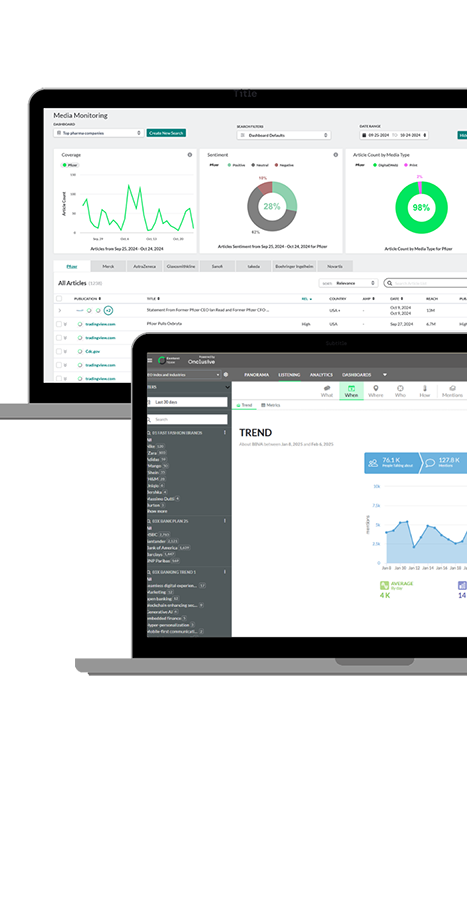
See the Full Narrative with Onclusive
Stories no longer live in channels.
Get one unified view across social and earned media, so you can track how narratives start, spread, and evolve – and act with confidence.
Brand activism and corporate Pride: Who’s communicating about Pride month
Methodological note
The brand examples and statistics presented in this section are derived from a representative sample of 100,000 conversations across social media platforms during Pride Month 2026 (May 1 – June 30).It’s a qualitative examination of notable examples and patterns observed within this sample. While the sample is substantial and representative, it does not capture every brand that communicated about Pride Month, nor should the findings be interpreted as definitive market share rankings.
Major brands engaging with Pride month 2026 (sample analysis)
Based on our sample of 100K conversations, we identified 24+ corporate entities and brands actively communicating about Pride Month 2026 across social platforms. The following are illustrative examples of brand approaches and strategies observed:
Tech & Platform Companies
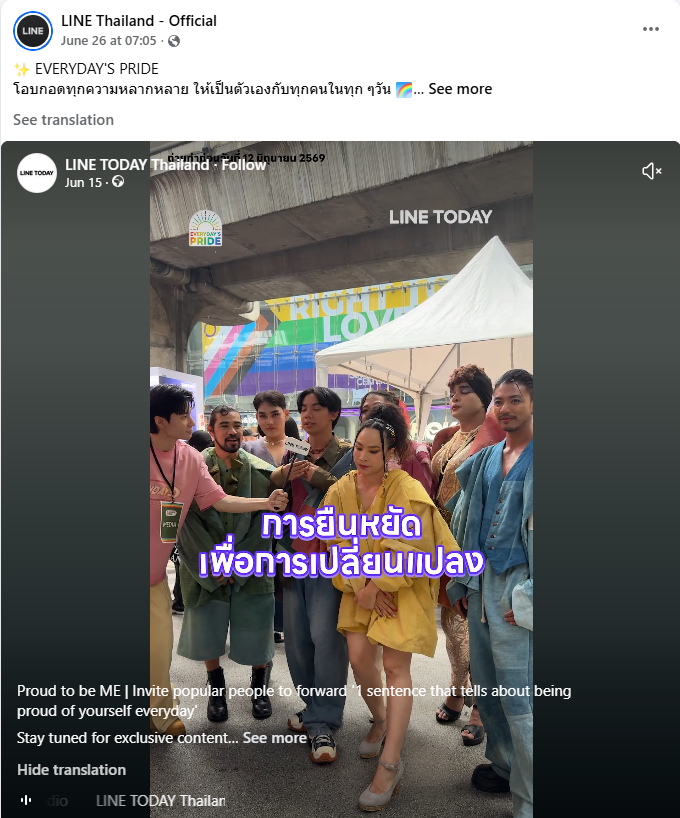
LINE (Thailand) – Dominant player
- Campaign: “Everyday’s Pride” – an omni-channel initiative
- Reach: 6.07 million impressions
- Strategy: Multi-service integration (LINE TODAY, LINE SHOPPING, LINE STICKERS, LINE OpenChat, LINE HEALTH, LINE WALLET)
- Insight: LINE’s dominance reflects the power of integrated platforms in reaching audiences at scale. Their approach went beyond performative “pride month” posts to embed LGBTQ+ inclusion across services.
SAMSUNG Thailand
- Type: Tech company local initiative
- Strategy: Corporate diversity celebration
- Significance: Represents major tech brands extending pride campaigns to Asia-Pacific markets
Entertainment & Media
MADONNA
- Event: Surprise performance at Times Square (NYC) during Pride Month
- Album launch: Announced “Confessions on a Dancefloor II” (July 3, 2026 release)
- Insight: Celebrity endorsement through action rather than statement. Madonna’s live performance and new album announcement generated authentic engagement, not just tokenistic social posts.
Food & Beverage
McDONALD’S (McThai – Thailand)
- Strategy: Pride Month menu/promotion
- Market: Southeast Asia
- Significance: QSR (Quick Service Restaurant) sector’s growing participation in pride marketing
HELLOFRESH
- Campaign: Controversial “Pride preparation” campaign messaging
- Insight: HelloFresh’s campaign generated significant backlash and memes, illustrating the risk of tone-deaf corporate pride messaging. While it achieved visibility, sentiment analysis reveals audience skepticism toward performative brand activism.
Professional Services
KPMG (Global)
- Type: Internal culture and workplace inclusion messaging
- Channels: LinkedIn and corporate blogs
- Focus: Employee resource groups (ERG), pay gap transparency, and workplace belonging
- Insight: KPMG’s approach exemplifies B2B2E (business-to-business-to-employee) pride strategy, targeting professional networks rather than consumer markets.
Sports
FC BAYERN MUNICH (Bayern US)
- Type: Professional football club
- Significance: Sports organizations increasingly using pride month to challenge masculinity narratives and signal inclusion
- Impact: Sports sector participation legitimizes LGBTQ+ inclusion across traditionally heteronormative spaces
Media & News
RTVE (Spanish National Television)
- Format: Documentary coverage, interviews, event reporting
- Type: Editorial coverage rather than promotional
PINKNEWS
- Type: LGBTQ+ specialized media outlet
The pinkwashing paradox: Corporate activism underscrutiny
Key finding: 5.4% of Pride Month conversations critical of corporate participation
While brands like LINE and Madonna generated positive engagement, a significant portion of Pride Month discourse (5.4%) focused specifically on pinkwashing and rainbow capitalism. This reflects a mature, critical consumer base that distinguishes between:
Authentic allyship: Sustained commitment to LGBTQ+ inclusion year-round
Performative activism: Limited to June, with no policy changes or community investment
Extractive marketing: Profiting from pride messaging without supporting LGBTQ+ causes
Red flags identified in 2026 brand activism
DEI Rollbacks (2.6% of conversations): Many corporations simultaneously celebrated Pride Month while rolling back diversity, equity, and inclusion initiatives elsewhere – a contradiction not lost on audiences
Absence of underrepresented sectors: Luxury fashion brands were largely absent despite historical leadership in pride marketing. Finance sector similarly quiet.
Controversy over messaging tone: HelloFresh’s controversial campaign and others show the increasing sensitivity to brand-led pride narratives that miss cultural context or seem opportunistic
Top performing posts and content
Highest engagement: Authentic lived experience over corporate messaging
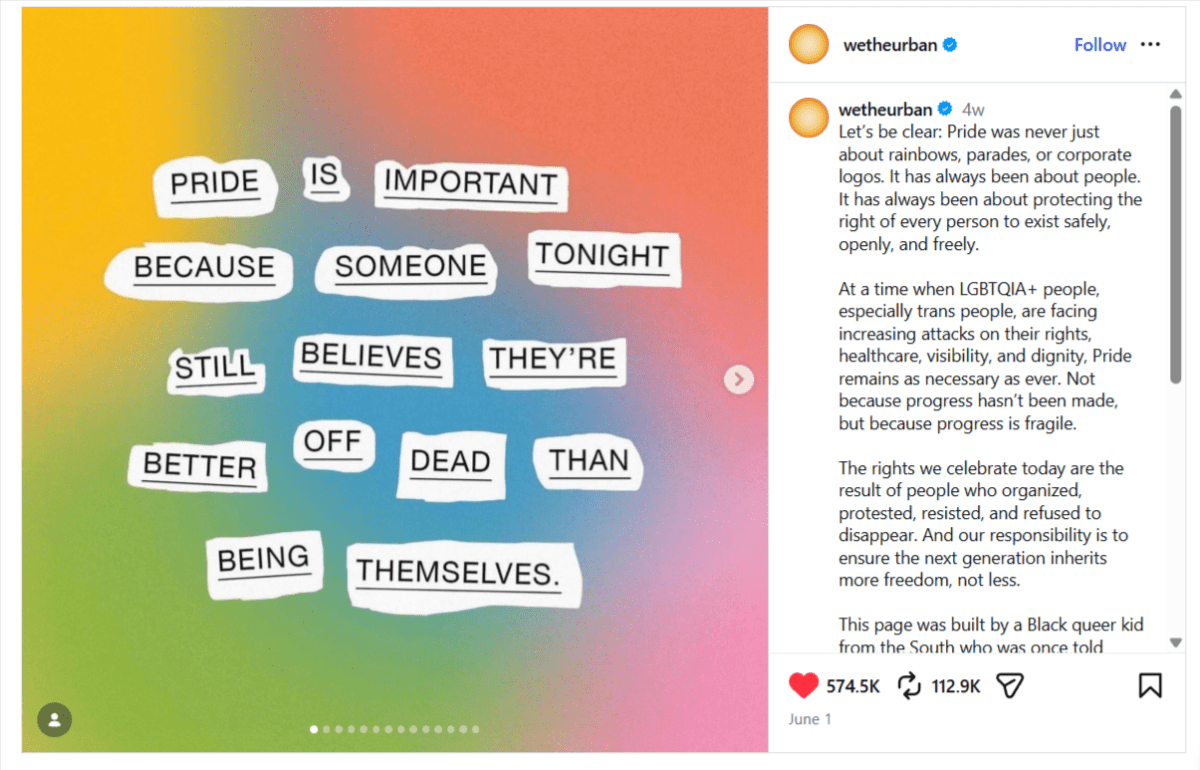
Instagram Post – @wetheurban
Engagement metrics: 574K likes, 112K reposts
Why it dominated: This post exemplifies why authentic storytelling outperforms corporate pride messaging. The creator’s vulnerability, specificity (Black queer kid from the South), and direct critiques of both the depoliticization of pride and current attacks on LGBTQ+ rights resonated deeply. Personal narrative combined with political clarity generated 10x+ more engagement than typical brand posts. The post directly challenged the “rainbow capitalism” narrative that dominated 2026 conversations.
Highest reach: Celebrity + trend-Based content
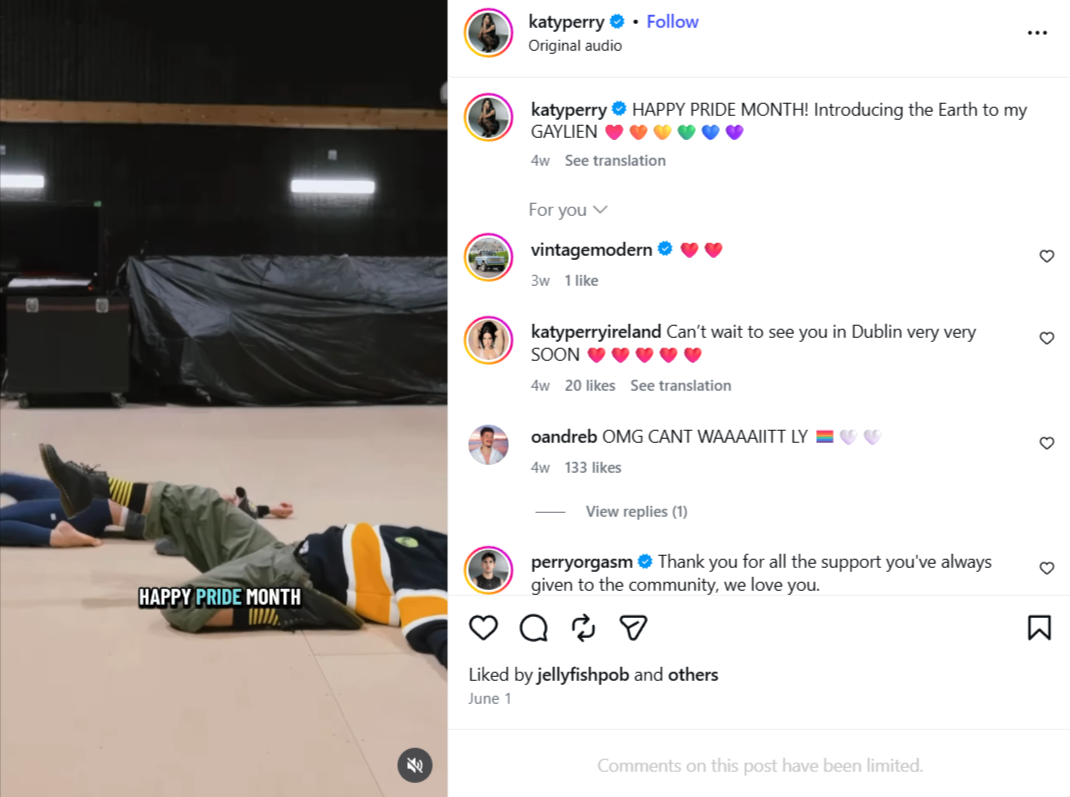
Instagram Reel – Katy Perry
Reach metrics: 2.6 million views
Post concept: Katy Perry wishing “Happy Pride Month” in a reel featuring an alien character. The post leverages the cultural moment (Pride Month) combined with entertainment/trending audio formats and established celebrity follower base.
Why it reached millions: Celebrity status provides algorithmic advantages, but the post succeeds because it optimizes for platform-native features (vertical video, trending audio, entertainment value). While less politically substantive than the WeTheUrban post, it reaches a broader, more mainstream audience through entertainment rather than activism.
Key insight: There’s a clear bifurcation in Pride Month content performance – niche, politically-engaged audiences prefer authentic narratives from community members, while mainstream audiences respond to celebrity endorsements and entertainment-focused content. Both have value; they serve different audience segments.
Most significant news coverage: Policy over celebration
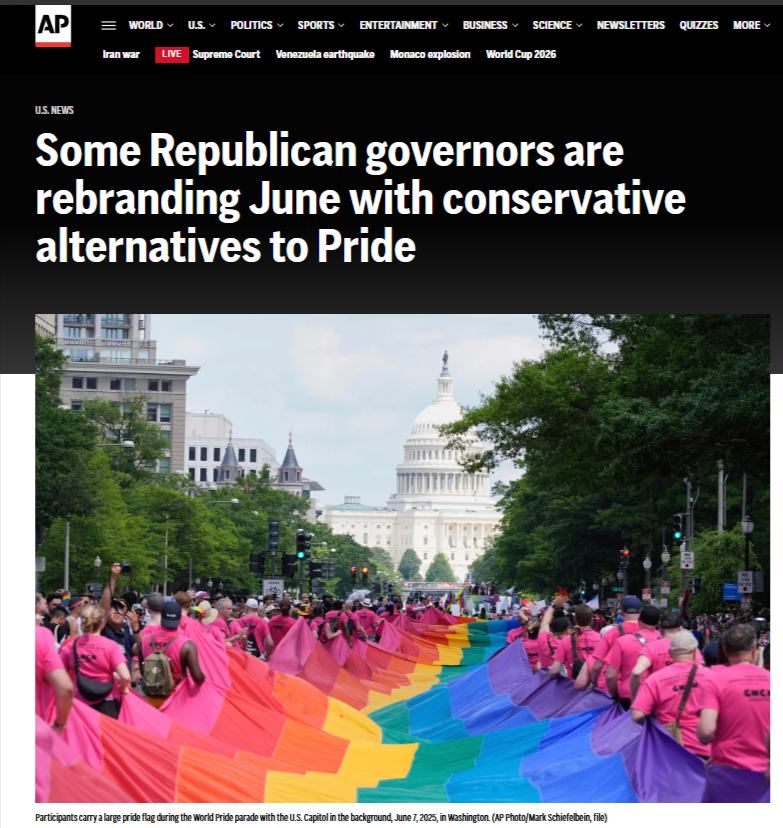
AP News – “Some Republican Governors are Rebranding June with Conservative Alternatives to Pride”
Why this article mattered: Rather than covering Pride Month as purely celebratory, AP News framed it through a policy/political lens – examining how conservative governors were actively counter-programming against Pride Month by designating June for “Family Month” or other alternatives. This represents mainstream media’s willingness to cover Pride Month not just as cultural celebration, but as a site of genuine political and cultural conflict.
Significance for 2026 landscape: The prominence of this political framing reflects broader 2026 contexts – as LGBTQ+ visibility increased, so did organized opposition. News coverage that centers this conflict rather than downplaying it represents media maturation in how it addresses pride.
Key Takeaways for Communicators and Marketers
For Brands
- Authenticity matters: Ongoing commitment and year-round action resonate more than June-only messaging
- Avoid tokenism: LGBTQ+ audiences are sophisticated and critical of performative activism
- Intersectionality is expected: Single-issue pride messaging (focusing only on marriage equality, for example) feels outdated
- Representation in leadership: Internal representation matters as much as external messaging
For Media Professionals
- Pride Month is a news story: Traditional media gave 185,191 mentions – this is significant editorial coverage
- Diverse angles: Top coverage wasn’t just parade coverage, but policy, healthcare, mental health, and corporate accountability angles
- Global perspective: Asian pride events gained unprecedented coverage, reflecting demographic and cultural shifts
For LGBTQ+ Communities and Advocates
- Visibility translates to reach: 9.17 million mentions means LGBTQ+ issues were part of mainstream conversation
- Intersectionality is advancing: 42% of conversation share for bi/non-binary topics shows progress in moving beyond LG-dominant narratives
- Critical scrutiny matters: The significant conversation around pinkwashing (5.4%) shows community capacity to call out inauthenticity
What Pride Month 2026 tells us about progress and fragility
Visibility has grown
A 42.6% increase in reach year-over-year is significant. LGBTQ+ conversations are reaching larger audiences. More people are exposed to pride messaging, anti-discrimination frameworks, and advocacy around transgender rights, mental health, and healthcare access. This is undeniable progress.
But as the top-performing Instagram post from Sterling Graves reminds us: “Progress is fragile.”
The paradox of 2026: More visibility, more backlash
The 5.4% of conversations focused on pinkwashing and corporate hypocrisy, the 2.6% examining DEI rollbacks, and the AP News coverage of Republican governors actively counter-programming against Pride Month all point to a single reality: increased visibility has sparked increased resistance.
The same June that saw LINE launch an integrated “Everyday’s Pride” campaign also saw corporate America simultaneously roll back diversity initiatives. The same month that celebrated pride saw attacks on trans rights, healthcare access, and education. This contradiction is not a flaw in the data – it’s a feature of 2026 reality.
Authentic community voices outperformed corporate messaging
The WeTheUrban post (574K likes, 112K reposts) discussing lived experience as a Black queer person outperformed polished corporate pride campaigns by orders of magnitude. This is the most important finding for brands, media organizations, and communicators.
The lesson: In 2026, audiences can distinguish between authentic advocacy and performative activism. They’re increasingly critical of corporations that speak proudly about LGBTQ+ inclusion while rolling back internal diversity efforts. They gravitate toward community voices that integrate joy with political clarity, celebration with accountability.
Geography matters more than ever
Seoul Pride’s 8.9% share of voice represents a significant shift from previous years. Bangkok Pride’s 1.8%, while smaller, signals growing visibility for Asian pride events and communities. Meanwhile, the near-complete absence of Sub-Saharan African pride events from major coverage – despite significant LGBTQ+ communities across the continent – represents both an opportunity and an indictment of media infrastructure disparities.
Pride Month 2026 revealed that LGBTQ+ visibility remains deeply tied to economic power, English-language dominance, and existing media ecosystems. Truly global pride will require intentional efforts to amplify voices and events beyond North America and Western Europe.
The Intersectionality win
The fact that bisexual visibility (26.9%), non-binary rights (15.2%), asexual visibility (6.5%), and intersex rights (2.3%) together account for over 50% of Pride Month conversations is a genuine victory. It signals that LGBTQ+ discourse has moved beyond binary frameworks and single-issue focus.
However, it also reveals ongoing work. Trans youth healthcare (1.1%), gender-affirming care (1.1%), and hate crimes (0.1%) received comparatively minimal conversation share – despite being life-and-death issues for many LGBTQ+ people. The gap between “visibility” and “action” remains significant.
What comes next: Beyond June
As pride celebrations extend into July and August with WorldPride Amsterdam, Brighton Pride, and countless other events, one critical question emerges: Will the conversations, solidarity, and commitments made in June persist?
For brands, the challenge is simple but profound: Prove that Pride Month 2026 wasn’t just a June phenomenon. Demonstrate year-round commitment through policy, investment, hiring practices, and political advocacy. The 5.4% of audiences focused on pinkwashing will be watching.
For media organizations, the opportunity is to continue covering LGBTQ+ issues beyond Pride Month – healthcare access in July, trans visibility outside of designated days, anti-discrimination enforcement in September. Pride shouldn’t be a novelty angle; it should be integrated into regular news cycles.
For LGBTQ+ communities and advocates, the power demonstrated in 2026 – the ability to shape narratives, call out inauthenticity, and demand more – must be sustained. The conversations that made pinkwashing a topic of debate didn’t happen by accident. They happened because communities organized, spoke up, and refused performative activism.
A final reflection
Pride Month 2026 was many things: celebratory and defiant, joyful and urgent, inclusive and critical. It was 9.17 million conversations about human dignity, survival, visibility, and the right to exist freely.
As WeTheUrban’ post reminds us in its conclusion: “You deserve to be here. You always have.”
The challenge now is making sure that statement is true not just for one month, but for every day of the year. Not just in pride parades and social media posts, but in healthcare access, workplace protections, legal recognition, and cultural respect.
The progress made in 2026 is real. The fragility remains equally real. What happens next – in the 11 months between Pride Months, in the boardrooms making DEI decisions, in the legislative battles over healthcare and education – will determine whether June’s visibility translates into lasting change.
This analysis is based on Onclusive’s proprietary monitoring, covering media and social mentions, across 8 languages.
For more information on Onclusive’s events and politics intelligence capabilities, contact our team: