




For years, PR and communications teams have treated social and earned media as separate worlds — different teams, different tools, different dashboards, and often different strategies.
That structure made sense when the media landscape was slower, more linear, and easier to segment.
Today, brand stories do not live in channels. They move across them. They start in one place, spread in another, get reframed somewhere else, and return in a different form. What begins on social media often becomes earned media coverage. What appears in the media is then reshaped and debated on social platforms.
According to Onclusive’s industry research, proving measurable impact and evolving beyond siloed channels are top priorities for communications teams in 2026, as the media landscape becomes faster and more complex. Yet many organizations still monitor and manage social media and earned media as if they are separate worlds.
They are not.
The audience experience is now one continuous narrative
From the audience’s point of view, there is no such thing as “earned media” or “social media.”
There are only stories.
A narrative might:
- Start as a post on X
- Get picked up by a journalist
- Turn into a headline
- Get shared on YouTube or Instagram
- Spark debate in comments and forums
- And resurface days later in a different form
The platforms change. The narrative continues.
People do not consume channels. They follow stories, issues, and ideas wherever they appear.
In this environment, the true unit of analysis for modern PR and communications is no longer a post, a mention, or a single piece of coverage. It is the narrative itself.
The problem with treating social and earned media as separate worlds
When organizations treat social and earned media as separate domains, several things start to break.
First, you miss early signals.
Many reputational issues and emerging risks start on social media before they ever reach traditional or online news coverage. Without integrated social media monitoring and media monitoring, those signals often go unnoticed until the story is already moving fast.
Second, you fragment understanding.
Different teams see different slices of the same narrative. One team sees the headlines. Another sees the comments. Nobody sees the whole story.
Third, you slow down decision-making.
When insight is split across tools and reports, alignment takes longer. In a fast-moving narrative environment, delay is itself a risk.
Finally, you create inconsistent responses.
When social and earned channels are managed separately, messaging drifts. What is said to journalists does not always match what is happening on social platforms.
This is not just inefficient. It is strategically dangerous in a world where narratives move faster than organizations.
Why unified media monitoring is now a strategic requirement
If narratives flow across channels, then media intelligence must as well.
You cannot:
- Monitor social media in one system
- Monitor news and earned coverage in another
- And still expect to understand what is really happening
Modern PR and communications teams need unified media monitoring that brings social and earned together in one view.
That means one connected picture of:
- What is being said
- Where it started
- How it is spreading
- How it is evolving
- And what it means for your brand or organization
This is not about convenience. It is about having a shared, reliable view of reality – and that’s what combining social and earned media monitoring gives you.
From channel-based monitoring to narrative-based intelligence
The traditional model of media monitoring was channel-first:
- Track by channel
- Report by channel
- Act by channel
But that model no longer reflects how stories behave in the real world. Experts warn that traditional monitoring alone will not protect brands going forward; communicators must understand the full narrative — not just mentions — to stay ahead.
The modern model is narrative-first:
- Track the story wherever it appears
- Understand how it evolves across social and earned media
- Respond based on the narrative, not the platform
In this approach, channels become inputs, not organizing principles.
The key question is no longer: “What’s happening on social?” or “What’s happening in the media?”
It is: “What is the story right now, and how is it moving?”
What this means for modern PR and communications teams
This shift changes how PR, communications, and social teams need to work together.
It means:
- Social, PR, and communications teams can no longer operate in silos
- Escalation and response workflows must converge
- Leadership needs one shared view of the media and narrative landscape
- Measurement must reflect narrative and reputation impact, not just channel performance
This is not a tooling change. It is an operating model change.
Where Onclusive fits: unifying social and earned media intelligence
This shift is exactly what has driven the evolution of Onclusive’s media monitoring platform.
Onclusive now brings social media content directly into its core media monitoring environment, alongside:
- Broadcast
- Online media
- Blogs and forums
- Podcasts
All enriched by the same AI-powered intelligence layer.
This means Onclusive provides:
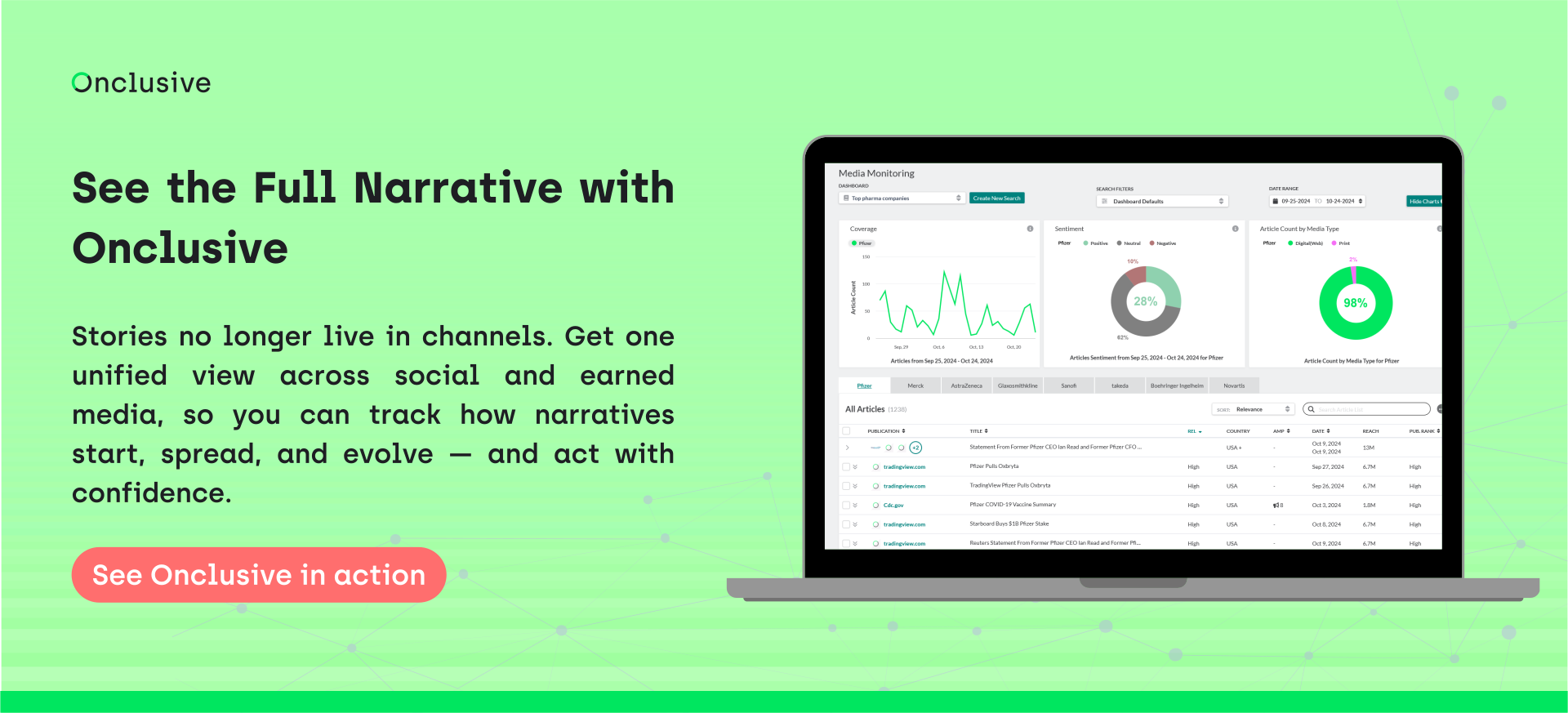
- Unified monitoring from a single source across social and earned media
- Coverage across major platforms including X, YouTube, Instagram, and Facebook, with LinkedIn and TikTok
- Consistent AI-powered enrichment across all content, including sentiment analysis, relevance scoring, and topic classification
- One system of record for reputation, risk, narratives, and opportunity
This is not about adding another data source. It is about aligning your media intelligence to how stories actually move.
What changes when you see the full narrative
When social and earned media are monitored together:
- Issues are detected earlier
- Narrative momentum becomes clearer
- Decision-making becomes faster and more confident
- Messaging becomes more consistent across channels
- Measurement reflects real narrative and reputational impact
Ready to unify your media intelligence? Discover how Onclusive brings social and earned media monitoring together in one system for complete narrative visibility.
The end of the channel split
The separation between social and earned media made sense in a different era.
That era is over.
Today: Earned and social are not two worlds. They are one continuous narrative space.
The organizations that succeed will not be the ones with more dashboards or more disconnected tools. They will be the ones with: One shared view of reality. One shared understanding of the narrative. And one coordinated way of acting on it.
Frequently Asked Questions
What is the difference between social media and earned media?
Social media refers to user-generated content on platforms like X, Instagram, YouTube, and Facebook. Earned media refers to coverage in news outlets, broadcast, online publications, and blogs. While traditionally managed separately, modern narratives flow continuously between both channels, requiring unified monitoring for effective PR management.
Why can’t PR teams separate social and earned media anymore?
Brand stories no longer respect channel boundaries. Issues start on social media before reaching news coverage. Journalists source stories from social platforms. Earned coverage sparks social debate. When monitoring systems are separated, teams miss early signals, fragment understanding, slow decision-making, and create inconsistent responses across channels.
What is unified media monitoring?
Unified media monitoring tracks social media and earned media in one integrated system, providing a single view of how narratives form, spread, and evolve across all channels. This enables earlier issue detection, better decision-making, faster response times, and more consistent messaging across the entire media ecosystem.
How does integrated monitoring improve crisis detection?
Most crises start on social media as complaints, videos, or activist posts before reaching mainstream coverage. Unified media monitoring surfaces these early warning signals when issues are still emerging, enabling teams to intervene and manage narratives before they escalate into headlines.
What is Onclusive Social Ingest?
Social Ingest brings social media content directly into Onclusive’s core media monitoring environment alongside news, broadcast, online media, and blogs. All content is powered by the same AI Sense intelligence layer, providing consistent sentiment analysis, relevance scoring, and topic classification across social and earned media.
What changes when you unify social and earned media monitoring?
Teams detect issues earlier, see narrative momentum more clearly, make faster and more confident decisions, maintain consistent messaging across channels, and measure real narrative impact. Organizations shift from reacting to channel fragments to managing complete stories across the entire media landscape.