




How Social Listening Strategy for Brand Awareness has Evolved Beyond Content Volume
Building brand awareness used to be about posting consistently and reaching as many people as possible. Today, it requires something deeper: understanding what audiences actually care about and showing up in ways that resonate.
Social listening for brand awareness now depends on listening as much as broadcasting. The brands gaining visibility aren’t necessarily the ones posting most frequently—they’re the ones whose content reflects real audience interests, emotions, and conversations.
This shift changes how marketing teams approach visibility entirely. Instead of pushing messages out and hoping they stick, successful brands tune into what’s already being discussed and shape their presence around those insights.
Here’s how to use social listening for brand awareness in a way that creates genuine connection and lasting visibility.
Key Takeaways
Strategic social listening drives modern brand awareness: Success comes from understanding audience conversations and cultural context, not just posting frequency. Social listening reveals what resonates before you invest resources in content creation. Sentiment matters as much as volume: Monitor emotional tone in social conversations to ensure your messaging matches your audience’s current mindset. The right message at the wrong emotional moment falls flat. Micro-communities deliver outsized impact: Niche groups with high engagement often generate more meaningful brand awareness than large, passive audiences. Focus on where trust and authentic recommendations live. Audience language creates authenticity: Using the exact phrases and terminology your target audience uses naturally makes your brand feel approachable and credible. Industry jargon can create barriers. The discovery journey is fragmented: Modern consumers move between platforms, formats, and sources before making decisions. Map these touchpoints to position your brand effectively at each stage. Proactive monitoring protects brand equity: Real-time social listening catches reputation threats early, allowing you to address issues before they damage brand awareness efforts. Prevention is more efficient than crisis management. Data-informed beats assumption-driven: Continuous social listening creates an intelligence foundation that makes every campaign, partnership, and message more relevant and effective.
Track Cultural Conversations, not Just Trending Hashtags
Using social listening for brand awareness means understanding the broader cultural context your audience lives in. Rather than jumping on every viral moment, focus on identifying themes with staying power.
Monitor social platforms to:
- Identify emerging topics before they peak
- Understand what different audience segments value
- Align your brand voice with relevant cultural movements
Example
A home goods brand noticed conversations about mindful consumption growing across platforms months before it became mainstream. They positioned their products around intentional living, gaining brand awareness among audiences who valued that philosophy.
Match your Tone to Audience Sentiment
The most effective social listening for brand awareness strategies recognize that timing isn’t just about when you post—it’s about how your audience feels in that moment. Social platforms reveal the emotional temperature of your community.
Pay attention to:
- Sentiment shifts following current events
- Whether audiences want entertainment or practical solution
- The language people use to express joy, frustration, or concern
Example
A skincare brand noticed stressed, anxious language dominating beauty conversations during a particularly challenging period. They shifted from aspirational content to soothing, self-care focused messages, strengthening brand awareness among people seeking comfort.
Find Micro-communities Where Influence Happens
Social listening for brand awareness isn’t just about follower counts anymore. Real influence lives in tight-knit communities where trust runs deep and recommendations carry weight.
Use social platforms to discover:
- Which niche groups actively discuss your category
- Who community members genuinely trust
- How conversations naturally flow between platforms
Example
A sustainable fashion brand built brand awareness by engaging with zero-waste living communities on Reddit and Facebook groups rather than chasing large influencers. These authentic conversations drove more meaningful visibility.
Speak your Audience’s Language
When using social listening for brand awareness then social media management, the words you choose matter enormously. Brands that mirror natural audience language feel approachable and authentic.
Track social conversations to identify:
- Phrases and terminology your audience uses organically
- Industry jargon that creates distance
- Slang and shorthand that signals you understand their world
Example
A financial services company learned through social listening that Gen Z avoided terms like “investment portfolio.” They adjusted their social media listening for brand awareness campaigns to use phrases like “building your future” and saw engagement triple.
Map the Modern Discovery Journey
Social listening for brand awareness requires understanding how people actually find and evaluate brands today. The path to discovery is fragmented, moving between videos, reviews, comments, and creator opinions.
Analyze social platforms to understand:
- Which content formats capture initial attention
- Where people seek validation before committing
- What questions come up repeatedly in comments
- Which voices carry authority in decision-making moments
Example
A meal kit service realized potential customers were reading comment sections before watching recipe videos. They optimized their social media for brand awareness by encouraging satisfied customers to share experiences in comments, increasing early-stage visibility.
Protect your Brand Reputation in Real-time
Using social media brand monitoring only works if your reputation stays intact. Social platforms make it possible to spot brewing issues before they damage visibility.
Monitor continuously for:
- Patterns in customer complaints
- Sudden negative sentiment spikes
- Misleading information spreading about your brand
- Minor issues that could escalate
Swift responses protect both reputation and brand awareness efforts.
Build a Data-informed Brand Awareness Strategy The most successful social media for brand awareness strategies are grounded in real audience data, not assumptions. When you consistently monitor what people say, how they feel, and what they need, your content naturally becomes more relevant. This ongoing intelligence helps you:
- Create campaigns that reflect actual interest
- Choose partnerships that resonate with your community
- Maintain consistent messaging that aligns with audience values
Final Thoughts
Social listening for brand awareness works best when brands listen as actively as they speak. By tuning into authentic conversations, understanding emotional context, and showing up where communities naturally gather, you build visibility that feels earned rather than forced.
Ready to amplify your brand awareness?
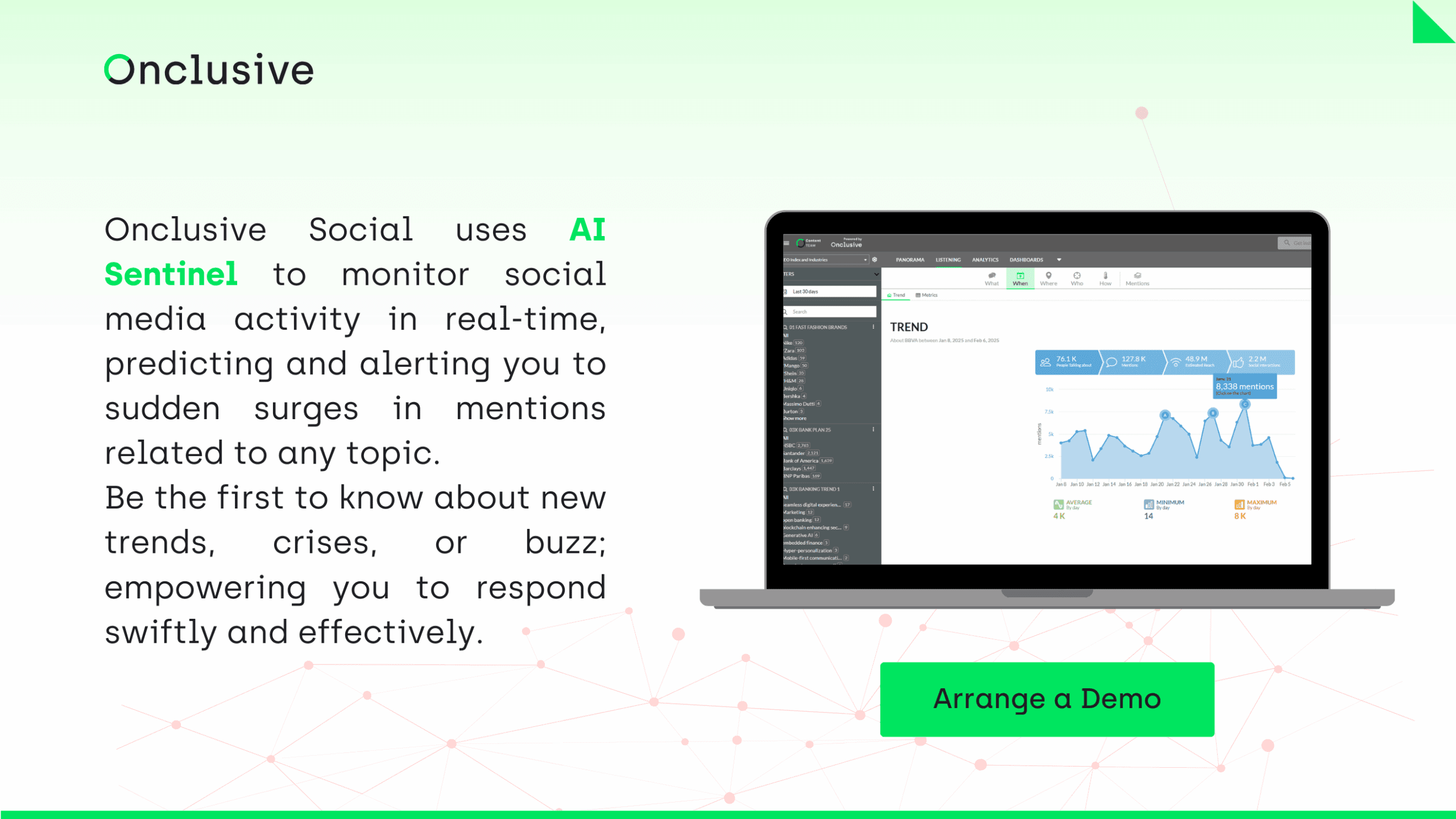
Onclusive Social transforms social media conversations into actionable brand intelligence. Contact us today to see how strategic social listening for brand awareness can elevate your brand awareness efforts.
Frequently Asked Questions about Social Listening for Brand Awareness
How much time does effective social listening for brand awareness require?
Initial setup typically takes 2-4 weeks to configure monitoring tools, identify relevant keywords, and establish baseline metrics. Ongoing monitoring requires 30-60 minutes daily for most brands, with weekly deep analysis sessions (2-3 hours) to identify patterns and strategic opportunities. Larger brands or those in crisis-prone industries may need dedicated resources.
What tools do I need to implement social listening for brand awareness?
Professional social listening platforms (like Onclusive Social) provide comprehensive monitoring, sentiment analysis, and trend identification. Entry-level solutions include native platform analytics, Google Alerts, and social media management tools with monitoring capabilities. The right choice depends on your monitoring volume, platform coverage needs, and budget.
How is social listening different from social media monitoring?
Social media monitoring tracks mentions, hashtags, and direct brand references. Social listening goes deeper, analyzing sentiment, identifying emerging themes, understanding context, and uncovering untagged conversations where your brand or category is discussed. Monitoring tells you what happened; listening tells you why it matters and what to do about it.
How do I measure ROI from social listening for brand awareness?
Track metrics like share of voice growth, sentiment score improvements, reach of conversations your brand participates in, and engagement rate increases. Connect social listening insights to campaign performance by measuring how content informed by listening performs versus baseline content. Monitor brand search volume and direct traffic lifts following listening-informed initiatives.
Can social listening work for B2B brands or smaller companies?
Absolutely. B2B brands benefit enormously from tracking industry conversations, identifying decision-maker pain points, and monitoring competitor positioning. Smaller companies can focus monitoring on specific platforms where their audience congregates (LinkedIn groups, Reddit communities, industry forums) rather than attempting comprehensive coverage. Niche focus often yields better insights than broad monitoring.
What are the most common mistakes when starting social listening for brand awareness?
Focusing only on brand mentions rather than broader category conversations, ignoring sentiment and context, tracking too many metrics without clear objectives, failing to act on insights gathered, and treating listening as a one-time project rather than an ongoing practice. Starting with clear goals and a manageable scope prevents overwhelm.
How often should we adjust our brand awareness strategy based on social listening?
Make tactical adjustments (messaging tone, content topics, engagement approach) monthly based on sentiment and conversation shifts. Conduct quarterly strategic reviews to assess whether fundamental brand positioning needs evolution. React immediately to reputation threats or significant sentiment changes. Balance responsiveness with consistency, not every trend requires a pivot.
Should we respond to every conversation we discover through social listening?
No. Strategic engagement is more effective than ubiquitous presence. Respond when you add genuine value, answer questions, or correct misinformation. Engage in communities where your participation is welcome and authentic. Avoid forced insertions into conversations where your brand feels out of place. Quality engagement builds brand awareness; spam damages it.