




Learning how to measure brand awareness starts with a definition problem. Ask five people in a marketing meeting what “brand awareness” means and you’ll get five different answers. One person means “people have heard of us.” Another means “people think of us first.” A third is really talking about sentiment, not awareness at all. That confusion is the first problem to solve before you measure anything.
Brand awareness is simply the extent to which people recognize and recall your brand, ideally without being prompted. It sits at the top of the marketing funnel, before consideration and preference, and it’s the foundation everything else is built on. You can’t build trust with an audience that doesn’t know you exist.
The trouble is that awareness is one of the hardest metrics in marketing to pin down, because it lives in people’s heads rather than in a spreadsheet. This guide walks through the methods PR and marketing teams actually use to measure it, the benchmarks worth aiming for, and how to turn the numbers into a story your leadership team will act on.
Key takeaways
- Brand awareness measures whether people recognize and recall your brand (ideally unprompted) not whether they like it, which is a separate metric.
- No single number captures it. The most reliable approach combines a periodic brand tracking survey with continuous proxy metrics: share of voice, mention volume, and branded search.
- Benchmarks only mean something relative to your own baseline and your named competitors — an industry-wide average is a weak target.
- Media coverage monitoring and social listening double as awareness-measurement tools, since consistent visibility is one of the strongest available proxies for recall.
Brand awareness definition: aided vs. unaided
Before you measure, it helps to separate two flavours of awareness:
Unaided (or “top of mind”) awareness is when someone names your brand without any prompt. “What media monitoring companies can you think of?” This is the gold standard because it reflects genuine mental availability.
Aided awareness is when someone recognizes your brand from a list or logo. It’s easier to achieve and easier to measure, but it tells you less about how deeply your brand has landed.
Most brand tracking studies report both, because the gap between them is informative in itself. A brand with high aided awareness but low unaided awareness has a distribution problem. People have seen the name, but it hasn’t stuck.
Why brand awareness is difficult to measure directly
You can’t survey the entire market every week, and even if you could, self-reported recall is a blunt instrument. People forget, misremember, or say what they think you want to hear. That’s why most teams triangulate awareness using a mix of metrics and periodic research, rather than relying on a single number.
How to measure brand awareness: 6 core methods
1. Brand tracking surveys
The most direct method: ask a representative sample of your target audience whether they know your brand, how they heard of it, and how it compares to competitors. Run quarterly or twice a year, tracking surveys give you a longitudinal view and let you correlate awareness shifts with specific campaigns or news events. The tradeoff is cost and lag time: by the time results come back, the campaign that moved the needle is old news.
2. Share of voice
Share of voice measures how much of the conversation in your category belongs to you versus your competitors, across earned, owned, and social media. It’s not a direct measure of what’s inside people’s heads, but it’s a strong leading indicator — the more consistently your brand shows up relative to competitors, the more likely it is to be remembered. It’s also one of the few awareness proxies you can track continuously rather than waiting for a survey wave.
3. Media coverage and share of voice in earned media
Earned coverage carries more credibility than paid or owned content, and it compounds. A steady drumbeat of coverage in the outlets your audience actually reads builds recognition even among people who never click through to read the article. Tracking volume, reach, and tone of coverage over time gives you a proxy for awareness that updates in near real-time, rather than once a quarter.
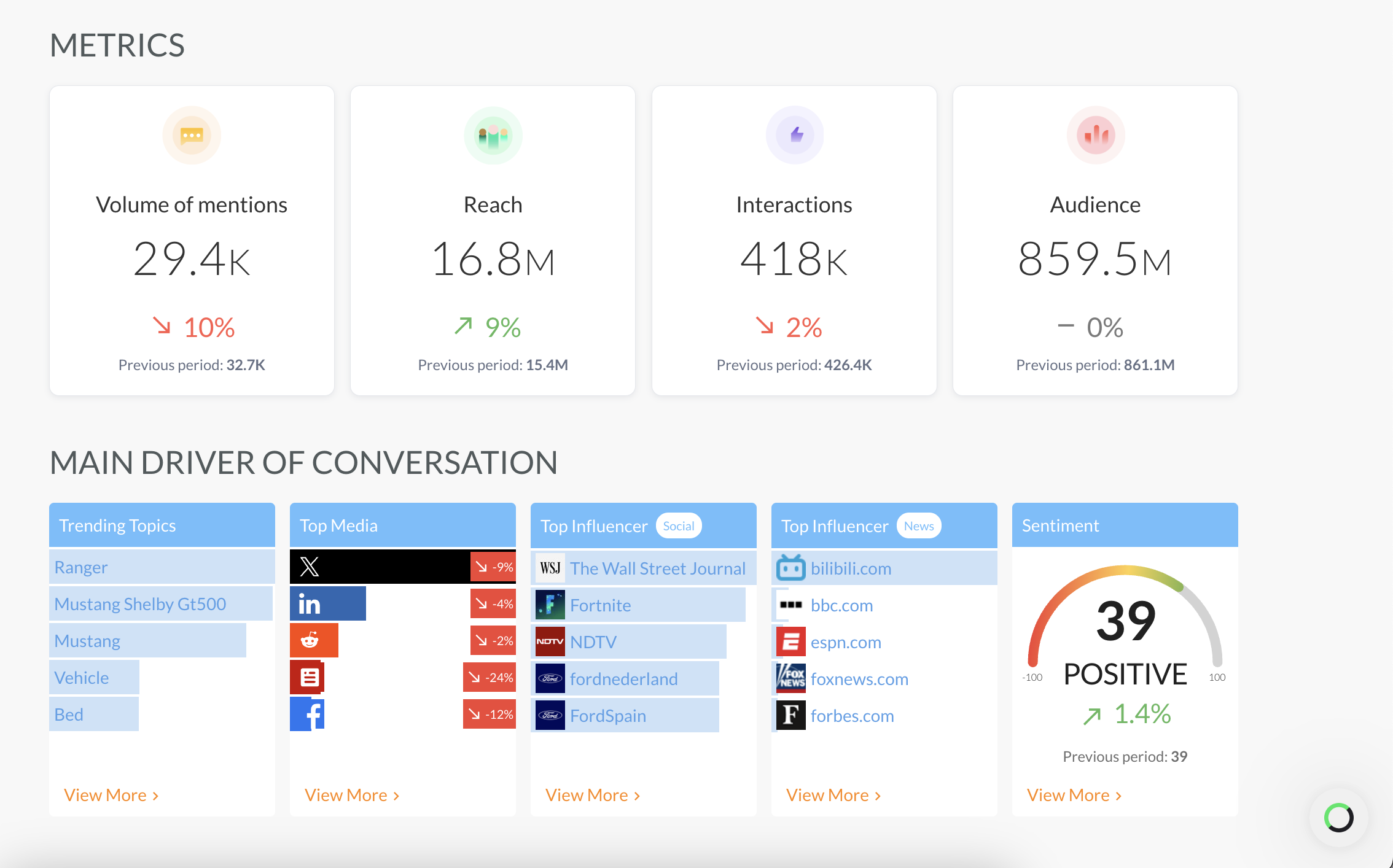
4. Social listening and mention volume
Tracking how often your brand is mentioned across social platforms, forums, and review sites (and in what context) tells you two things at once: how visible you are, and how people talk about you when you’re not in the room. A spike in organic, unprompted mentions after a campaign or product launch is one of the clearest signals that awareness is moving.
5. Branded search volume
How many people type your brand name into Google each month? Branded search is imperfect, but it is the closest thing on this list to a behavioral measure of recall. Nobody types a name they cannot remember. It captures active curiosity rather than passive exposure.
6. Direct and referral website traffic
If people are typing your URL directly into a browser or arriving via referral rather than search, they already know who you are. Watching this segment of traffic over time — alongside branded search — gives you a rough but useful read on awareness trends without commissioning new research.
Brand awareness tools: what to look for
Most teams end up measuring awareness across four or five separate tools. A media monitoring platform for earned media coverage, a social monitoring or listening tool for mentions, Search Console or a keyword tool for branded search, a research agency for the tracking survey, and Analytics for traffic.
That works, but it creates two problems. Reporting takes days instead of minutes and nobody can answer the obvious follow-up question, which is whether the coverage spike in March actually moved anything.
When you evaluate tools to help you measure brand awareness, look for four things:
- Coverage breadth. Earned, social, broadcast, and print in one place, with the markets and languages you actually operate in.
- Share of voice built in. You should be able to set a competitive set once and track against it, not rebuild the comparison every month.
- Sentiment alongside volume. Volume without tone is half a metric.
- AI search visibility. Whether your brand appears in AI-generated answers is now a real awareness question, and most legacy tools do not measure it at all.
Setting benchmarks that actually mean something
Knowing how to measure brand awareness is only half the job. The other half is knowing what a good number looks like. Absolute awareness numbers are almost meaningless without context — “34% aided awareness” tells you nothing on its own. Benchmarks become useful when you compare against:
- Your own baseline over time. Is awareness moving in the right direction quarter over quarter?
- Your competitive set. Are you gaining or losing share of voice against the two or three brands you’re actually competing with for attention?
- Your category norms. A challenger brand in a niche B2B category will have very different realistic targets than a consumer brand competing for mainstream attention.
A reasonable rule of thumb: set your first benchmark from your own baseline data, then revisit it every two quarters. Chasing an arbitrary industry average is less useful than beating your own prior best.
Real brand awareness campaigns worth studying
Seeing the metrics play out in the real world makes them easier to apply. Two campaigns get studied for good reason:
Duolingo’s mascot strategy
Duolingo built one of the most recognizable brand assets in tech out of a green owl with a bad attitude. The account comments on pop culture, guilt-trips users who skip lessons, and behaves nothing like a language-learning app. In February 2025 the brand staged Duo’s death, which generated coverage across mainstream news, not just marketing trade press.
The earned media numbers are the ones worth studying, because they are awareness metrics rather than vanity metrics. News outlets worldwide published around 450 articles about Duo’s death, and 60% came from publications Duolingo classes as top tier, meaning a reputable, highly ranked outlet that ran a full feature rather than a passing mention. Local TV news covered the revival in 13 segments, including Chicago, Philadelphia, and San Francisco.
That top-tier split matters more than the raw article count. 450 mentions spread across aggregators would be a volume story but 450 with a majority running full features is a recall story, because feature coverage is what actually lodges a brand in memory.
The awareness lesson, though, is about distinctiveness rather than reach. Duo is recognizable with no logo and no product name attached and that’s exactly what unaided recall depends on.
Spotify Wrapped
Spotify’s annual personalized-data campaign turns each listener’s own year of data into shareable content. Wrapped 2025 reached 200 million engaged users within roughly 24 hours, and shares climbed 41% year over year to around 500 million.The engaged user figure was up 19% on the previous year. Almost all of that came from people voluntarily posting their own results.
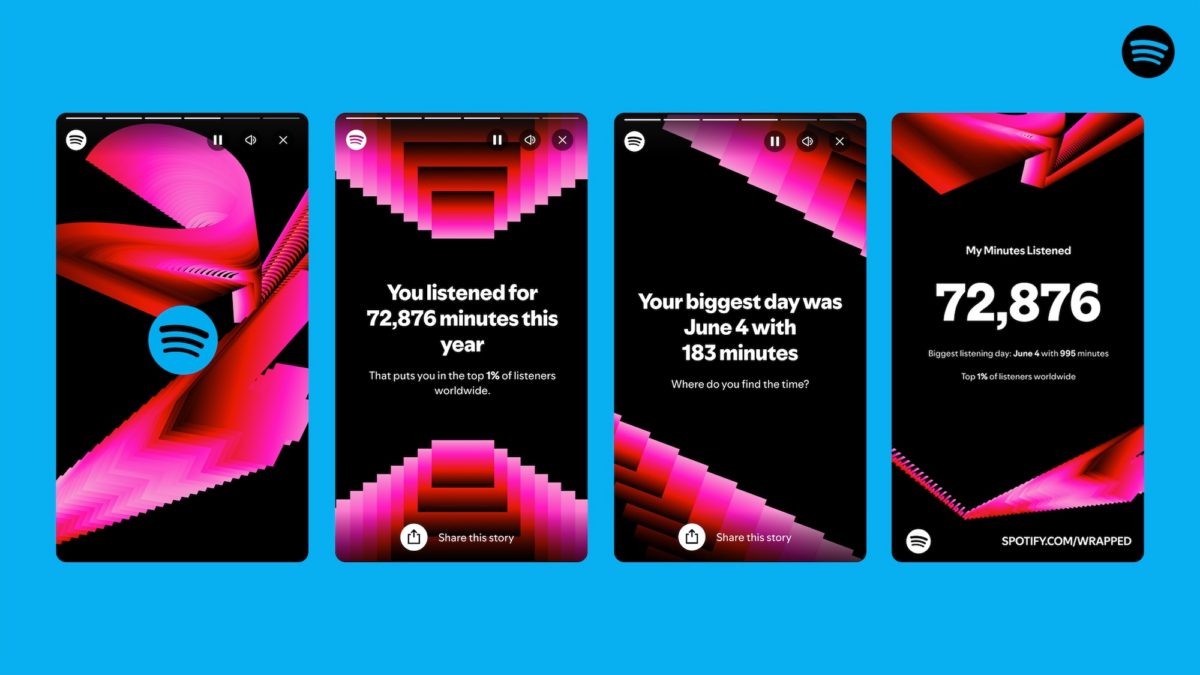
The year-on-year comparison is the useful part. In 2024 the same 200 million milestone took around 62 hours to reach. That edition leaned heavily on AI and disappointed a lot of users, who complained publicly about missing stats like top genres and albums.
Same campaign, same mechanic, but a very different result. What changed was the quality of the thing being shared. That is a useful reminder that share volume is downstream of whether the content is worth sharing, and that a repeatable annual campaign gives you a genuine like-for-like benchmark most brands never get. That combination — a distinctive idea plus low-friction sharing — is a useful lens for evaluating any brand awareness campaign, consumer or B2B.
Turning awareness data into action
Learning how to measure brand awareness only pays off if it changes what you do next. If share of voice is flat despite a busy PR calendar, the issue might be message clarity rather than volume. If branded search is climbing but unaided recall in surveys isn’t, your campaigns might be building recognition without building genuine recall — worth investigating with follow-up research on messaging and creative distinctiveness.
The most effective teams don’t treat awareness measurement as a single report card. They watch the leading indicators like share of voice, mention volume, branded search continuously, and use the periodic survey data to validate what those signals are telling them.
How Onclusive helps
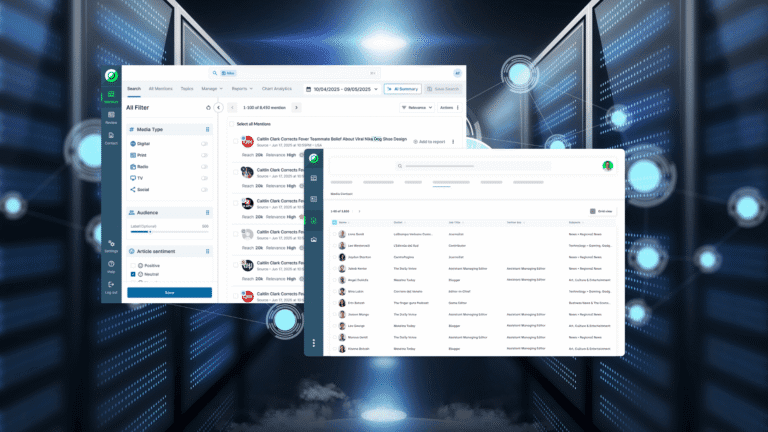
Tracking brand awareness properly means pulling together data that usually lives in separate tools: media coverage, social mentions, and increasingly, visibility in AI search results and chatbot answers. Onclusive brings media monitoring, social monitoring, and AI search visibility together inside one unified platform, so you can see share of voice, sentiment, and mention trends alongside your traditional coverage, without stitching together exports from five different dashboards.