





What is AI visibility? Put simply, it is how your brand appears, or fails to appear, in the answers that AI engines (ChatGPT, Perplexity, Claude etc.) generate in response to questions about your brand, competitors, or category. And for most marketing teams, it remains an unmeasured blind spot.
Your customers are asking AI engines which brands and products to compare and trust. The answers they get are shaping perceptions and influencing decisions before those audiences ever reach your website.
The search landscape has changed
The shift did not happen overnight, but the scale of it is hard to ignore. Today:
- 47% of consumers have used AI to help make a purchase decision.
- Brands in the top 10% for media influence are recommended by LLMs 80% of the time.
For marketing teams, those numbers reframe what visibility actually means: A brand that performs well in traditional search and earns strong media coverage may still be missing, misrepresented, or outranked in the AI search recommendations its audiences are increasingly relying on.
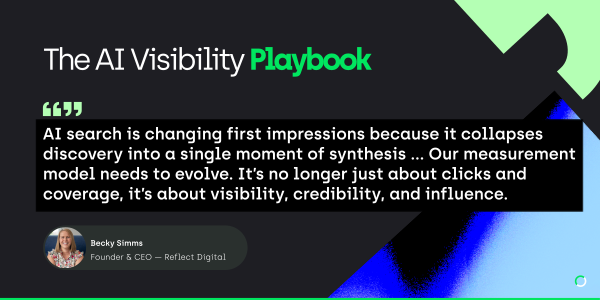
As Becky Simms, Founder and CEO of Reflect Digital, puts it: “It’s no longer just about clicks and coverage, it’s about visibility, credibility, and influence.”
Three shifts changing the stakes for your brand
Understanding AI visibility starts with understanding what AI engines are actually doing.
They summarize reputation before audiences reach you
AI search collapses discovery into a single moment of synthesis. Audiences are not forming opinions based on a list of links anymore, they are forming them based on the answer. The response a potential customer receives about your brand may already be shaped before they visit your website. And if that narrative is outdated or shaped by your competitors, you may have no idea.
They recommend and rank competitors
If a potential customer asks an AI engine which brand to choose in your category, they will likely receive a ranked shortlist with reasons before they’ve visited anyone’s website. If competitors appear more consistently or more favorably in those answers, they are shaping perception before a direct comparison even takes place.
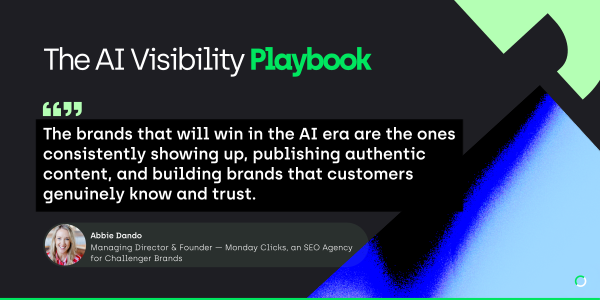
As Abbie Dando, Managing Director and Founder of Monday Clicks, notes: “AI-driven discovery is increasingly influenced by brand reputation, authority, and sentiment across the wider web. The brands that will win in the AI era are the ones consistently showing up, publishing authentic content, and building brands that customers genuinely know and trust.”
They cite sources beyond your owned channels
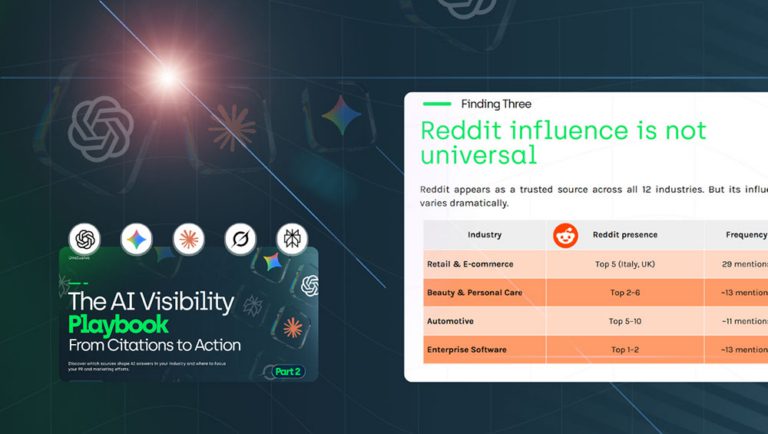
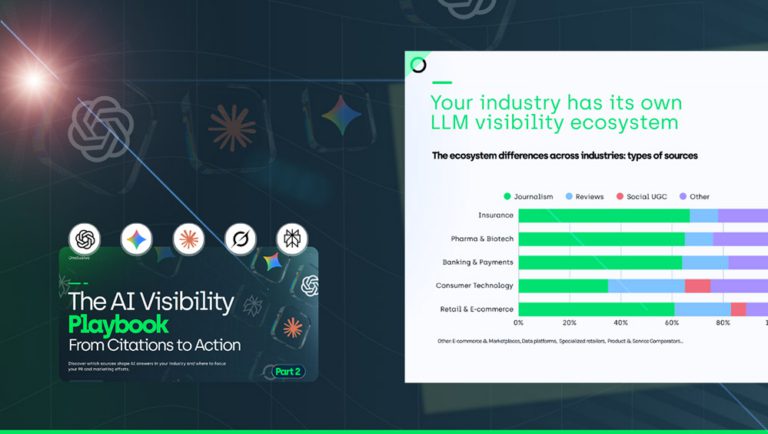
AI answers draw on earned media, third-party sites, reviews, and rankings, not just what you publish and own. If the sources that carry most weight in your category are not part of your current media or content strategy, your AI visibility will reflect that. Understanding which sources shape AI-generated answers in your space is now a core part of AI visibility optimization, and it is information most teams do not currently have.
This is the practice Generative Engine Optimization (GEO) is built around: understanding and strengthening how your brand appears across all of those inputs, so you can act on what AI engines are actually surfacing about you.
How AI visibility is built
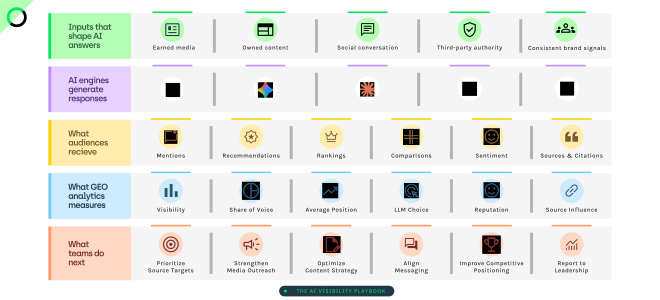
AI visibility is shaped by the signals AI engines can find, trust, and piece together about your brand. That includes earned media, owned content, social conversation, third-party authority, and consistent brand signals across the web.
AI engines process those inputs to generate responses: mentions, recommendations, rankings, comparisons, sentiment, and citations. To make this concrete: if someone asks ChatGPT which product to recommend and your brand does not appear in the answer, you may never know it happened. There is currently no way to see that miss in your existing reporting. That’s the gap AI visibility measurement is designed to close.
Understanding which of those outputs your brand is winning or losing, and why, is what gives teams something to act on.
AI visibility is an opportunity for PR, comms, and marketing
AI visibility is not simply SEO by another name, and it is not only relevant to marketing teams. The signals that shape AI-generated answers: earned media, expert commentary, brand mentions, and third-party authority, are all areas where PR and comms teams have direct influence. That makes AI visibility one of the clearest opportunities the discipline has had in years to demonstrate measurable impact.
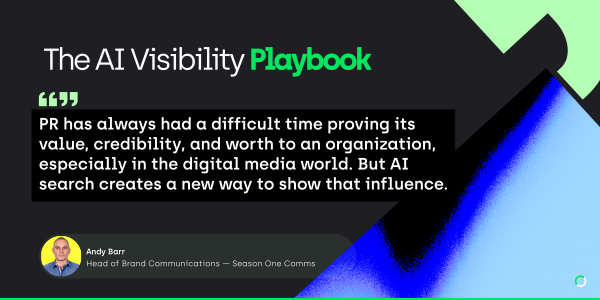
Andy Barr, Head of Brand Communications at Season One Comms, makes the opportunity explicit: “PR has always had a difficult time proving its value, credibility, and worth to an organization. But AI search creates a new way to show that influence. Earned media, expert commentary, content, and brand signals all help shape how AI engines describe, compare, and recommend brands.”
For marketing teams, the connection runs through content, social signals, and the questions audiences are actually asking at each stage of discovery, comparison, and decision-making.
Why AI visibility matters for your brand
Without a clear view of your AI visibility, you have no way to understand where you stand, where to focus, or how to demonstrate the impact of your work to leadership.
The good news is that it is measurable. There are specific metrics that tell you how often your brand appears in AI-generated answers, how it ranks relative to competitors, how it is described, and which sources are shaping those answers. The teams building that capability now will be the ones who can prove the value of their work in the channels that are increasingly shaping brand perception.
The AI Visibility Playbook gives you a structured framework for doing exactly that: covering how to measure your position, diagnose what is driving it, and prove the impact to your business.