





Updated April 2026
What is social listening?
Social listening, also referred to as social media listening, is the process of tracking, analyzing, and interpreting online conversations about your brand, competitors, and industry to generate actionable insight. Unlike social media monitoring, which records what is being said, social listening focuses on what it means, and what you should do about it.
Social listening has become one of the most important capabilities in modern communications. But it’s often misunderstood, misused, or confused with similar-sounding concepts. This guide defines exactly:
- what social listening is,
- how it differs from social media monitoring and social intelligence,
- and why it’s fast becoming essential for PR, comms, and marketing teams.
Social listening vs. social media monitoring vs. social intelligence
These three terms are frequently used interchangeably. They shouldn’t be.
Social media monitoring
Social media monitoring is the process of tracking mentions, tags, and keywords across social media platforms. It answers the question: what is being said? It’s reactive by nature, a record of what has already happened.
Social listening (or social media listening)
Social listening goes further. It analyzes the data collected through monitoring to uncover patterns, sentiment, and trends over time. It answers the question: what does this mean? Social listening turns raw mention data into actionable insight.
Read more in our guide to social media monitoring vs. social listening.
Social intelligence
Social intelligence is the strategic outcome of social listening done well. It means using the insight generated by listening to inform decisions, from brand positioning and campaign planning to crisis response and product development. Social intelligence is the destination; social listening is how you get there.
Together, these three capabilities form a continuous intelligence loop:
- Monitor what’s happening
- Listen to understand it
- Act on the intelligence it generates
Why social listening matters for PR, comms, and marketing
Social media has fundamentally changed how brand reputation is built and lost. Conversations about your brand, competitors, and industry happen at scale, in real-time, across dozens of platforms, from LinkedIn and X to Reddit, Bluesky, and niche forums. No team can manually keep pace with that volume.
Social listening platforms give you the tools to stay ahead of the conversation rather than react to it. Here’s what it makes possible:
Key benefits of social listening
Understand your audience
Social listening reveals what your audience actually cares about, not what you assume they do. By analyzing conversations at scale, you can identify the topics, formats, and voices that resonate, and use those insights to shape content strategy, messaging, and campaigns.
Learn more about using social listening for brand awareness.
Protect your brand
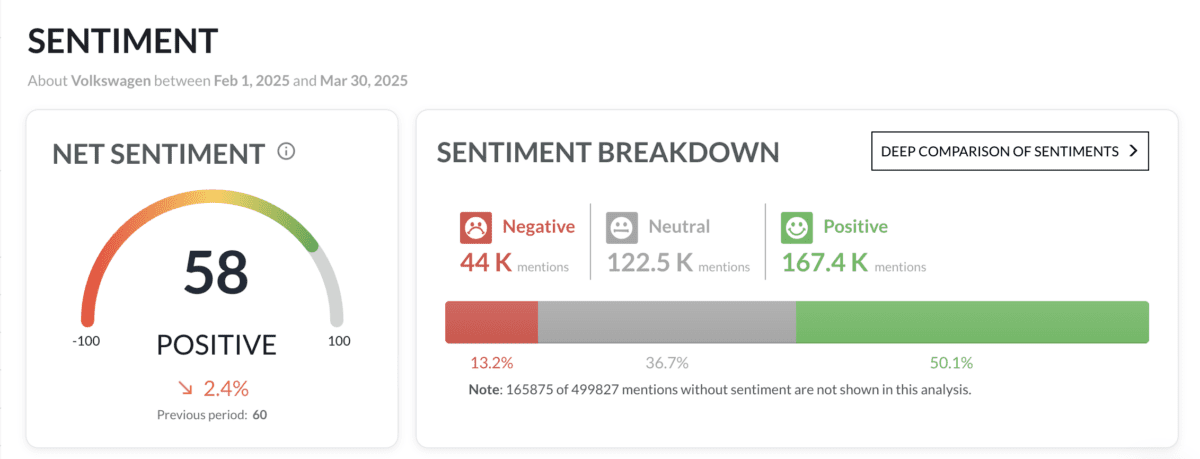
Brand reputation can shift quickly. Social listening enables early detection of negative sentiment, emerging criticism, or potential misinformation, giving your team the time to respond before a situation escalates into a crisis.
See our guide on how to use social listening to enhance and protect brand reputation.
Detect and manage crises
Speed is everything in a PR crisis. Social listening enables teams to set threshold alerts so they’re notified the moment conversation volume or sentiment spikes, long before it reaches mainstream media.
Download our whitepaper: Get ahead of a PR crisis: 7 social listening best practices.
Generate consumer insights
Social conversations are an unfiltered source of real-time consumer opinion. Social listening surfaces emerging themes, unmet customer needs, and shifting attitudes that can inform product, brand, and communications strategy.
Explore how to master the customer journey with social listening.
Enhance customer support
Social listening helps identify customer complaints and service issues as they surface online, even when they’re not directed at your brand handle. That means faster resolution, better customer experience, and a support team that gets ahead of problems rather than waiting for them to land in your inbox.
Measure earned media impact
Understanding the reach and sentiment of your earned media coverage is a core part of PR measurement. Social listening connects the dots between what you publish, what gets picked up, and how audiences respond, giving you the data to demonstrate ROI.
Read more: 11 ways social listening will transform your communications strategy and performance.
Optimize campaigns
Real-time listening during campaigns tells you what’s landing and what isn’t, enabling real-time adjustments rather than post-campaign autopsies. Social listening data also feeds into pre-campaign planning, helping you identify the right angles, channels, and timing.
Social listening doesn’t just tell you what your audience and customers think, it helps you create content that actually connects. See how a 20-million-user fintech used real-time social listening to shape its owned media strategy and engage users at scale.
How social listening works: from data to decision
A modern social listening platform works in four stages:
Data collection:
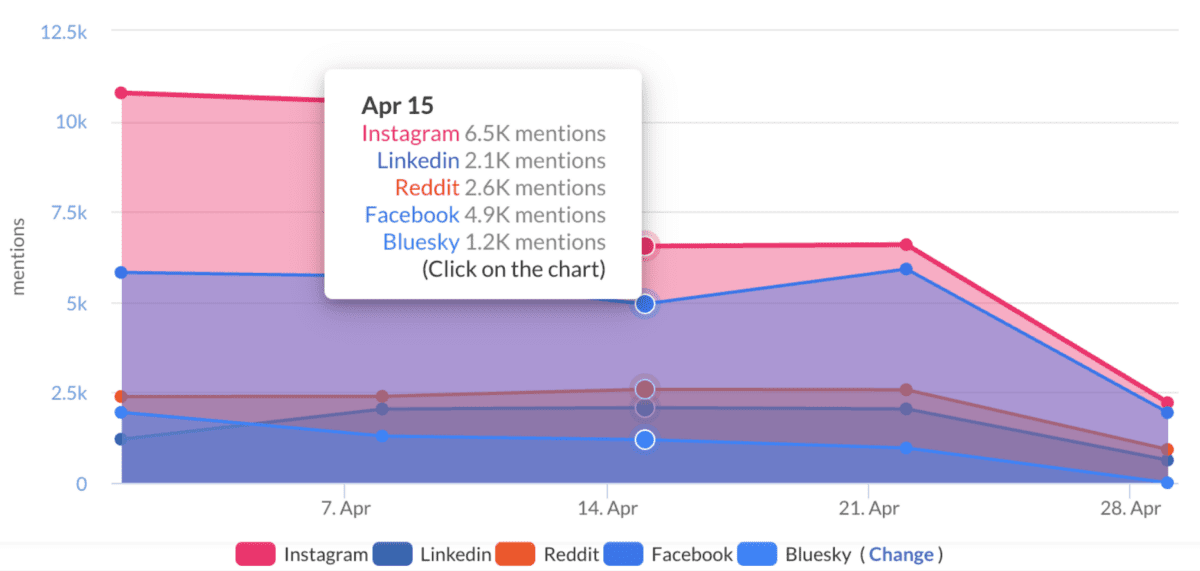
Ingesting mentions, posts, and conversations from across social networks (X, LinkedIn, Facebook, Instagram, TikTok, Bluesky), forums (Reddit), news sites, and broadcast sources. Coverage breadth matters: the wider the net, the more complete the picture.
Filtering and query building:
Applying boolean logic, language filters, location parameters, and topic tags to surface the conversations that matter. AI-assisted query building reduces setup time and improves precision.
Analysis and AI-powered insight:
Sentiment analysis, topic clustering, trend detection, and anomaly alerts turn volume into meaning. AI identifies what’s worth your attention, before you have to go looking for it.
Dashboards and reporting:
Presenting insight in a format that’s shareable across teams and leadership. Customizable dashboards mean each stakeholder sees what’s relevant to them.
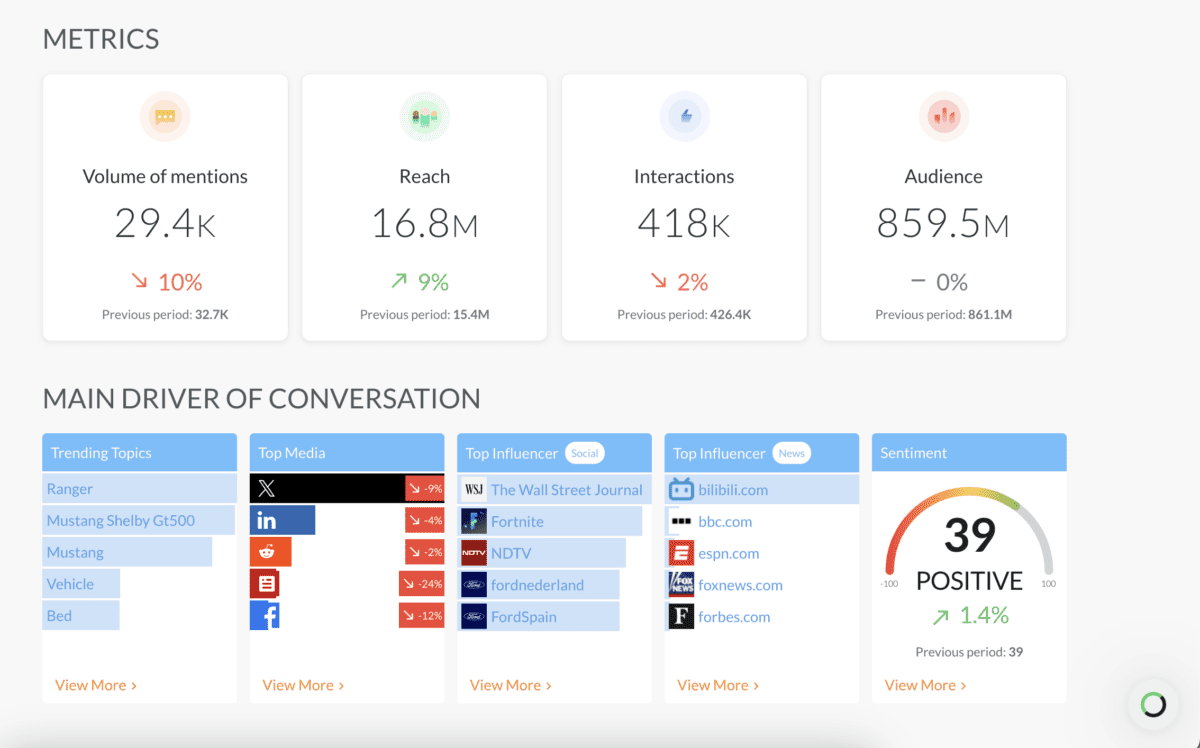 Explore Onclusive’s social listening platform to see how this works in practice.
Social listening and social intelligence: the strategic outcome
One of the most important things to understand about what is social listening is that data alone isn’t the end goal. Social listening data is only as valuable as the decisions it informs. That’s where social intelligence comes in.
Social listening becomes truly valuable when it informs decisions across teams and markets. See how Samsonite turned customer feedback into action across 13 markets, embedding social insight into decision-making at scale.
Social intelligence means embedding listening insight into strategic workflows: using audience data to brief campaigns, sentiment trends to inform exec communications, and crisis signals to trigger response protocols. It’s the difference between a team that reports on what happened and one that shapes what happens next.
Onclusive’s platform is built to deliver both real-time listening capability and the analytical depth needed to generate genuine social intelligence. And when combined with media monitoring, it gives communications teams a complete picture of how narratives develop across both earned and social channels.
AI and advanced analytics in social listening
A common question alongside what is social listening is how AI fits in. AI is transforming what social listening can do, and how fast it can do it. According to Mordor Intelligence’s 2026 social media listening market report, the social listening market reached $9.61 billion in 2025 and is projected to grow to $18.43 billion by 2030, driven by the shift from basic monitoring to AI-powered audience intelligence. Today, 62% of marketers use social listening, and it is fast becoming core business intelligence infrastructure, not just a marketing tool.
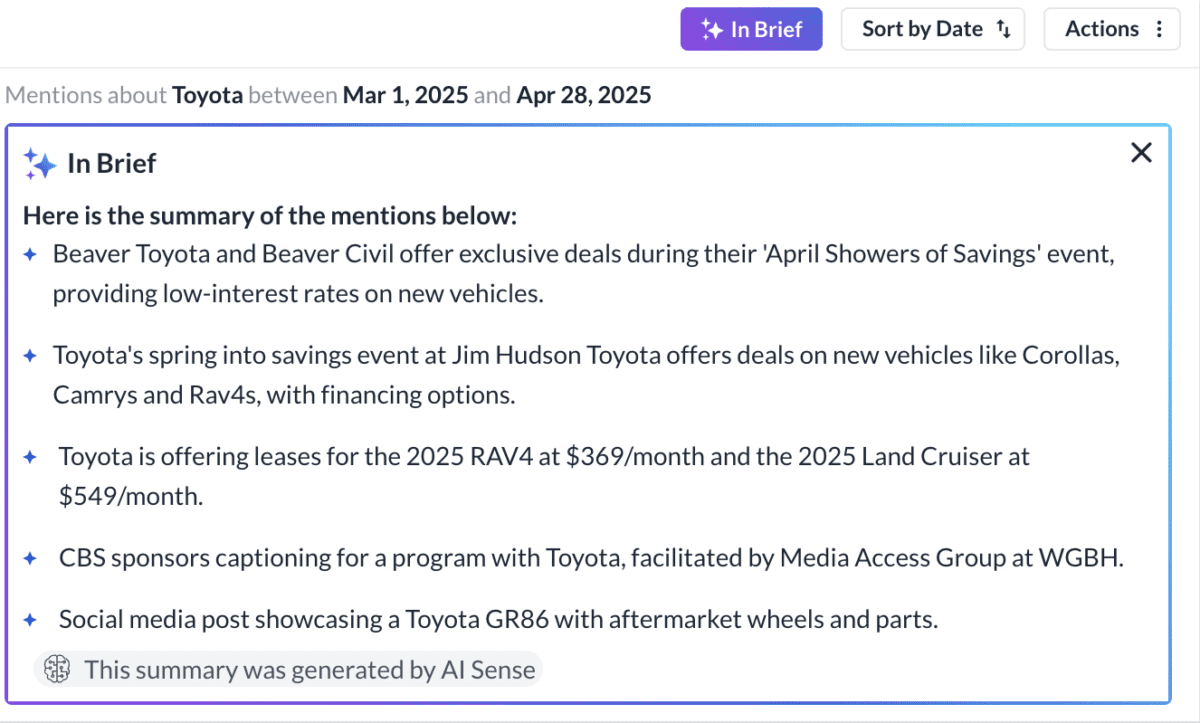
Where traditional listening required analysts to manually review data and draw conclusions, AI-powered platforms now automate the heavy lifting: detecting sentiment shifts, clustering themes, flagging anomalies, and surfacing insights in near real time.
What AI-powered social listening makes possible
- AI sentiment analysis: Accurately classifying conversation tone at scale, including nuanced expressions, irony, and multilingual content
- Topic clustering: Automatically grouping related conversations to reveal themes without manual tagging
- Anomaly detection: Alerting teams to unusual spikes in mention volume or sentiment before they escalate
- Query builder assistance: AI-guided setup that helps users build effective listening queries faster
- Trend identification: Surfacing emerging topics before they reach peak volume
- Predictive insight: Using historical patterns to anticipate likely shifts in conversation or sentiment
AI doesn’t replace human judgment. It sharpens it, by reducing noise and directing attention to what matters.
How AI social listening is used across the business
The value of AI-powered social listening isn’t limited to the marketing and communications teams. Here’s how different functions put it to work:
- PR and communications: Track narratives, monitor journalist activity, and measure message resonance across media and social channels.
- Crisis management: Detect early warning signs of reputation risk through anomaly detection and trajectory modeling, enabling proactive response rather than reactive damage control.
- Marketing: Optimize campaigns in real time based on actual audience reaction, not assumptions.
- Competitive intelligence: Monitor competitor narratives, share of voice, and customer sentiment in real time to identify where you’re winning or losing attention and where strategic gaps are emerging
- Product and innovation: Surface unmet customer needs and identify roadmap priorities from unprompted audience conversations.
- Customer experience: Discover friction points and service issues as they emerge online, before they escalate
Read our dedicated guide: AI social listening: How AI is changing audience analysis.
Technical capabilities at a glance
| Capability | What it does |
| AI sentiment analysis | Classifies tone across millions of mentions in multiple languages |
| Topic clustering | Groups related conversations automatically without manual tagging |
| Anomaly detection | Flags unusual spikes in volume or sentiment in real-time |
| Query builder assistance | AI-guided boolean query setup for faster, more precise listening |
| Custom dashboards | Fully configurable views per team, campaign, or stakeholder need |
| Advanced filtering | Filter by source, language, location, author type, sentiment, and more |
| Performance metrics | Share of voice, reach, engagement, sentiment trend, and earned media value |
| Source coverage | X, LinkedIn, Facebook, Instagram, TikTok, Reddit, Bluesky, forums, news, broadcast |
Social listening by sector and use case
Social listening looks different depending on your industry and objectives. Here’s where to go deeper, including Onclusive’s latest intelligence reports built from millions of real social and media conversations.
- Banking Industry Trends 2026: A media and social media intelligence report
- Pharma Industry Scan 2025: The complete media intelligence report
- AI Infrastructure Industry Scan: Who’s winning the race?
- Energy Industry Scan: Media Analysis Report 2025
- Customer journey: Master the customer journey with social listening
- Brand reputation: Use social listening to enhance and protect brand reputation
Social listening in action: hospitality
In the hotel industry, reputation is everything, and it can shift overnight. A single viral complaint, a wave of negative reviews, or a competitor campaign can reshape guest perceptions before your communications team has had a chance to respond.
Social listening gives hospitality brands a real-time view of what guests are saying across social platforms, review sites, and forums, not just when they tag the brand directly, but in the organic conversations that reveal what people actually think. Leading hotel brands use it to track sentiment by property, identify recurring service issues before they escalate, monitor competitor positioning, and spot emerging trends in guest expectations.
The result is a communications strategy built on evidence rather than assumption. See how leading hotel brands are using social listening to stay ahead.
Tools and platform comparison
If you’re still exploring what social listening is and which platform is right for your team, our independently reviewed roundup covers the top options on the market: Top 10 social listening tools in 2026.
Go deeper: webinars and whitepapers
Webinars and videos
- Social listening: frameworks for communicators
- Demo webinar: social listening
- LinkedIn for Brand Impact: Learn how to leverage LinkedIn beyond your company page
The social surge: Using social listening to drive marcomms impact
How can social listening boost competitive insights?
Whitepapers and Reports
Ready to put social listening to work?
Onclusive’s social listening platform gives PR and comms teams the real-time data, AI-powered analysis, and strategic dashboards they need to understand their audience, protect their brand, and measure what matters.
FAQs: What Is Social Listening? Common Questions Answered
What is social listening?
Social listening is the process of tracking and analyzing public online conversations about your brand, competitors, and industry across social media and the wider web. It helps organizations understand sentiment, identify trends, detect risks early, and make better-informed decisions across PR, marketing, and customer experience.
What is the difference between social listening and social media monitoring?
Social media monitoring focuses on tracking and responding to mentions in real time. Social listening analyzes conversations across social media and the wider web to understand sentiment, trends, and insights that inform strategy.
What is social listening used for?
Social listening is used for brand reputation management, crisis detection, competitive intelligence, campaign optimization, consumer research, customer support, and earned media measurement. It is increasingly used across PR, marketing, product, and customer experience functions.
What is social listening in PR?
In PR, social listening enables teams to track how narratives develop across social and media channels, monitor journalist and influencer activity, measure message resonance, and detect reputational risks early enough to respond proactively.
How long does it take to see concrete results?
Initial results appear within the first weeks with immediate identification of ignored conversations and commercial opportunities. The first two to three months constitute a learning phase to refine your queries and train your teams. After three to six months, you will observe patterns in accumulated historical data. Beyond six months, social listening should be integrated into your processes with measurable return on investment.
What is social listening in crisis prevention?
A well-configured tool constantly monitors several critical indicators: unusual volume spikes, increase in negative mentions, velocity of message propagation, influencer participation, and use of emotionally virulent terms. By combining these signals, it alerts you within the first hours of an emerging crisis, giving you time to prepare a response before the situation becomes uncontrollable.
What team is needed to manage social listening tools?
A small business can manage with a part-time person. A medium-sized company requires at least one dedicated full-time person. A highly visible large company will need a team of three to five people. However, real value is created when the entire organization effectively uses generated insights to make informed decisions.