




AI visibility tools, sometimes referred to as generative engine optimization tools, are changing how brands understand their presence in AI search. Right now, someone is asking an AI engine about your category. They want to know which brands to trust, which providers their peers use, and which products best fit their needs.
AI engines form responses to those questions based on whatever sources are available to them. In that response, your brand may appear prominently, somewhere in a list, or not at all. That’s the reality of AI search in 2026.
In this post we explore why AI visibility has become a measurement priority, how and why Onclusive GEO Analytics is built differently from any other AI visibility tracker or generative engine optimization tool on the market, and how it gives marketing teams the data they need to measure and improve their brand’s presence in AI search.
Read more about the basics of generative engine optimization.
Why AI visibility measurement is a 2026 brand priority
Traditional search returned a list of links and left the user to decide where to go next. But in 2026, 60% of searches now end without a click. That’s because AI search works differently: Large Language Models and answer engines (ChatGPT, Gemini, Perplexity etc.) gather information from a wide range of sources, form a view, and deliver it as a confident recommendation. They rank providers, compare reputations, and tell users which brands to consider, often before the user has visited a single website.
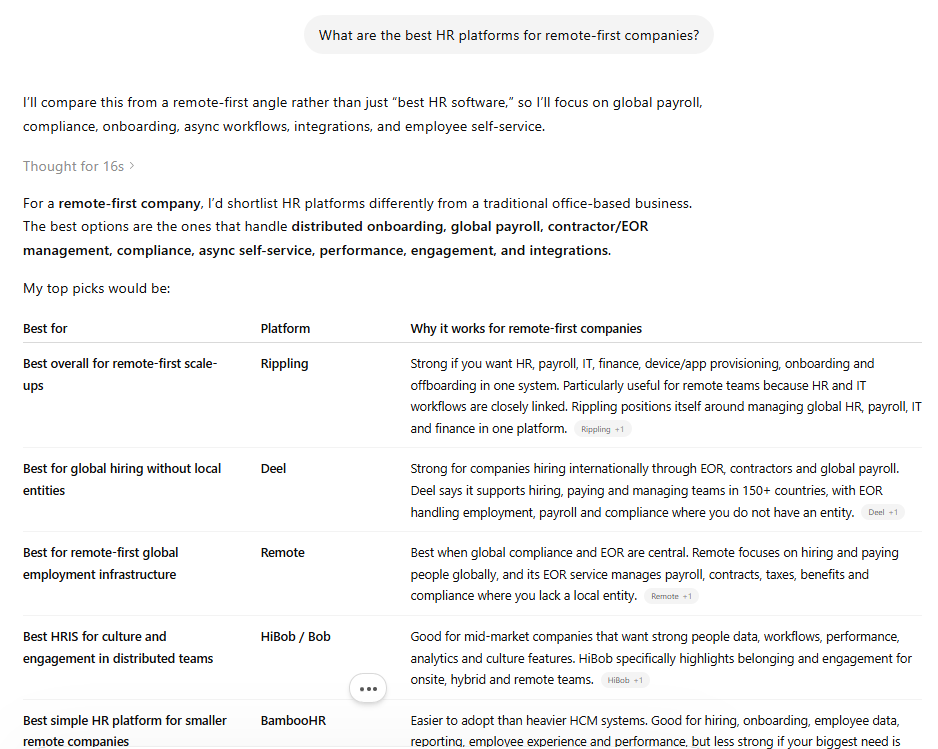
Those responses won’t be consistent either. If you ask the same question on ChatGPT and Gemini you will probably get a different answer. Ask again tomorrow and it may have shifted again. And the vast majority of marketing teams have little understanding of what those views actually say.
For brands, this is genuinely new territory because:
- High search rankings don’t guarantee an AI mention.
- Strong earned media coverage doesn’t automatically translate into AI visibility
- Your brand can be performing well across every traditional channel and still be missing, misrepresented, or consistently outranked by competitors in AI-generated answers.
What happens when AI visibility goes unmeasured?
If a competitor is being recommended more consistently in AI-generated answers, that shapes audience perception before any direct comparison takes place and before your team has any opportunity to influence the outcome.
By the time that gap becomes visible through declining win rates or shifting brand sentiment, it may already have been building for months. Without an AI visibility tool in place, there is no early warning system, no competitive benchmark, and no way to prove to leadership that the gap exists or that closing it is working.
That’s why AI visibility needs to become a core part of the measurement framework for marketing teams, just as social listening has before it.
Why choose Onclusive GEO Analytics
Most AI visibility tools stop at monitoring. They tell you what AI says about your brand, but not why it says it, how that compares to competitors, or what your team should do about it.
Knowing ChatGPT mentioned your brand yesterday is a data point. Knowing you’re losing ground to a competitor in a category that drives 40% of your pipeline is intelligence you can act on. That’s the difference between an AI visibility tool and a GEO analytics platform built for marketing teams.
Onclusive GEO Analytics is built to go further. It monitors, diagnoses, and prescribes. It tracks your brand across five AI engines, surfaces the competitive context that makes the data meaningful, connects AI visibility to the channels your teams already measure, and tells you where to focus your efforts.
GEO Analytics is built into Onclusive Social, connecting AI visibility directly with social listening and campaign intelligence. If audiences in your category are shifting their discovery behavior away from social feeds toward AI engines, that trend will show up in your GEO data before it shows up anywhere else. Cross-channel campaign intelligence means you can connect owned content, social strategy, and campaigns directly to how your brand appears in the AI conversations that drive buyer decisions.
It is the only solution that monitors, diagnoses, and prescribes, built natively into the platforms marketing teams already use. No new login. No additional vendor. No switching between tools.
Five metrics that define your brand’s AI visibility
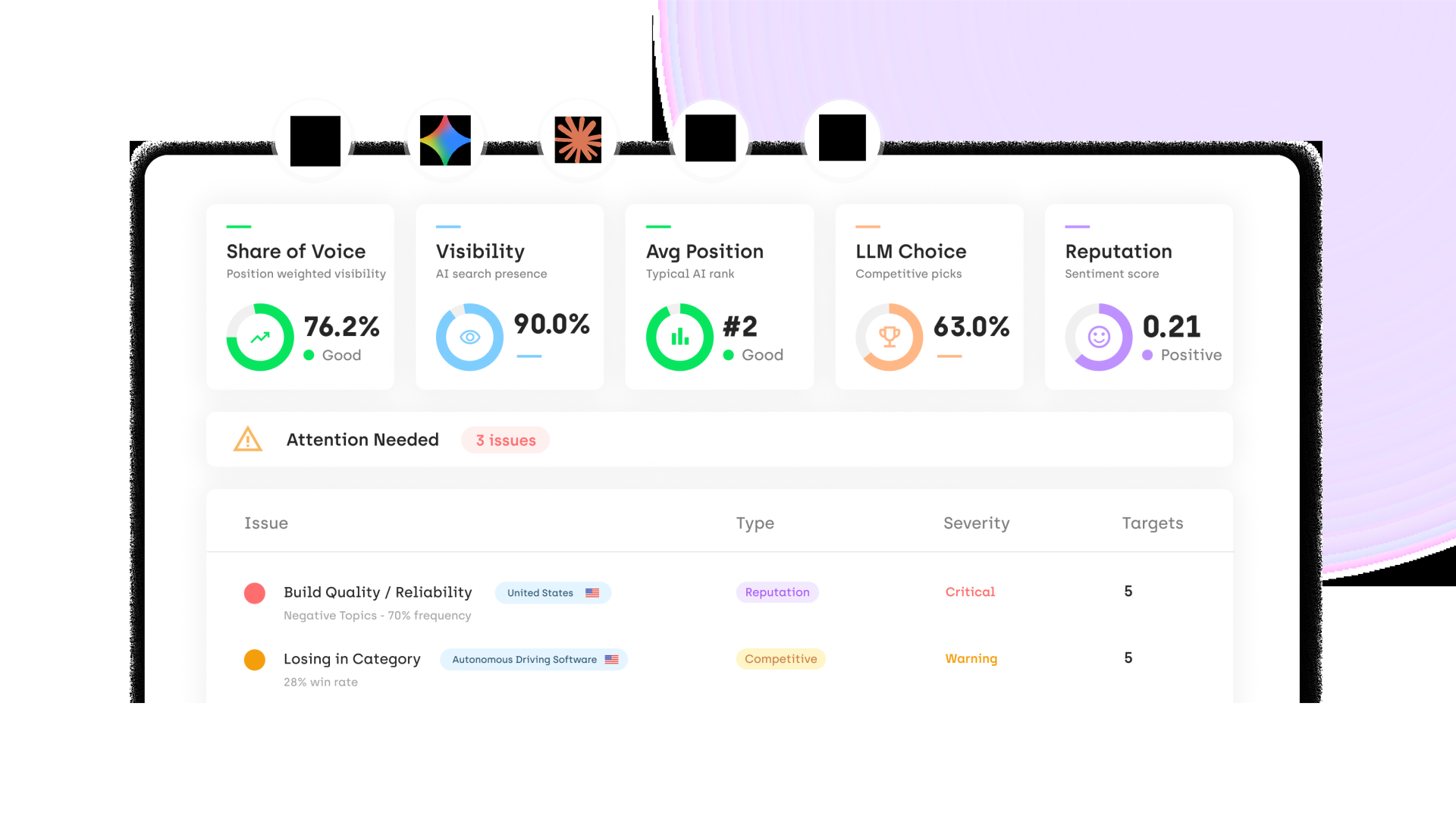
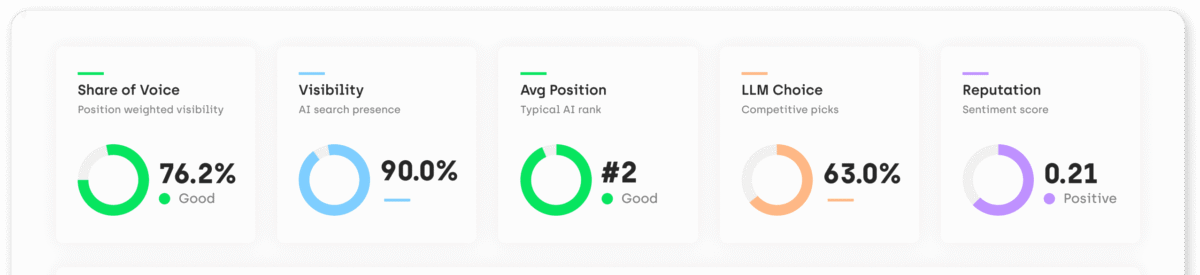
Our GEO Analytics tool tracks five core metrics that together give a complete and comparable picture of your brand’s AI visibility.
Share of Voice tells you how often your brand appears in AI-generated answers, weighted by ranking position, expressed as a single composite score. It’s the number that’s most useful for leadership reporting and for tracking progress over time.
Visibility shows the proportion of AI responses in which your brand is mentioned at all. A high Visibility score with a weak Share of Voice score tells you something specific: you’re present, but not ranking well. That’s a different problem to solve than simply being absent.
Average Position tracks where your brand typically appears in ranked AI responses. This matters more than you might think. Appearing second in a ranked recommendation carries significantly more weight than appearing fifth, and AI engines don’t treat all mentions equally.
LLM Choice shows how often your brand outranks competitors in direct head-to-head category queries. When someone asks an AI engine to recommend a provider in your space, Win Rate tells you how often you come out ahead. That’s the sharpest measure of competitive AI positioning available.
Sentiment provides a weighted perception score drawn from AI-generated responses. High visibility with declining sentiment is a warning sign worth catching early.
See which publications are driving AI visibility in your category
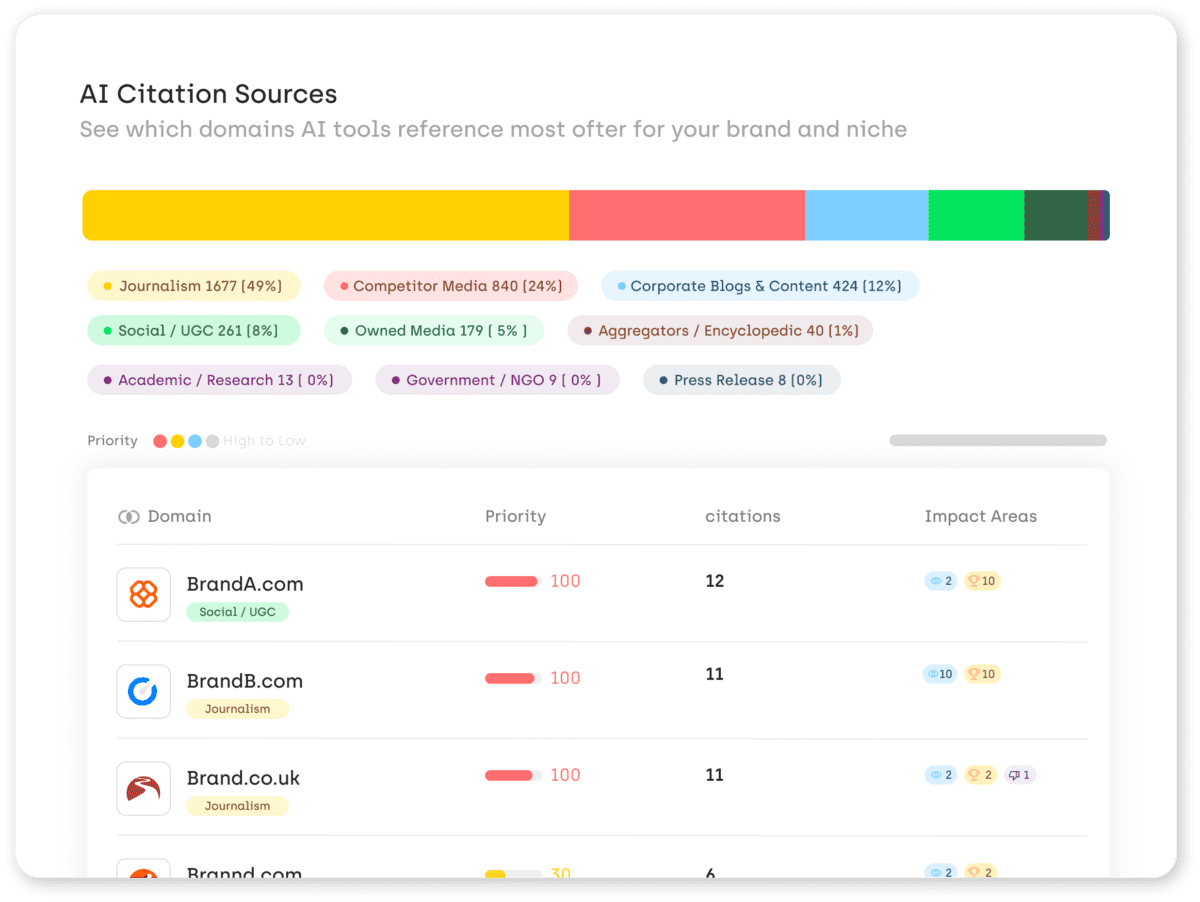
Taking a closer look at Priority Source Targets, this is where AI visibility data becomes immediately actionable. If AI engines consistently cite certain formats, topics, or domains in your category, that tells you where to publish, what to create, and which channels are most likely to improve your AI search presence. Rather than building content plans based on audience research alone, you can base them on what actually gets surfaced to your audiences when they are making decisions.
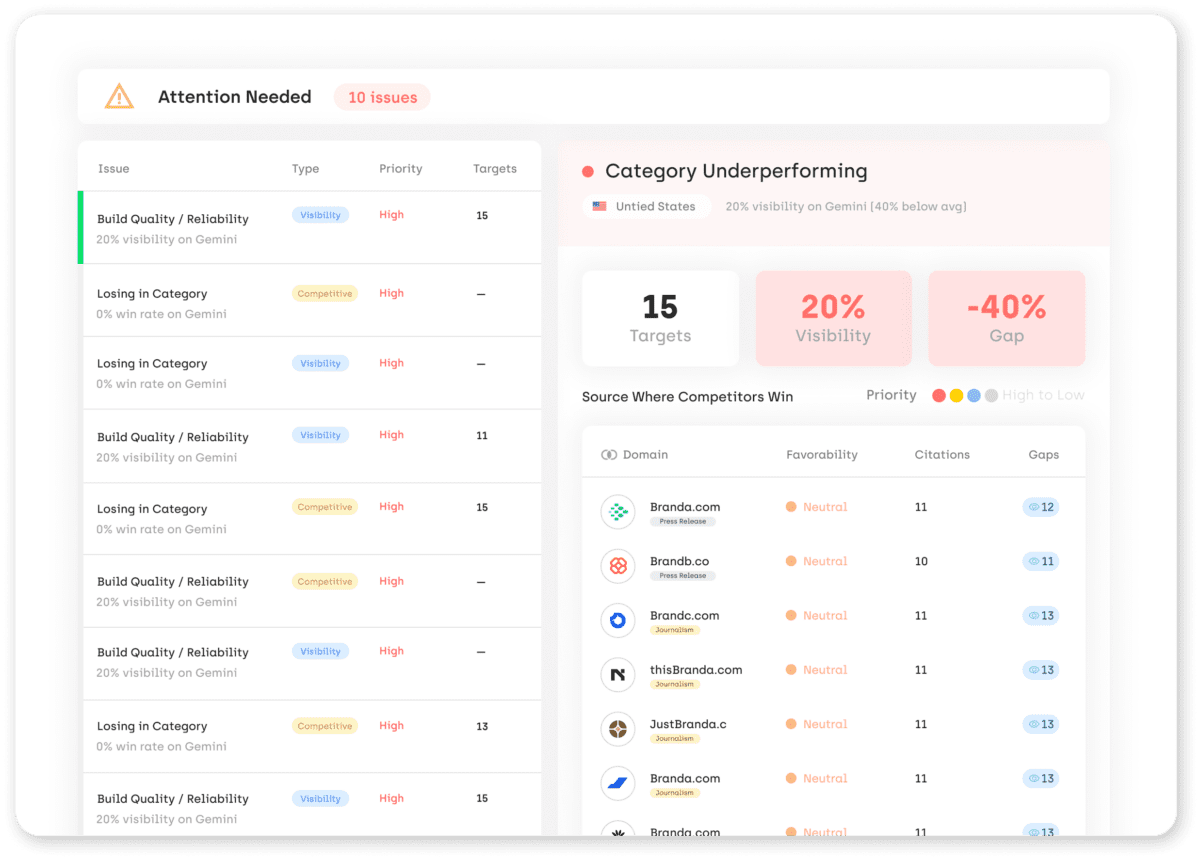
If a competitor is consistently cited by AI engines in your category, the same intelligence tells you exactly which publications and domains are driving their visibility, and where you need to establish a stronger presence to close the gap.
See what AI is saying about your brand
Most teams won’t discover their AI visibility gap until a competitor has already taken advantage of it. The brands moving first to measure and improve their AI presence will be better placed to protect their narrative, respond quickly to competitive moves, and make a concrete case to leadership for the work they’re doing.
Request a demo of Onclusive GEO Analytics to find out where your brand stands in AI search and how to act on it.
FAQs about AI visibility tools and GEO tools
What is an AI visibility tool and why do marketing teams need one?
An AI visibility tool tracks how your brand appears in AI-generated search results across platforms like ChatGPT, Gemini, Grok, Claude, and Perplexity. For marketing teams, it closes a critical awareness gap that social listening and content analytics can’t fill. Strong campaign performance and high search rankings don’t guarantee your brand appears in AI-generated answers. An AI visibility tool is the first step toward closing that gap. The most sophisticated solutions go further, diagnosing why your visibility looks the way it does and prescribing what to do about it.
What is the difference between an AI visibility tool and a generative engine optimization tool?
An AI visibility tool monitors how your brand appears in AI-generated answers. A generative engine optimization tool goes further: it diagnoses why your visibility looks the way it does, benchmarks it against competitors, identifies which content formats, topics, and domains are shaping AI-generated answers in your category, and tells you where to focus to improve. Onclusive GEO Analytics is built to do all of this, not just report what AI says, but tell you what to do about it.
What should I look for in a generative engine optimization tool for marketing teams?
The most important thing to look for is integration. A generative engine optimization tool that sits outside your existing stack is easy to ignore. The best solutions connect AI visibility data to the channels you already measure, social listening, content performance, and campaign intelligence, so the data informs decisions rather than adding another reporting silo. You should also look for multi-engine tracking across ChatGPT, Gemini, Grok, Claude, and Perplexity, competitive benchmarking, source intelligence, and proactive alerting rather than passive reporting.
Can an AI visibility tool inform content strategy?
Yes, and this is one of the most actionable things a generative engine optimization tool can do for marketing teams. Onclusive GEO Analytics identifies which topics, formats, and domains AI engines cite most frequently in your category. Rather than building content plans based on audience research alone, you can base them on what actually gets surfaced to your audiences when they are making decisions. It is a more targeted content brief than traditional planning methods can provide.
How do AI visibility tools help marketing teams with competitive intelligence?
AI visibility tools give you a clear view of how competitors are positioned in AI-generated answers: how often they are mentioned, where they rank, how they are described, and which content and domains are driving their visibility. That competitive context is something social listening and SEO tools don’t provide. Knowing a competitor is being recommended more consistently in AI-generated answers in a category that drives purchase intent is a different and more actionable insight than knowing they have stronger social engagement.
How do generative engine optimization tools connect to marketing measurement and ROI reporting?
Generative engine optimization tools connect campaign activity to AI search outcomes, showing how owned content, social strategy, and earned media influence how your brand appears in AI-powered discovery conversations. If a content campaign drives increased AI visibility in a category that matters, that connection is now measurable. Onclusive GEO Analytics goes further with export-ready reports, making it straightforward for marketing teams to share findings and demonstrate the impact of content and campaign decisions to leadership.