







Media monitoring tools track and collect coverage of your brand, competitors, and industry across newspapers, magazines, broadcast media, online news, and digital publications. This gives PR and communications teams a real-time view of how their organization is being covered. The leading platforms in 2026 include Onclusive, Cision, and Meltwater, with pricing ranging from free options like Google Alerts to $20,000+ annually for comprehensive enterprise solutions.
The right media monitoring platform can transform your PR strategy by helping you track coverage, measure campaign effectiveness, and protect your brand reputation. This guide examines the leading media monitoring software available in 2026 and how to choose the solution that fits your needs and budget.
Table of Contents
Quick comparison: Top media monitoring tools in 2026
What is media monitoring?
Why you need a media monitoring tool
Types of media monitoring
Media monitoring vs. media measurement
Top 10 media monitoring tools in 2026
Free media monitoring tools
AI-powered media monitoring
How to choose the right media monitoring tool
Key features to look for
Use cases by organization type
FAQs
Quick comparison: Top media monitoring tools in 2026
Not all media monitoring software offer the same level of coverage, licensing, or analytical depth. The comparison table below outlines how the leading platforms in 2026 differ across media types, pricing models, and core functionality.
| Tool | Best For | Coverage | Social Monitoring | Broadcast Monitoring | Journalist Database | Pricing Range |
| Onclusive | Enterprise global PR teams | Online, Print, Broadcast, Social | Yes (built-in) | Yes | Yes (300,000+ contacts) | Custom enterprise pricing |
| Cision | All-in-one PR workflow | Online, Print, Broadcast, Social | Yes | Yes | Yes | From ~$9,000+ annually (est.) |
| LexisNexis Newsdesk | Licensed content & legal-grade monitoring | Online, Print, Broadcast | Not specified | Yes | No | Custom pricing |
| Meltwater | Earned + social monitoring | Online, Print, Broadcast, Social | Yes | Yes (outsourced) | Yes | ~$10,000–$25,000+/year (est.) |
| Signal AI | Risk & reputation intelligence | Online, Print, Broadcast, Regulatory | Yes | Yes | No | From ~$9,000+/year |
| Agility PR Solutions | Mid-sized PR teams | Online, Print | Not specified | Not specified | Yes | From ~$1,000/year (est.) |
| Brand24 | Small businesses & startups | Online, Social | Yes | No | No | From $149/month |
| Mention | Affordable digital monitoring | Online, Social, Blogs | Yes | No | No | From $29/month |
| TVEyes | Broadcast & podcast focus | Broadcast, Podcasts | No | Yes | No | From ~$2,400/year |
| Google Alerts | Free basic tracking | Online (indexed web) | Limited (via indexing) | No | No | Free |
What is media monitoring?
Media monitoring is the process of tracking and collecting coverage of your brand, organization, or industry across news and media channels. Media monitoring tools automate this process, scanning thousands of sources continuously so you always know what is being said, where, and by whom.
Modern platforms track across multiple media types: online news publications, print newspapers and magazines, broadcast TV and radio, social media platforms, podcasts, and blogs. The scope of coverage varies between tools, with enterprise platforms typically offering the most comprehensive cross-channel monitoring.
Media monitoring is closely related to social listening but not identical to it. Media monitoring focuses on coverage in news and media outlets, while social listening is specifically concerned with organic conversations happening across social platforms. Many organizations use both approaches together for a complete picture.
For PR and communications teams, media monitoring provides the foundation for measuring campaign effectiveness, managing reputation, and demonstrating the value of communications activity. Without it, you are making decisions based on incomplete information about how your brand is being perceived and covered.
Why you need a media monitoring tool
Crisis prevention and rapid response. Media monitoring platforms scan sources continuously and alert you the moment significant coverage appears. Early detection of negative stories gives you time to respond before a situation escalates. Without real-time monitoring, a damaging story can gain momentum before your team is even aware of it.
Competitive intelligence. Monitoring your competitors alongside your own brand reveals which stories they are getting, which outlets favor them, and how their messaging is landing. These insights help you identify gaps in your own strategy and opportunities to differentiate.
PR measurement and ROI. Media monitoring provides the data needed to measure campaign effectiveness, track outlet pickup, and calculate earned media coverage reach. This gives communications teams concrete evidence of impact to share with leadership and stakeholders.
Reputation management. Tracking sentiment trends over time helps you understand how your brand is perceived and spot shifts before they become problems. Consistent monitoring builds a historical record that supports long-term reputation strategy.
Brand awareness tracking. Understanding which outlets are covering you, how frequently, and in what context helps you identify where your brand has visibility and where gaps exist. This informs both PR strategy and broader marketing activity.
Types of media monitoring
Not all media monitoring tools cover the same ground. Understanding the different types helps you identify which channels matter most for your organization and whether a platform covers all of them.
Online news monitoring tracks mentions across digital publications, news websites, and blogs. This is the baseline capability of most platforms and the starting point for any monitoring program.
Print media monitoring tracks coverage in physical newspapers and magazines. Increasingly, print and online monitoring are offered together, as most major publications now publish across both formats.
Broadcast monitoring captures mentions on TV and radio stations. Not all platforms include this capability, so it’s worth verifying coverage before committing to a platform. Organizations with significant broadcast presence or those in regulated industries typically prioritize this channel.
Social media monitoring covers conversations on platforms including LinkedIn, X (formerly Twitter), Instagram, Facebook, and TikTok. While closely related to social listening, social media monitoring within a broader platform focuses on brand mentions and coverage rather than deep community analysis.
Podcast monitoring is an emerging capability as podcast audiences continue to grow. A small number of platforms now offer searchable transcripts across major podcast platforms, making it possible to track spoken brand mentions alongside written coverage.
The most comprehensive enterprise platforms, including Onclusive, Cision, LexisNexis Newsdesk, and Meltwater, cover all of the above through a single interface. Smaller or more affordable tools typically focus on online news and social media, with broadcast and print available as add-ons or not at all.
Media monitoring vs. media measurement
Media monitoring tracks and collects coverage as it happens, answering “what” and “where” questions. Media measurement analyzes that coverage to extract strategic insights, answering “how well” and “why” questions through sentiment analysis, share of voice metrics, and message penetration rates. The best platforms include both capabilities.
Looking for social media-specific listening? While media monitoring tools track traditional news coverage, social listening tools focus on conversations across platforms like TikTok, LinkedIn, Instagram, and Twitter. Many organizations use both approaches together.
Top 10 media monitoring tools in 2026
1. Onclusive
Main Features:
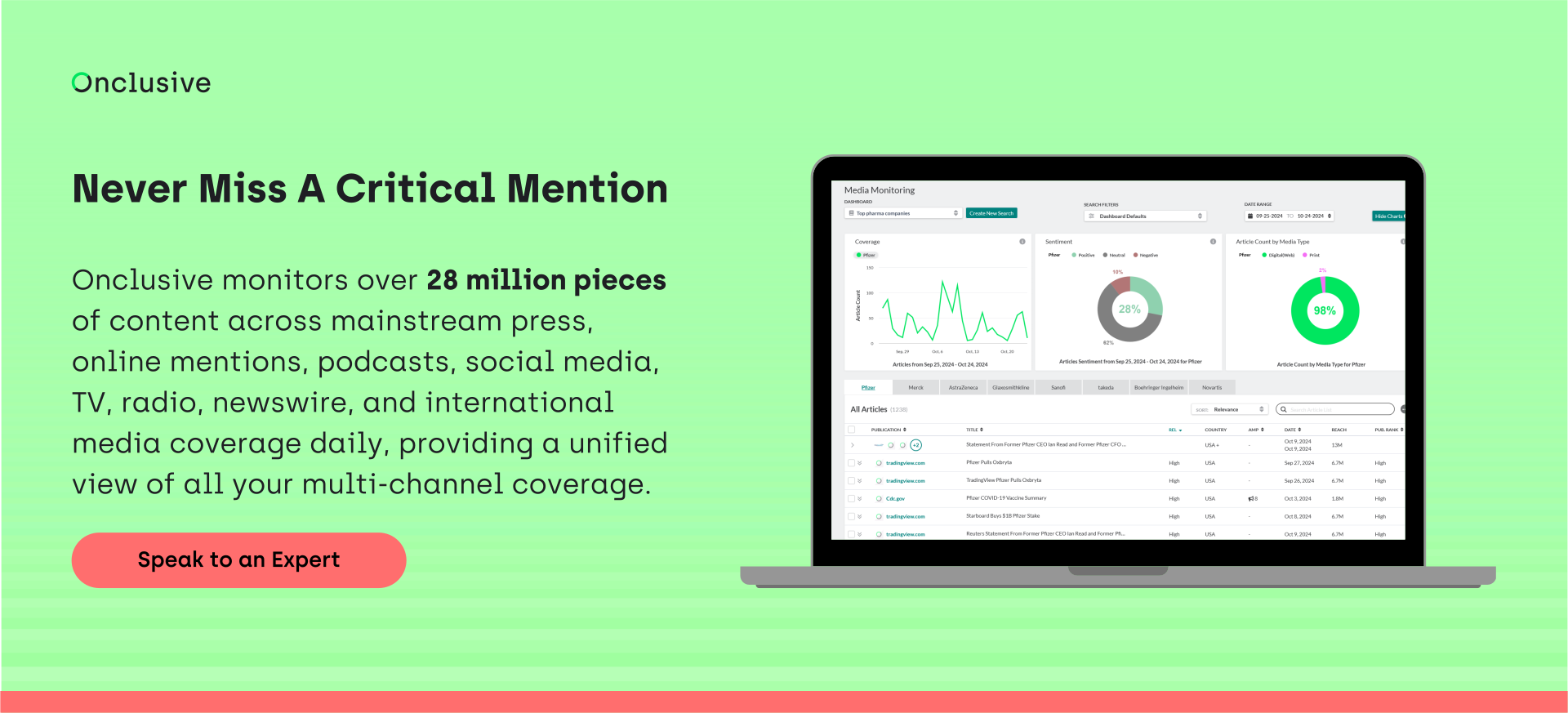
- Access over 28 million news stories daily from 30,000+ newspapers and magazines
- Coverage from 3 million websites and 3,000 TV and radio stations worldwide
- Built-in comprehensive social media monitoring
- Search up to 12 months of past coverage
- Instant alerts with AI sense technology when your brand is mentioned enriched in just 14 seconds
- Reports created in minutes with easy export options
- Database of 300,000 verified journalist contacts
- All content fully licensed and legally compliant
Benefits:
- Flexible service model: choose full-service support, self-service, or hybrid approach
- Round-the-clock global support across all time zones
- Stay ahead with instant notifications as stories break
- Make confident decisions with clear insights into media sentiment
- Scale monitoring up or down as your needs change
Ideal User or Team: Enterprise PR teams, corporate communications departments, and agencies requiring comprehensive global coverage with flexible service options.
Pricing: Custom enterprise pricing based on requirements.
Limitations: Extensive feature set may exceed the requirements of smaller organizations with basic monitoring needs.
2. Cision
Main Features:
- Comprehensive PR workflow tool for end-to-end campaign management
- Newswire distribution through PR Newswire network
- Global media monitoring across multiple channels
- Analytics and reporting dashboards
- AI-powered features including conversational assistant
- CisionOne React Score for measuring coverage impact
Benefits:
- Long-established, widely recognized leader in the PR industry
- Broad, bundled suite covering traditional PR and monitoring needs
- Extensive network for press release distribution
- Integrated platform for multiple PR functions
Ideal User or Team: PR teams and communications professionals seeking an all-in-one platform for media monitoring and distribution.
Pricing: Cision’s pricing is not publicly available. Estimated that CisionOne pricing typically starts from $9,000 for global online monitoring. Complete PR platform estimated starting at $7,200 annually. Broadcast, social, and print monitoring available as add-ons.
Limitations: Bundled contracts may include features some organizations don’t need. Some users report that platform complexity can require significant training as well as challenges with journalist contact data accuracy.
3. LexisNexis Newsdesk
Main Features:
- Licensed and open-web content from premium sources
- Near real-time monitoring of 2,000+ global TV and radio stations
- Built-in media analysis including sentiment and share of voice
- Customizable alerts, RSS feeds, and newsletters
- AI-powered SmartIndexing for content enrichment
Benefits:
- Access to premium licensed content without paywalls
- Strong visualization tools for coverage analysis
- Broad data coverage across 75 languages and 100+ countries
- Real-time broadcast coverage monitoring
- Trusted by legal and journalism professionals
Ideal User or Team: Organizations requiring access to premium licensed content and strong broadcast monitoring capabilities.
Pricing: Subscription-based with pricing customized based on content access and usage requirements.
Limitations: Focus on licensed database may not align with organizations prioritizing social media and open-source content monitoring.
4. Meltwater
Main Features:
- Earned and social media monitoring across multiple channels
- Analytics and reporting tools
- Influencer management capabilities
- Mira AI teammate for intelligent assistance
- Global presence with support across multiple regions
Benefits:
- Broad offering spanning earned and social media
- Strong global presence with 50 offices across six continents
- Recent investments in AI capabilities
- Comprehensive analytics for measuring PR impact
Ideal User or Team: PR teams and communications professionals needing combined earned and social media monitoring.
Pricing: Meltwater’s pricing is not publicly available. Average pricing estimated around $12,000 per user annually (range $8,000-$25,000+). Base packages typically $10,000-$25,000. Insight reporting available as bespoke service or annual AI reports starting from £2,950.
Limitations: According to customer feedback, social media monitoring capabilities may be more limited on some platforms. Print and broadcast monitoring is outsourced, which can increase costs. Base packages may require additional investments for comprehensive coverage.
5. Mention
Main Features:
- Web-based online monitoring across social media, blogs, news, and forums
- Real-time conversation tracking
- Performance analytics including sentiment, influence, and location
- Influencer identification tools
- Collaboration features for team coordination
- Integration with Slack, Zendesk, and other business tools
Benefits:
- Cost-effective entry point for small and mid-sized businesses
- Monitors billions of sources across 40+ languages
- Intuitive user interface with responsive customer support
- Useful for brand monitoring, crisis management, and influencer marketing
- Free version available for basic monitoring needs
Ideal User or Team: Small to medium-sized PR teams and agencies seeking affordable monitoring with good language coverage.
Pricing: Solo: $29/month (5,000 mentions, 3 alerts). Pro: $99/month (30,000 mentions, 15 alerts). Enterprise Plan offers custom pricing for unlimited mentions and users.
Limitations: Historical data access limited on lower-tier plans. Some users report that coverage may occasionally miss mentions and users can exhaust mention credits quickly if tracking broad topics.
6. Signal AI
Main Features:
- AI-powered media monitoring and intelligent search
- Risk and reputation threat sensing
- Customizable briefings and alerts
- AIQ proprietary AI for relevant data retrieval
- Benchmarking and measurement tools
- Global content set including print, online, broadcast, and regulatory sources
Benefits:
- Focus on risk and reputation intelligence using advanced AI
- Simplifies complex Boolean searches with AI-powered taxonomy
- Proactive identification of opportunities and threats
- Extensive content coverage across media types
Ideal User or Team: Enterprise organizations prioritizing risk management and reputation monitoring with AI-powered intelligence.
Pricing: Minimum price reportedly $9,000 with average cost of $21,000 annually. Subscription-based model with custom pricing for enterprise solutions.
Limitations: Pricing represents significant investment that may not suit smaller organizations. AI-powered interface may involve a learning curve for some users.
7. Brand24
Main Features:
- Real-time media monitoring across digital channels
- AI sentiment and emotion analysis
- AI events detection for identifying significant coverage patterns
- Lightning Search for quick topic exploration
- Mentions, engagement, and reach tracking
- Discussion volume charts and analytics
Benefits:
- Cost-effective pricing especially for individuals and small businesses
- Good value for money with multiple project tracking
- Strong focus on real-time crisis management with immediate alerts
- Intuitive interface with responsive customer support
- Quick setup and easy onboarding
Ideal User or Team: Small businesses, start-ups, and individual PR professionals seeking affordable real-time monitoring.
Pricing: Individual: $149/month (annual billing, 3 keywords, 2,000 mentions). Pro: $299/month (annual billing, 12 keywords, 40,000 mentions). Enterprise starts from $999/month with custom limits.
Limitations: Lower-tier plans have limited features and historical data access. Primarily focused on online sources rather than traditional media. Less comprehensive for organizations needing extensive print or broadcast coverage.
8. Agility PR Solutions
Main Features:
- Media contact database with journalist information
- Press release distribution network
- Media monitoring across multiple channels
- Analytics and reporting tools
- Campaign tracking and measurement
Benefits:
- Affordable solution especially for mid-sized businesses
- Good media database and press release distribution capabilities
- Focus on traditional PR workflow needs
- Integrated platform for core PR functions
Ideal User or Team: Mid-sized businesses and PR teams seeking affordable, traditional PR-focused monitoring.
Pricing: Agility’s pricing is not publicly available. Typical reported starting price of $1,000 (Basic plan). Subscription-based model.
Limitations: Designed for small-to-mid-sized businesses rather than enterprise organizations with a basic feature set focused on traditional PR functions. Therefore may present limited scalability for larger organizations with complex needs.
9. Google Alerts
Main Features:
- Tracks mentions of specified keywords, phrases, and topics across the internet
- Monitors news, blogs, and general web content
- Customizable source, language, and region filters
- Email notifications with flexible frequency options (as-it-happens, daily, weekly)
Benefits:
- Completely free with no subscription required
- Extremely easy to use for simple brand and competitor monitoring
- Useful for basic online reputation management
- Helpful for tracking new content related to your topics
Ideal User or Team: Small businesses, startups, and individuals needing basic free monitoring capabilities.
Pricing: Free
Limitations: Limited functionality compared to dedicated media monitoring platforms. No deep sentiment analysis, engagement metrics, or advanced analytics. Social media monitoring based only on web indexing rather than direct platform access. Cannot monitor print or broadcast media. Occasional false alerts and outdated information.
10. TVEyes
Main Features:
- Broadcast monitoring of 2,000+ TV and radio stations globally
- Podcast monitoring across major platforms
- Ad Intelligence APIs for ad discovery, tracking, and filtering
- Real-time searchable transcripts of broadcast content
- Media clips and video/audio archiving
- Customizable reports and alert systems
Benefits:
- Excellent broadcast media monitoring capabilities
- Real-time searchable transcripts of TV and radio content
- Strong for ad tracking, compliance, and news monitoring
- Supports large number of podcasts
- Valuable for organizations focused on broadcast coverage
Ideal User or Team: Organizations prioritizing broadcast and podcast monitoring, or those in regulated industries requiring broadcast compliance monitoring.
Pricing: TVEyes uses custom pricing based on user needs. Online sources report a $2,400/year (flat rate). subscription-based model with custom quotes for specific coverage and features.
Limitations: Primarily focused on broadcast and audio-visual media. Organizations need additional tools for comprehensive print, online, and social media monitoring.
Free media monitoring tools
If you’re just starting out with brand tracking, or need a no-cost baseline alongside a paid platform, free media monitoring tools offer a useful entry point, albeit with significant limitations.
Google Alerts is the most widely used free option and requires no software or subscription. You set up keyword alerts for your brand name, competitors, or industry topics, and Google sends email notifications when those terms appear in indexed web content. It’s genuinely useful for basic brand tracking and catching news mentions, and it costs nothing to set up.
The limitations are real, however. Google Alerts does not monitor social media directly, cannot track broadcast or print coverage, offers no sentiment analysis, and provides no reporting or analytics. There is no dashboard, no historical data access, and no way to measure reach or share of voice. For solo practitioners or very small businesses needing occasional awareness of online mentions, it serves its purpose. For any team that needs to measure PR impact, manage reputation at scale, or report on coverage to stakeholders, it quickly becomes insufficient.
The practical reality is that most organizations use Google Alerts as a free safety net rather than a primary monitoring tool, running it alongside a paid platform to catch anything that might slip through, or as a starting point before investing in a more capable solution.
AI-powered media monitoring
Artificial intelligence has fundamentally changed what media monitoring platforms can do, moving them from passive collection tools to active intelligence systems.
The most significant development is automated sentiment analysis. Rather than manually assessing whether coverage is positive, negative, or neutral, AI models now classify sentiment at scale across thousands of articles simultaneously, with accuracy that continues to improve. Some platforms go further, detecting emotional tone and identifying the specific aspects of your brand or messaging that are driving sentiment shifts.
AI-powered alerts represent another step forward. Instead of sending notifications for every mention, advanced platforms use machine learning to distinguish significant coverage spikes from background noise, alerting you only when something genuinely warrants attention. This reduces alert fatigue and helps communications teams focus on stories that matter.
Image and logo recognition allows platforms to detect brand mentions even when your name doesn’t appear in the text, identifying your logo in photographs or broadcast footage. For brands with strong visual identities, this extends monitoring coverage considerably.
Natural language processing has also improved the quality of search itself. Rather than relying solely on Boolean keyword strings, AI-enhanced search understands context and intent, reducing irrelevant results and surfacing coverage that simpler keyword matching would miss.
The practical implication for PR and communications teams is that AI capabilities are increasingly a baseline expectation rather than a premium feature. When evaluating platforms, look specifically at how AI is applied to alert quality, sentiment accuracy, and search relevance, as these have the most direct impact on day-to-day workflow.
How to choose the right media monitoring tool
Coverage breadth and depth. Different platforms offer different levels of media coverage. Some focus on online news and social media, while others include print, broadcast, and podcast monitoring. If you operate internationally, verify coverage in all your key markets and language support.
Licensing and compliance. Some platforms provide fully licensed content you can legally share and archive, while others require additional licensing. Fully licensed content provides more flexibility for internal reporting and protects your organization from legal issues.
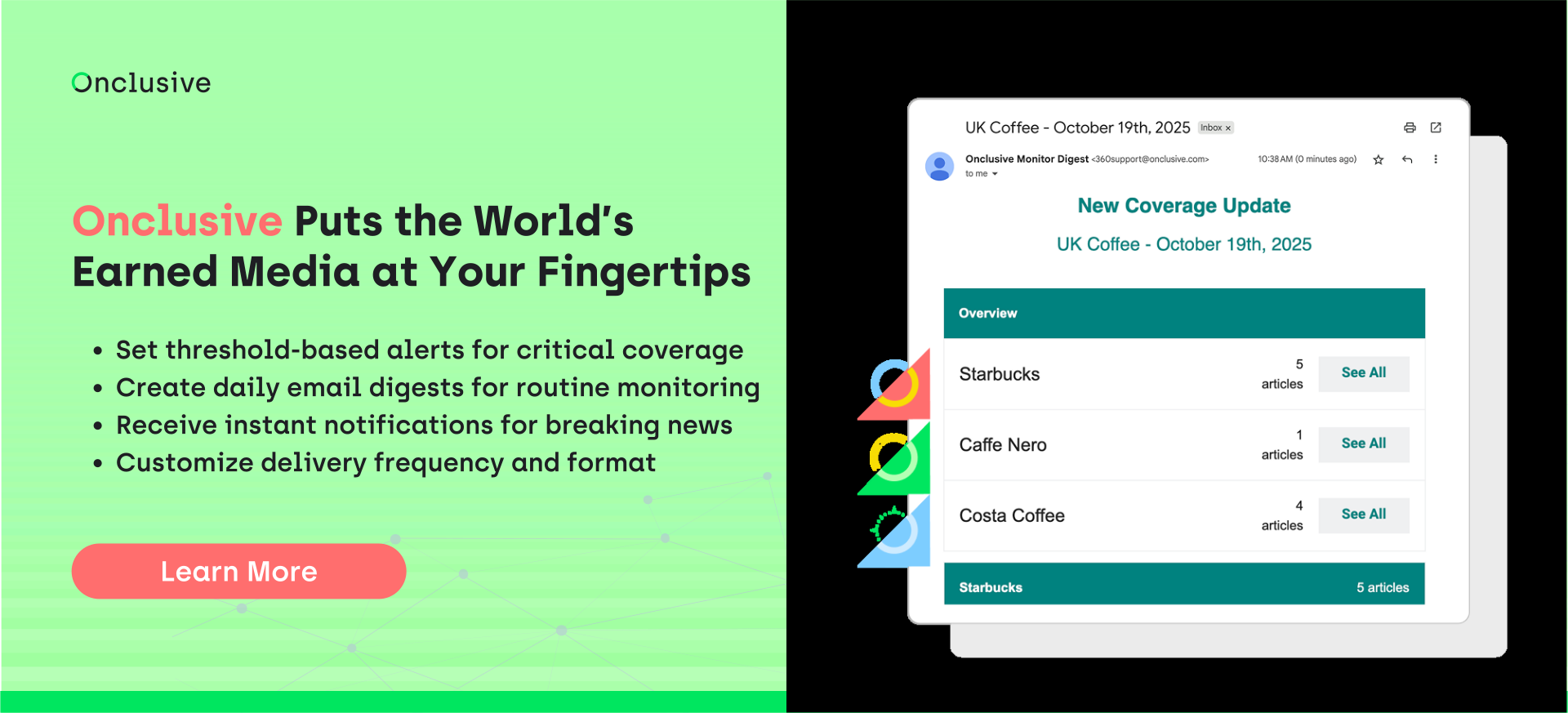
Alert systems and reporting. Look for customizable alert systems with different notification thresholds for various topics or sources. The best platforms offer customizable, brandable reports with export options for presentations and strategy documents.
Media contact databases. Many platforms include journalist databases, but quality varies. Look for regularly verified contact information with beat tracking and outlet details to help you identify the right journalists for your pitches.
Integration capabilities. Consider how your platform will integrate with existing workflows. API access and integration with collaboration tools like Slack can streamline team communications around media coverage.
Test before committing. Where free trials are available, use them. Platform usability varies significantly and the tool that looks best on paper may not suit your team’s workflow in practice.
Key features to look for
When evaluating media monitoring platforms, these are the capabilities that have the most direct impact on day-to-day performance.
Real-time alerts ensure you know about significant coverage as it breaks, not hours later. Look for platforms that offer customizable alert thresholds so you are notified about what matters, not every mention.
Sentiment analysis automatically classifies coverage as positive, negative, or neutral, saving hours of manual review and enabling trend tracking over time.
Competitor tracking lets you monitor rival brands alongside your own within the same platform, giving you ongoing competitive intelligence without additional tools.
Customizable dashboards allow you to surface the metrics most relevant to your role and reporting requirements, rather than navigating a one-size-fits-all interface.
Reporting and export capabilities determine how easily you can share coverage data with stakeholders. Look for brandable report templates and flexible export formats.
Integration capabilities with tools like Slack, CRM platforms, and analytics systems help embed media monitoring into your existing workflow rather than treating it as a separate task.
Global and multilingual coverage is essential for organizations operating across multiple markets. Verify that your platform covers the regions and languages relevant to your business before committing.
Use cases by organization type
Enterprise communications teams
Large enterprises need media monitoring tools that handle global coverage at scale. They benefit from platforms offering advanced analytics, customizable reporting, and integration with existing communications systems. Multi-user access with role-based permissions supports large distributed teams. Comprehensive coverage across all media types—print, broadcast, online news, and social media—through a single interface becomes essential.
PR agencies
PR agencies serving multiple clients require platforms with flexible project management capabilities. The ability to create separate monitoring streams for different clients streamlines workflow and simplifies billing. White-label reporting options allow agencies to deliver branded coverage reports. Strong journalist databases help agencies identify media opportunities across diverse industries and beats.
Corporate communications departments
Corporate communications teams focus heavily on reputation management and crisis monitoring. Real-time alerts for negative coverage or emerging issues enable rapid response. Historical data access helps teams understand coverage trends and measure the long-term effectiveness of communications strategies. Executive briefings represent a key use case—teams need tools that can quickly generate summary reports for senior leadership.
Small business and startup teams
Resource-constrained teams need affordable solutions that deliver core monitoring capabilities without overwhelming complexity. Ease of use becomes paramount when teams lack dedicated PR professionals. Limited budgets mean small organizations must prioritize coverage types carefully. Many focus primarily on online news and social media monitoring while foregoing expensive broadcast coverage.
Key takeaways
- Budget Range: Media monitoring ranges from free (Google Alerts) to $25,000+ annually for comprehensive enterprise solutions.
- Coverage Types: Platforms vary significantly – some cover only online/social, while premium options include print and broadcast.
- Licensing Matters: Fully licensed content provides legal compliance and internal sharing flexibility.
- Enterprise Needs: Large organizations require global coverage, multi-language support, journalist databases, and advanced analytics.
- ROI Measurement: Track time saved, crisis prevention, coverage value, and share of voice improvements.
- Integration: Consider how platforms integrate with existing PR workflows and reporting systems.
Final thoughts: Choose strategic media monitoring
Media monitoring tools have become essential for PR and communications teams. They provide the intelligence needed to measure campaign effectiveness, protect brand reputation, and make data-driven communications decisions.
When evaluating platforms, prioritize coverage that matches your organization’s media landscape and balance capabilities against budget constraints. Start by defining clear monitoring objectives—this clarity guides platform selection and helps you configure monitoring to deliver maximum value. Look for scalable solutions that can grow with your needs.
FAQs
What is the difference between media monitoring and media intelligence?
Media monitoring collects and tracks media coverage as it appears. Media intelligence analyzes that coverage to extract strategic insights and actionable recommendations. The best platforms combine both capabilities, offering comprehensive monitoring with sophisticated analytical tools for measuring PR impact.
What is the best media monitoring tool for enterprise-level organizations?
Enterprise organizations typically benefit from Onclusive, Cision, LexisNexis Newsdesk, or Meltwater. These platforms offer comprehensive global coverage, fully licensed content, multi-user access, advanced analytics, and enterprise integrations. Pricing ranges from $10,000-$25,000+ annually depending on coverage breadth and user requirements.
How much does media monitoring cost?
Media monitoring costs vary widely based on coverage scope. Basic online monitoring starts around $30-100 per month. Comprehensive enterprise platforms with global coverage across all media types typically range from $5,000 to $25,000+ annually. Broadcast and print monitoring generally cost more than online-only solutions. Custom enterprise pricing depends on coverage breadth, user count, and feature requirements.
Can media monitoring tools track social media?
Many media monitoring platforms include social media tracking capabilities, though depth varies significantly. Some offer robust social listening with sentiment analysis and influencer identification. Others provide basic social monitoring primarily through web indexing. Organizations prioritizing social media monitoring may benefit from specialized social listening tools alongside their media monitoring platform.
How do I measure the ROI of media monitoring?
Measure ROI by tracking time saved on manual clipping, crisis prevention through early detection, improved media relationships leading to better coverage, and measured increases in share of voice. Compare platform costs against the value of coverage secured, opportunities identified, and reputation issues prevented. Calculate the cost per relevant mention and compare against manual monitoring costs.
What is the best media monitoring tool for small businesses?
Small businesses typically benefit from affordable platforms like Mention (from $29/month), Brand24 (from $149/month), or Agility PR Solutions (from CA$1,000/year). These offer good online monitoring without enterprise complexity. Google Alerts provides free basic monitoring. Choice depends on whether you need print/broadcast coverage or online-only monitoring.
All trademarks, product names, and company names are the property of their respective owners. This comparison is provided for informational purposes only and does not imply any affiliation, endorsement, or sponsorship
The information presented is based on publicly available data and is accurate to the best of our knowledge at the time of publication. All efforts have been made to ensure the information is complete and reliable; however, specifications, features, and pricing may change over time. Onclusive makes no warranties or representations regarding the completeness or accuracy of third-party information.