





You’ve seen the reports. Wikipedia. Reddit. YouTube. A handful of global platforms dominating AI visibility rankings, month after month.
These generic AI visibility rankings are useful context. They’re also dangerously incomplete.
If your PR, communications, or marketing strategy relies on generic AI visibility rankings alone, you’re optimizing for an internet that doesn’t exist. You’re competing on the wrong playing field. You’re making decisions based on what generic AI visibility rankings tell you, not on what actually shapes AI answers in your category.
This is the benchmarking problem. It’s reshaping how organizations should approach generative engine optimization (GEO). And if you’re still relying on generic AI visibility rankings to guide your strategy, your competitors are already pulling ahead.
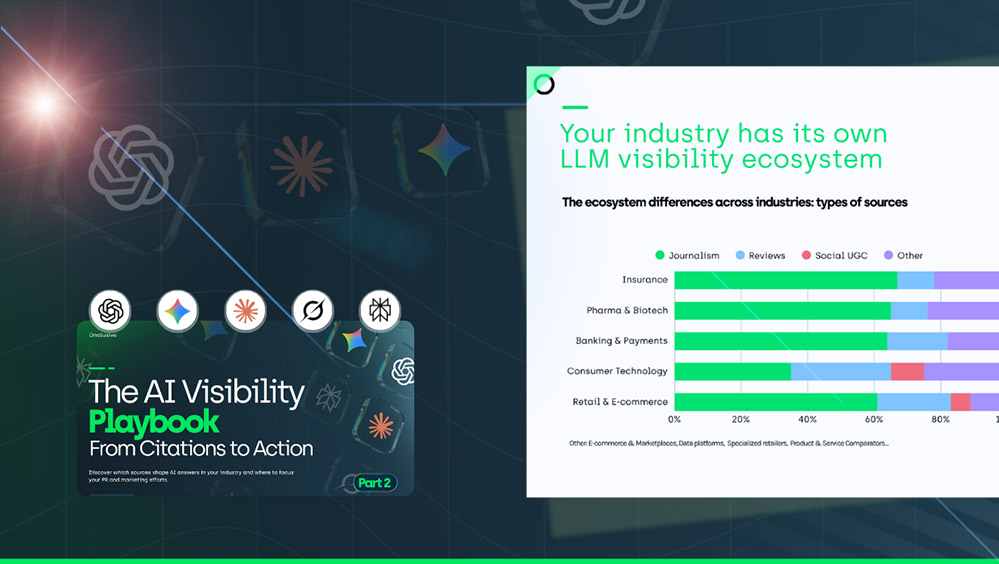
The GEO Playbook Part 2 contains industry and market benchmarks, category-specific AI visibility rankings, and an action framework to help you move beyond generic rankings and focus your AI visibility strategy where it actually drives results.
We analyzed the sources selected by LLMs for 12 industry sectors using our GEO Analytics tool
The benchmarking problem: Why generic AI visibility rankings don’t equal strategy
Generic AI visibility rankings create a false consensus. They show that Wikipedia, YouTube, and Reddit are cited as sources across industries. Consistency in a global AI visibility rankings list feels like strategy but it isn’t.
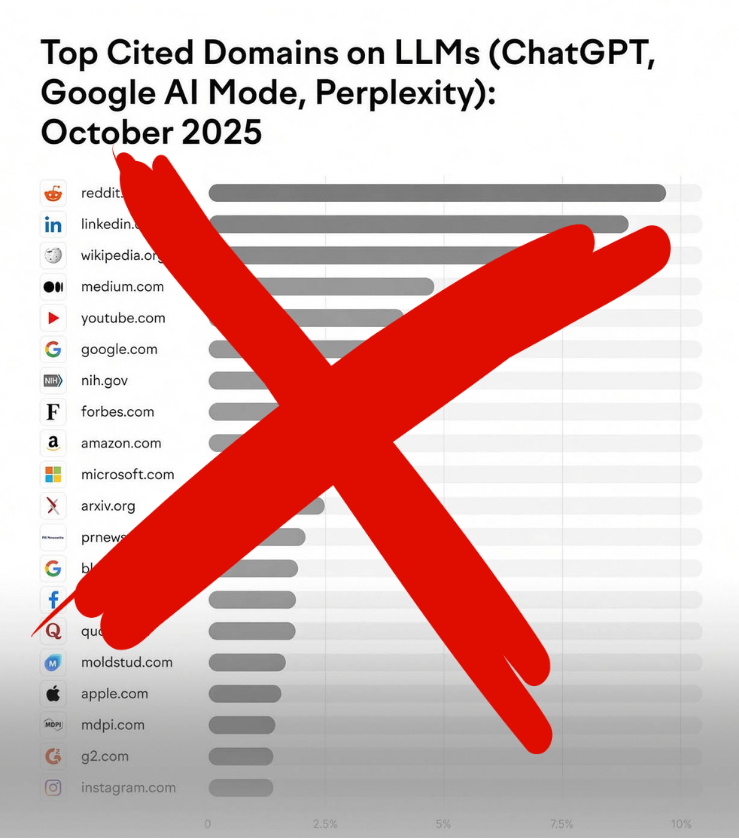
Here’s the gap: A domain that ranks highly in an aggregated, global list may be outranked by specialist publications, local media, or category-specific authorities in your actual competitive landscape. The internet doesn’t exist in aggregates. Your audience doesn’t consume information that way. Neither do LLMs when answering category-specific questions.
The problem: Organizations are building their entire GEO strategy around generic AI visibility rankings – reports that show global citation patterns but hide the category-specific realities where competition actually happens.
The invisible problem with generic AI visibility rankings
When you treat generic AI visibility rankings as your complete GEO strategy, you’re making three critical assumptions:
1. Scale equals relevance in AI visibility rankings
Wikipedia tops global AI visibility rankings. Does that mean a financial services brand should prioritize getting mentioned on Wikipedia? Not necessarily. If your category relies on regulatory guidance, specialized banking publications, or fintech reviewers – sources that LLMs weight heavily when answering “best payment processors” – then Wikipedia visibility alone won’t drive the AI answers shaping your market.
2. One source list can’t serve all industries in AI visibility rankings
A consumer technology company and an insurance company face radically different information ecosystems. B2C categories are shaped heavily by reviews, creator platforms, and community discussions. B2B categories lean on journalism, industry analysis, and institutional sources. A strategy optimized for one will likely fail in the other.
The data is clear: Generic AI visibility rankings that treat all industries identically miss these fundamental differences in how LLMs source information for different categories.
3. Geography isn’t secondary because it reshapes AI visibility rankings
A source that dominates LLM citations in the US might have minimal relevance in France, Italy, or Spain. Local media, regulators, and category specialists often outrank global platforms in their markets. The closer your target audience is to a specific country, the more your AI visibility rankings need country-specific insights.
These aren’t edge cases but are the rule, and generic AI visibility rankings consistently miss them.
Your industry has its own LLM visibility ecosystem beyond generic AI visibility rankings
The first major finding from analyzing 1,972 unique sources across 12 industries and 6 countries is stark: Industry defines which sources shape AI answers far more than generic AI visibility rankings suggest.
Generic AI visibility rankings flatten these differences. They create the illusion that a single strategy works across all industries. The data shows the opposite.
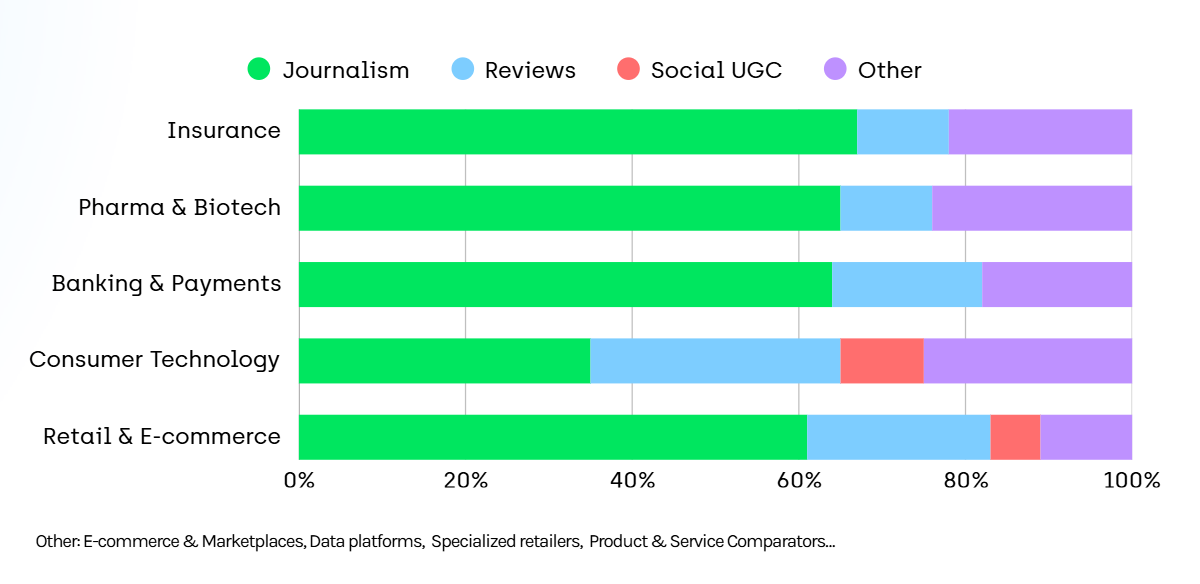
How source ecosystems differ by industry type – and why generic AI visibility rankings miss it
The composition of sources shaping LLM answers shifts dramatically based on industry. This is precisely what generic AI visibility rankings obscure.
B2B industries (Banking & Payments, Enterprise Software, Insurance, Pharma & Biotech) rely heavily on journalism, institutional sources, and regulatory bodies. Trade publications and analyst firms carry outsized weight in what LLMs cite – yet generic AI visibility rankings emphasize broad platforms irrelevant to these categories.
B2C industries (Consumer Technology, Retail & E-commerce, Fashion & Luxury, Travel & Hospitality) draw disproportionately from reviews, user-generated content, creator platforms, and social discussion. Direct consumer perspectives and product recommendations shape the sources LLMs prioritize – sources that barely register in generic AI visibility rankings focused on Wikipedia and institutional authority.
Regulated industries (Healthcare Providers, Telecoms, Insurance, Pharma & Biotech) see government agencies, institutional bodies, and specialized policy sites dominate. These sources aren’t optional – they’re foundational to how LLMs answer category questions in these sectors. Generic AI visibility rankings that emphasize Reddit or YouTube miss these critical authorities entirely.
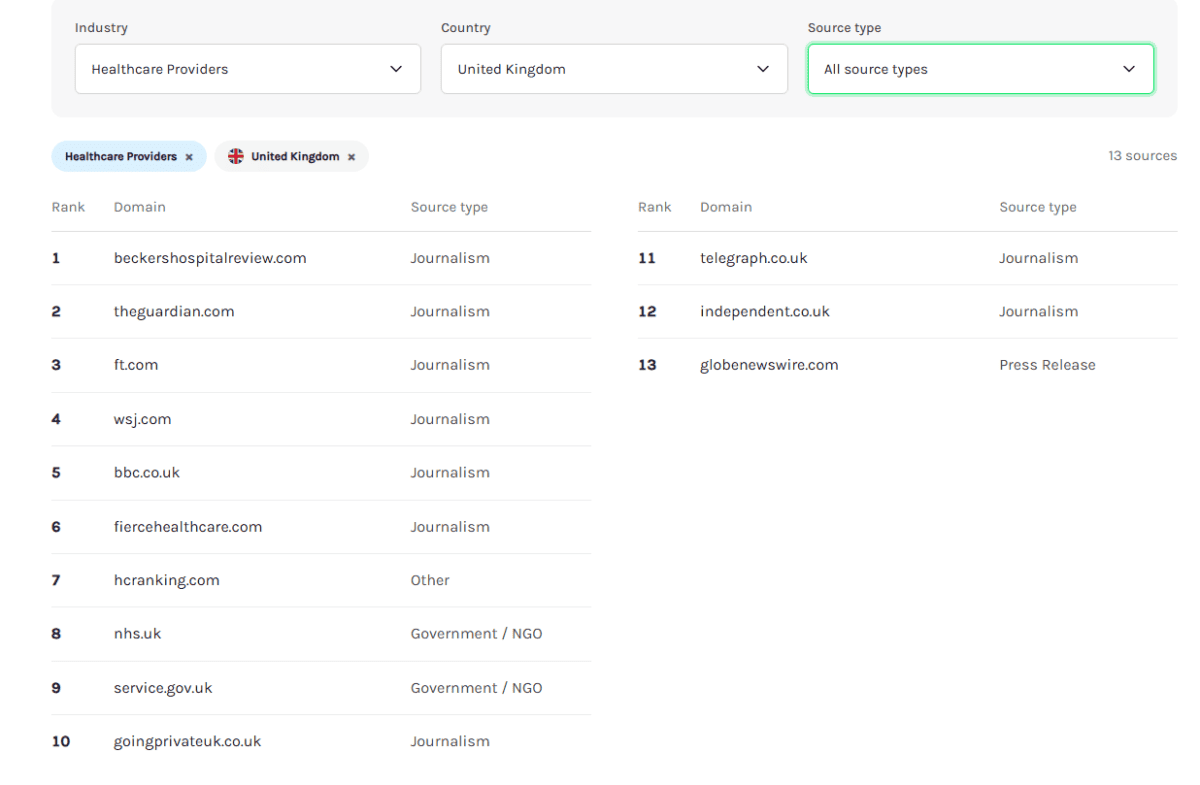
This is why a generic AI visibility strategy fails. If you’re building an AI visibility plan for a B2B company but your benchmark data emphasizes consumer reviews and YouTube, you’re solving for the wrong audience. Conversely, a B2C brand optimizing primarily for trade press will miss the review platforms and community discussions that actually shape consumer-facing LLM answers.
The insight: Generic AI visibility rankings can’t distinguish between these fundamentally different information ecosystems. Your strategy must.
/
Why category matters more than industry – and why this matters for AI visibility rankings
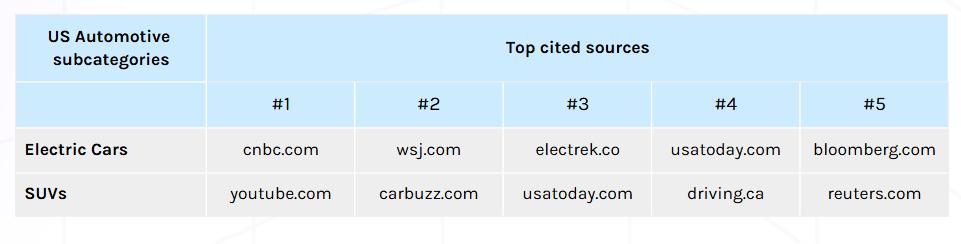
Even within a single industry, category changes everything. Two product lines in the same company – say, Smartphones versus Laptops – can have dramatically different source ecosystems in LLM responses. A source carrying weight for smartphone recommendations might barely register for laptop advice.
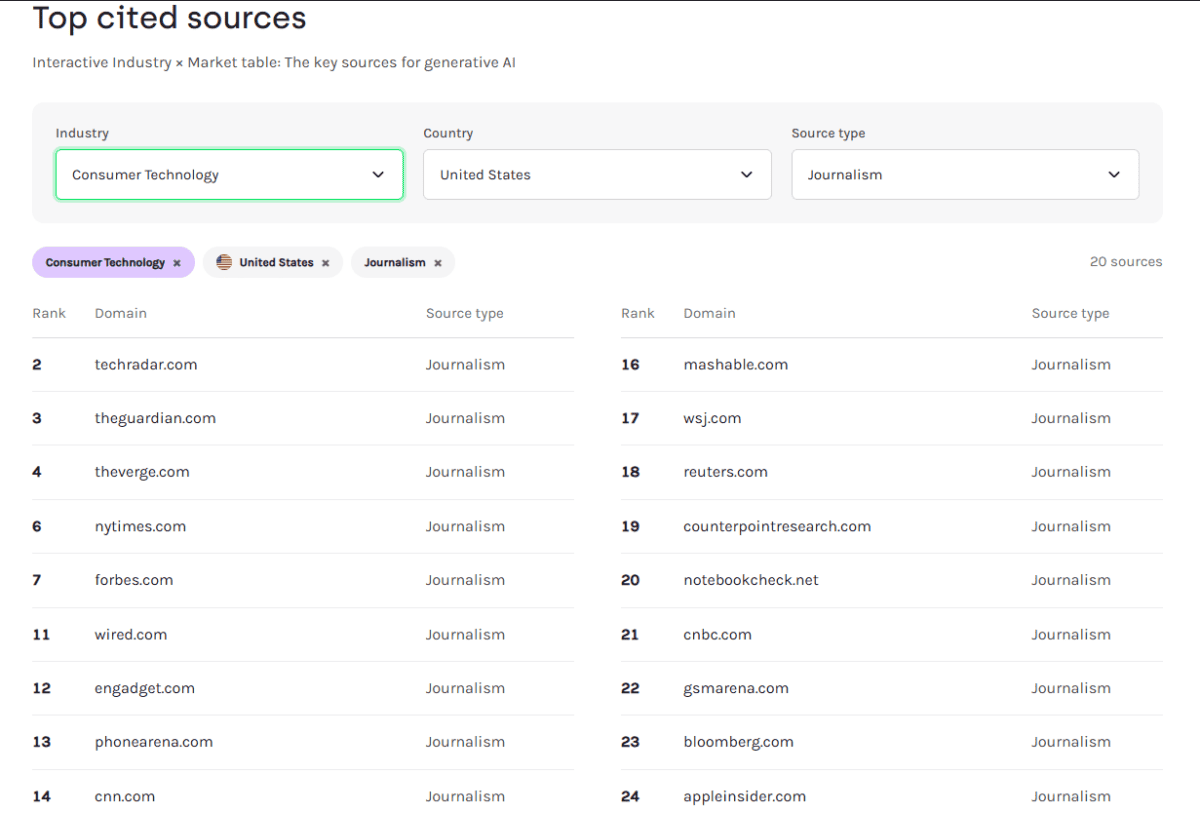
This is the nuance that separates reactive PR from strategic GEO. Your industry gives you the ballpark. Your category tells you exactly where to aim.
The strategic gap: AI visibility rankings treat “Consumer Technology” as monolithic. In reality, smartphone and laptop visibility require different source strategies. A brand optimizing for smartphone visibility in generic AI visibility rankings might completely miss the specialist laptop review sites carrying weight in laptop category answers.
Ready to move beyond generic AI visibility rankings?
Download the GEO Playbook Part 2 to access industry and market-specific benchmarks, category-level source analysis, and a focused 90-day action plan for AI visibility.
Learn which sources shape AI answers in your category, then build the visibility that drives results.
Why AI visibility rankings matter – but only when they’re category-specific
You might be thinking: This all sounds complicated. Can’t I just stick with the major platforms and ignore category-specific AI visibility rankings?
The answer is: Not if you want to compete effectively for AI visibility.
Here’s what the data shows about generic AI visibility rankings versus category-specific benchmarking:
- Generic AI visibility rankings are real but insufficient. Wikipedia, Reddit, and YouTube are genuinely cited by LLMs across industries. They’re baseline relevance. They’re not differentiation. Every brand your competitors know about can also optimize for Wikipedia.
- Specialist sources carry disproportionate weight in category-specific answers. When an LLM is answering “best payment processing platforms” or “top enterprise CRM software,” it relies more heavily on specialist reviews, product comparison sites, and industry analysts than on Wikipedia. These are the sources actually shaping answers in your category – and they’re invisible in generic AI visibility rankings.
- Ignoring category-specific AI visibility rankings means losing to competitors. If your competitors understand that category-specific sources matter more than generic AI visibility rankings suggest, and you’re still optimizing for global platform mentions, they’re building visibility where it actually drives AI answers. You’re not.
The strategic shift is unavoidable: Generic AI visibility rankings tell you where you’re competing. Category-specific rankings tell you where you’ll win.
Moving from generic rankings to category-specific action
The strategic shift is clear: Move from generic benchmark – industry – market – category – action. Here’s how to reframe your AI visibility strategy:
Step 1: Treat generic AI visibility rankings as context, not strategy
Accept that Wikipedia, YouTube, and Reddit carry weight. But accept also that generic AI visibility rankings aren’t your full strategy. They’re your baseline. They’re the low bar that many competitors are already meeting.
The mistake: Using generic AI visibility rankings as your primary decision-making tool. The fix: Use them for landscape context only. Benchmark against them. Then move on to what matters – category-specific sources.
Question to ask your team: “Which platforms show up in generic AI visibility rankings that everyone else is also competing on? And which category-specific sources are we missing that our competitors might be exploiting?”
Explore the sources shaping AI answers in your market with our tool: an Interactive Industry × Market table with The key sources for generative AI
Step 2: Identify your industry ecosystem – beyond generic AI visibility rankings
Does your brand operate in B2B, B2C, or a hybrid? Does regulation shape your category? Are reviews central to purchase decisions?
Your industry type fundamentally changes which sources matter. Generic AI visibility rankings treat all industries as one ecosystem. You need to treat yours specifically.
A B2B software company shouldn’t be measuring success primarily by Reddit mentions (high in generic AI visibility rankings but irrelevant to B2B). A consumer technology brand shouldn’t treat Techcrunch mentions (popular in generic AI visibility rankings) as equal to specialist review platforms (high-authority in category-specific answers).
Action: Map your industry type to the source ecosystem that actually shapes LLM answers in your sector – not what generic AI visibility rankings suggest.
Step 3: Localize by market – geography reshapes AI visibility rankings
Reddit dominance is not universal. In some markets and categories, local media, national regulators, or regional specialist publications outrank global platforms. Generic AI visibility rankings show Reddit as consistently important. The category-specific reality is different in each market.
This isn’t a minor factor because it’s often the difference between visibility and invisibility in that market.
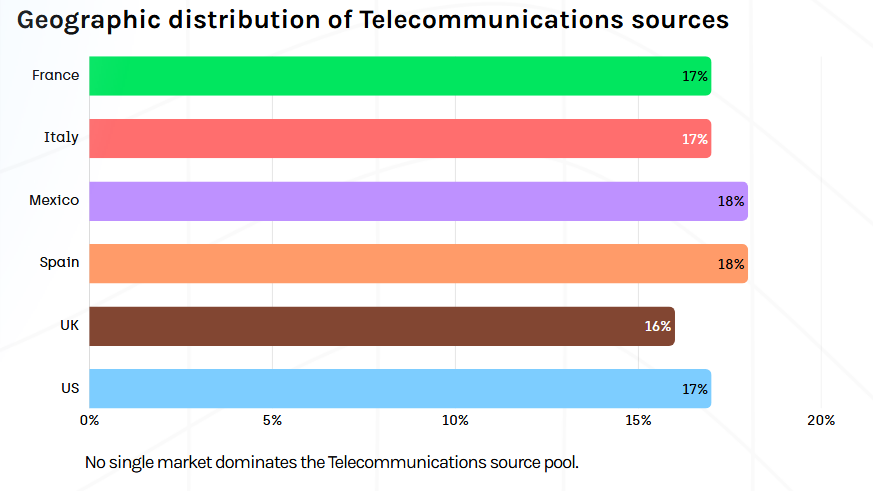
Action: Build separate AI visibility strategies for each major geography you compete in, not a one-size-fits-all approach. Don’t assume AI visibility rankings in the US apply equally to France or Mexico.
Step 4: Prioritize at the category level for maximum precision in AI visibility rankings
Within your industry and market, your category provides the clearest direction. This is where precision becomes possible. Once you know exactly which sources shape LLM answers about your specific product or service category, you can focus your PR, content, and media relations efforts on the publications, platforms, and communities that actually matter.
Category-level AI visibility rankings shift the entire calculus. Instead of asking “Are we mentioned in Wikipedia?”, you ask “Are we cited in the specialized sources that LLMs rely on for category-specific answers in our market?”
Action: Segment your AI visibility strategy by category. If you manage multiple product lines or business units, each may need a distinct GEO strategy based on its category-specific source ecosystem – not generic AI visibility rankings.
What this means for PR and communications leaders
The shift from generic benchmarks to category-specific AI visibility has three major implications for your role:
1. Your media relations strategy needs a GEO layer
You’ve always understood that different media matter for different audiences. GEO adds another dimension: different sources matter for different LLM-generated answers about your category. Some of your most valuable media placements might not be generating the press mentions you track in traditional media monitoring – but they’re shaping how AI systems answer questions about your brand and category.
2. Earned media is more strategic than ever
Owned channels (your website, social media) influence AI visibility indirectly. Earned media (coverage in publications, expert citations, community mentions) shapes what LLMs cite. This means your earned media strategy isn’t just about brand awareness anymore – it’s about visibility in the specific information ecosystems that LLMs rely on to answer questions your audience is asking.
3. Competitive intelligence becomes category-specific intelligence
Knowing what your competitors are getting coverage for is valuable. Knowing which sources they’re securing coverage in – and whether those sources matter for AI-generated answers in your category – is strategic. Your competitive analysis should now include a GEO layer: which publications, platforms, or communities are your competitors building visibility in, and how do those sources rank in LLM citations for your category?
The strategic move: From generic AI visibility rankings to precision
Generic AI visibility rankings served a purpose. They showed that LLMs do cite third-party sources, and that broad platforms dominate global citation counts. That initial context was useful.
But context is not strategy. Strategy requires specificity. And generic AI visibility rankings provide neither.
The brands that succeed in AI visibility won’t try to influence the whole internet by competing on generic AI visibility rankings. They’ll understand where authority sits in their own ecosystem – by industry, by market, by category – and focus their efforts there.
This is what the data from analyzing 1,972 earned-source domains across 12 industries and 6 countries consistently shows: The sources shaping AI answers change significantly by industry, market, and category. A source that carries influence in one sector or country may have little relevance in another.
Stop competing on generic AI visibility rankings. They’re not strategy.
The strategic question for your organization is “Which specific sources shape AI answers in our category, and how do we build credible visibility there?”
When you answer that question based on category-specific data instead of generic AI visibility rankings, everything changes. You stop competing against every brand on the internet. You start competing where you can win.
What comes next: Measuring progress beyond benchmarks
Understanding category-specific sources is the foundation. Measurement is the proof.
Once you’ve identified which sources matter for your category, the next layer is monitoring progress: Which sources are covering your brand? How does your earned media compare to competitors? Are your efforts driving visibility in the high-impact publications that LLMs rely on?
The GEO Playbook Part 2 includes a 90-day action plan to help you move from strategy to execution – from knowing which sources matter to securing the visibility that drives results.
Onclusive’s GEO Analytics platform analyzes how LLMs cite third-party sources across 12 industries, 24 categories, and 6 countries.
The GEO Playbook series translates this research into actionable strategy for PR, communications, and marketing leaders.
Part 1 covered measurement and diagnostics. Part 2 adds industry and market benchmarks, plus the action framework to turn source data into visibility results.