




The right story sent to the wrong journalist goes nowhere. That’s the uncomfortable truth behind most PR outreach that underperforms. It’s rarely the pitch itself that’s the problem, it’s who it landed in front of. A media database exists to solve exactly that problem: making sure your story reaches the person most likely to actually want it.
Key takeaways
- A media database is a searchable, regularly updated directory of journalists, organized by beat, outlet, and coverage history.
- Spreadsheets go stale fast because journalists change beats and outlets constantly; a maintained database solves this by design.
- Searching by beat and checking a journalist’s last few articles before pitching are the two highest-leverage habits for improving response rates.
- A database is the raw material for outreach; media relations is what you build with it — the two disciplines work together.
What is a media database or media contacts database?
It’s a searchable, regularly updated directory of journalists, editors, producers, and influencers, typically organized by beat, outlet, location, and past coverage history. Instead of maintaining a spreadsheet that goes stale the moment a journalist changes jobs, a proper database is maintained centrally and updated on an ongoing basis.
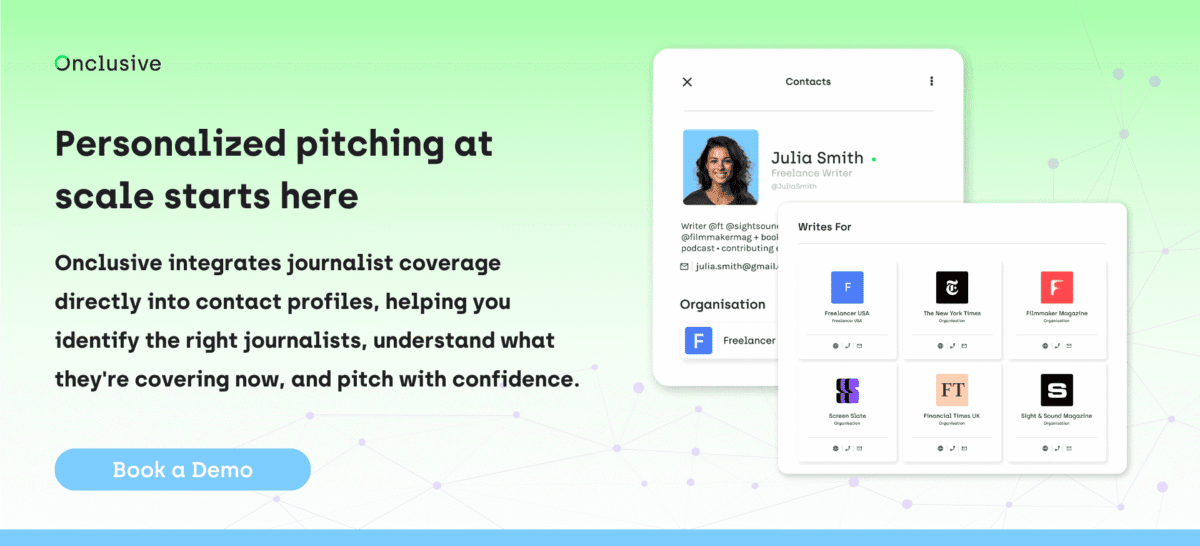
The best journalist contact databases go further than contact details. They include a journalist’s recent articles, the topics they cover most often, and sometimes their preferred pitch format or outlet-specific submission guidelines, giving PR teams the context needed to tailor outreach rather than guess at it.

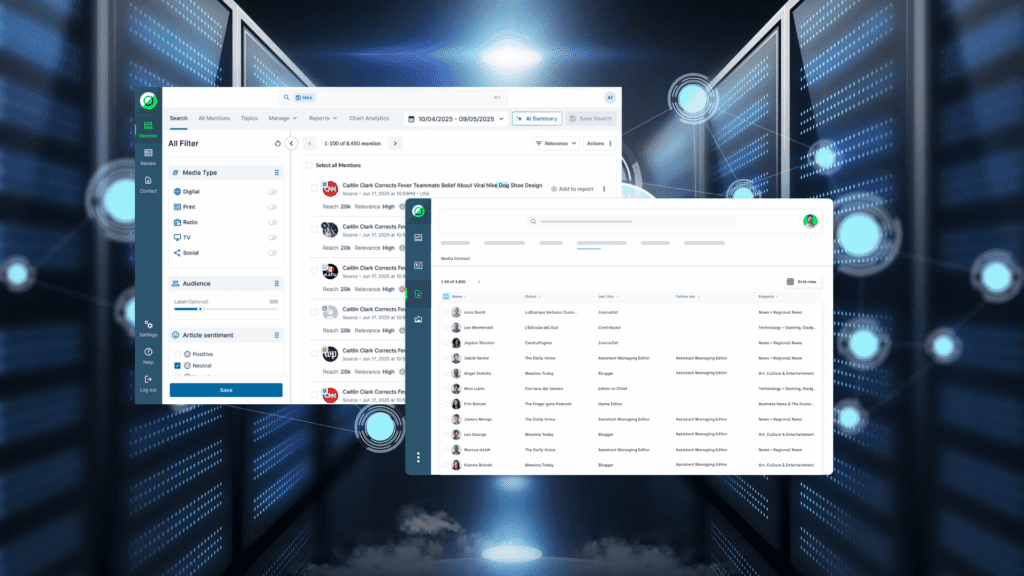
Filter journalist contacts by outlet, job title, and beat, all in one searchable database
Why a spreadsheet isn’t enough
Most in-house media lists start life as a spreadsheet someone built for a single campaign, then get inherited, copied, and half-updated for years afterward. The problems compound over time:
- Contacts go stale fast. Journalists move outlets, change beats, or leave the industry entirely, often without any public announcement. This isn’t a small problem. More than half of agency professionals (52%) and 42% of in-house teams expect fewer journalists to be covering their industry in 2026, according to Onclusive’s PR, Comms & Marketing: The 2026 Outlook report.
- There’s no coverage context. A name and email address tells you nothing about whether that journalist is actually the right fit for your story right now.
- They don’t scale. A spreadsheet works for one campaign. It falls apart the moment a team needs to run consistent, ongoing outreach across multiple markets or beats.
A dedicated media contact database solves each of these by design. It’s refreshed centrally, enriched with coverage history, and searchable in the moment a new story needs a home.
How to use a media database effectively
Search by beat
It’s tempting to build a target list around prestige outlets. It’s far more effective to build it around the specific journalists who cover your exact topic, regardless of publication size. A mid-tier trade journalist who writes about your niche every week is a better target than a generalist at a major outlet who covers your topic once a year.
This matters more each year. According to our research, 44% of agencies and 30% of in-house teams expect fewer journalists willing to build relationships with brands at all. A database that helps you find and prioritise the right handful of contacts is worth more than one built for volume.
Check recent coverage before you pitch
The single highest-leverage habit in outreach: read a journalist’s last three or four articles before sending anything. It tells you their current angle, their tone, and whether your story genuinely fits what they’re writing about right now.
Segment your list by relationship stage
Not every journalist on your list needs the same pitch. Some are cold contacts who need a stronger, more self-contained pitch. Others already know your brand and can be approached more directly. Treating both groups identically wastes the relationship equity you’ve already built with the second group.
Keep the list working, not just growing
A media database with 10K contacts and no organization is barely more useful than no database at all. The teams that get the most value tag and filter continuously (by beat, by responsiveness, by past coverage) so the list gets more useful the longer it’s used, not just bigger.
A media database and media relations go together
Media database software contains the raw material; media relations is what you build with it. Even the most accurate list of journalists won’t produce coverage on its own. It still needs to be paired with a genuine understanding of what makes journalists want to engage with a pitch in the first place. The database gets you in front of the right person. What you say once you’re there is a separate, equally important discipline.
Why choose Onclusive
There are several media database services on the market, so why choose Onclusive?
- Onclusive’s media contacts database gives PR teams verified, continuously updated journalist profiles, including beat, outlet, and recent coverage history, so outreach starts from accuracy rather than a stale spreadsheet.
- Because it sits inside the same platform as Onclusive’s media monitoring tool, teams can move from finding the right journalist to tracking the resulting coverage without switching systems.
- Onclusive Contact also builds in an events database of 250,000+ future events across 140 categories, so you can align pitches with the news agenda instead of reacting to it. From there, the same platform carries your outreach through: a Response Desk for tracking engagement, a newsroom for content management, and full contact history and distribution tracking in one place, so nothing gets lost switching between tools.
See how Onclusive’s media contacts database can help your team move from stale spreadsheets to targeted, data-backed outreach. Book a demo.