What will PR, communications and marketing teams be judged on in 2027? Onclusive surveyed PR, communications, and marketing professionals between September and October 2026, across 13 markets in Europe and the Americas. The answers point to a year where proving value, being found in AI answers and governing AI use will test every team. Below are the five key findings from our PR and marketing trends 2027 Report.
Five key findings from the 2027 Trends Report
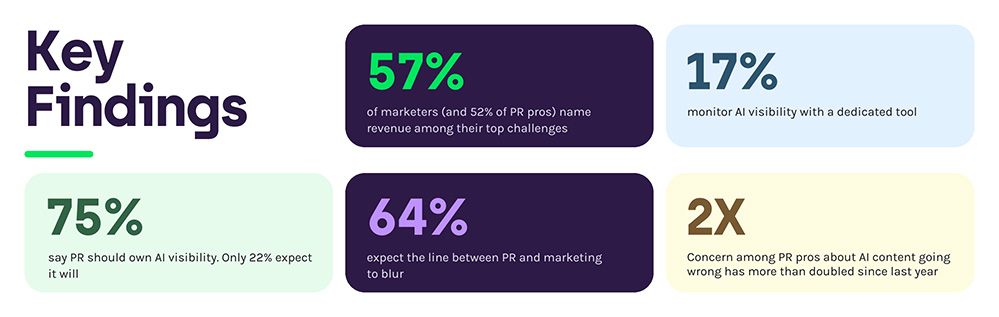
- Proving revenue impact will be the test. 57% of marketers and 52% of PR professionals name connecting their work to revenue among their top challenges.
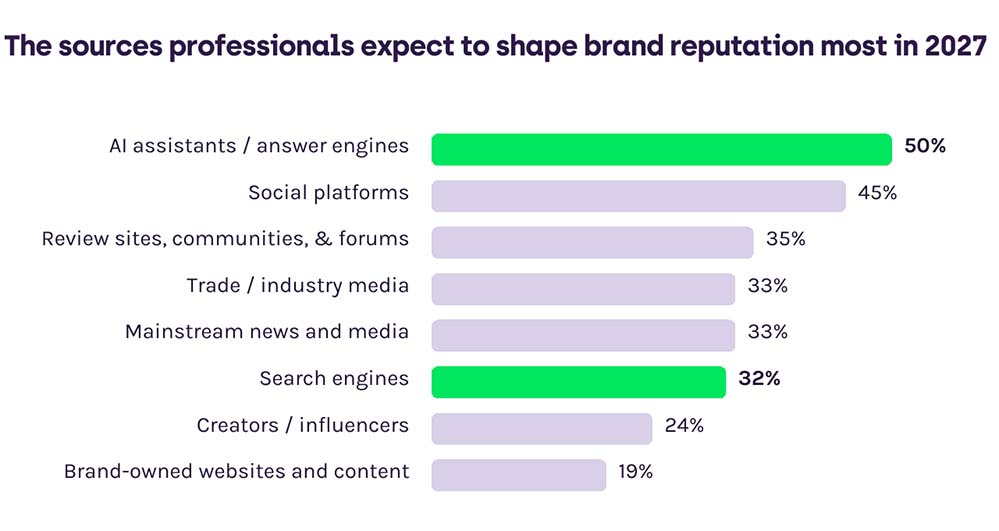
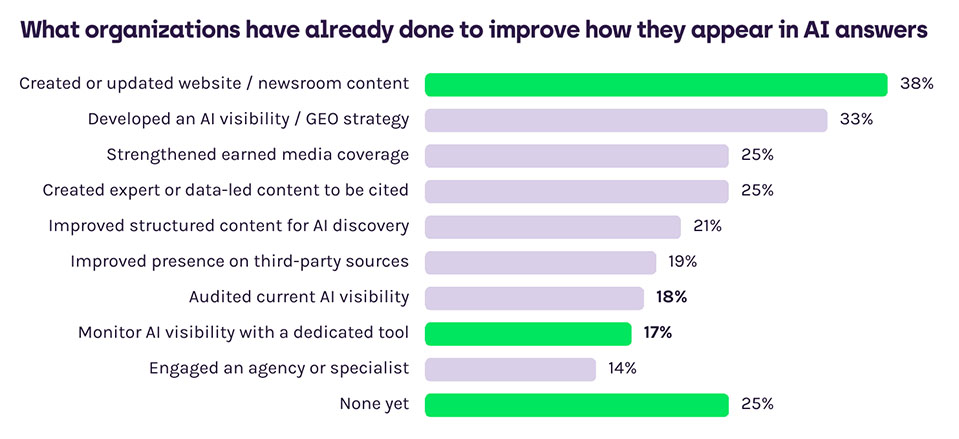
- AI visibility is a priority, but monitoring is limited. Half of respondents (50%) put AI assistants in their top three sources shaping brand reputation, yet only 17% monitor their AI visibility with a dedicated tool.
- PR and marketing expect to converge, but be measured differently. 64% expect the line between the two functions to blur in 2027, while PR expects to be judged on reputation and trust (55%) and marketers on revenue (41%).
- AI visibility faces an ownership gap. 75% agree PR should own how brands appear in AI answers, but only 22% expect that to happen.
- Concern about AI risk is growing. The share of PR professionals naming AI content going wrong as a top threat rose from 9% to 22%, and one in ten respondents say their organization has no formal AI policy.
Revenue is the test for PR and marketing
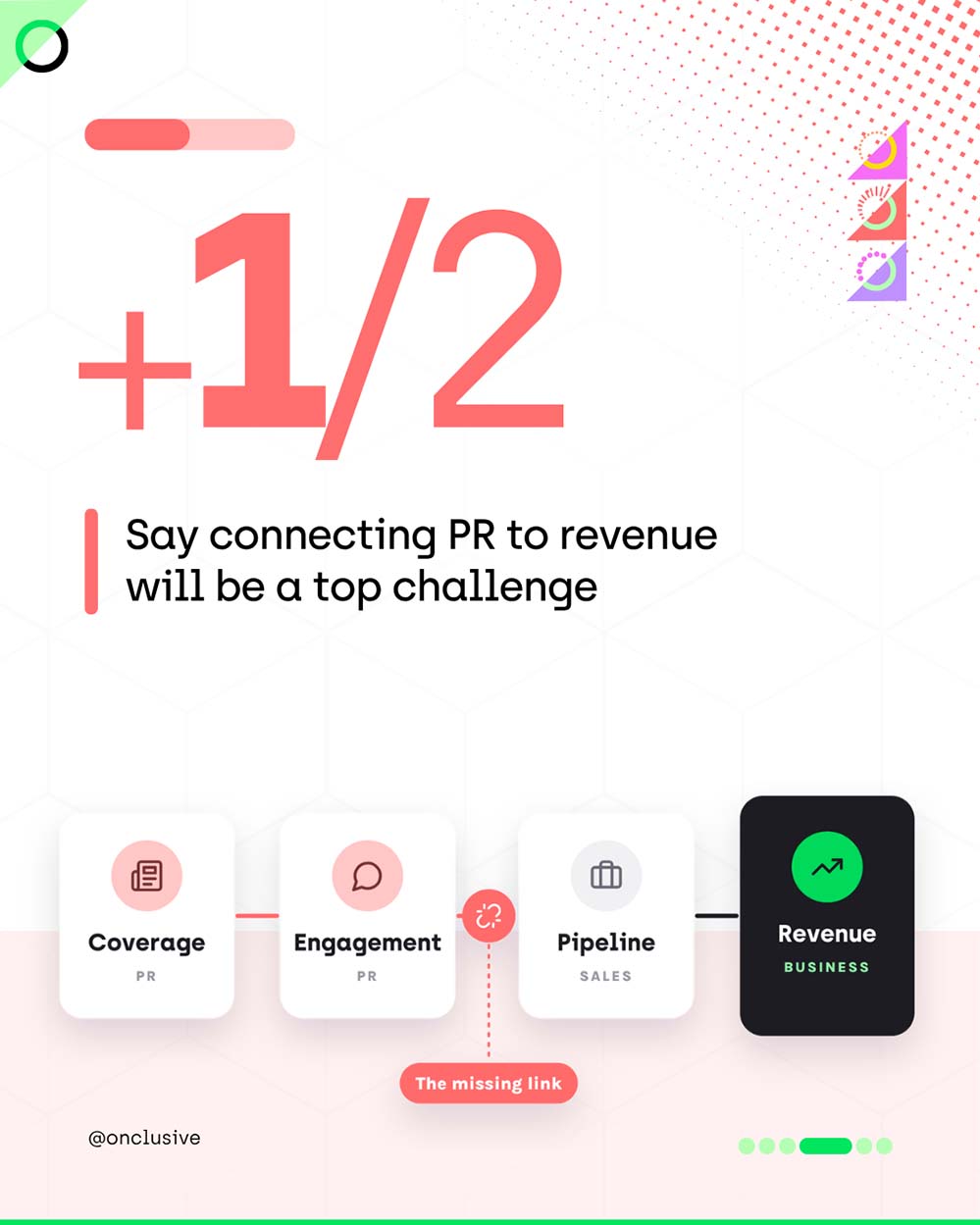
Connecting work to revenue and growth is the challenge both disciplines expect to face most in 2027. The pressure is growing fastest among agencies. 64% of agency PR professionals now name proving ROI beyond vanity metrics as a top challenge, up from 44% last year. Connecting PR to revenue also reaches 64%, up from 53%. These year-on-year comparisons are directional, as samples and markets differ between surveys.
As Onclusive CEO Peter Harris notes in the report, coverage counts and activity reports are no longer enough. The teams that do well in 2027 will be those that can show what their work changed, not just what they delivered. In practice, measurement will need to link coverage and AI visibility to outcomes such as reputation, trust and revenue.
AI assistants become the front door to reputation
AI assistants and answer engines are the source respondents most often expect to shape brand reputation and discoverability in 2027. They rank first with 50%, ahead of social platforms (45%) and search engines (32%). PR professionals feel this most: 60% put AI assistants in their top three, compared with 39% of marketers. Overall, 76% agree that AI visibility will matter more than traditional search visibility by the end of 2027.
Action is lagging behind belief. 25% of respondents say their organization has done nothing yet to improve how it appears in AI answers. The most common step is updating website or newsroom content (38%), and only 17% have started monitoring AI visibility with a dedicated tool. For brands, this means many are being described by AI without a clear view of what it says.
Patrick King, Director of Public Affairs at the Society of Chartered Surveyors Ireland, believes teams most underestimate how much AI platforms need credible information to earn users’ trust. In his view, success will come from original, authoritative content and a consistent, evidence-backed voice across your website, media coverage and LinkedIn, while also listening to what is said about you on platforms like Reddit.
Who owns AI visibility?
Professionals are split. Asked to pick one function, no answer gets more than 22% of the vote: PR and communications (22%), a cross-functional or shared team (21%), SEO or search (17%), then digital or growth, brand, a dedicated AI or GEO team, and content.

Support for PR leading is broad but moderate. 75% agree PR and comms should have primary responsibility for how brands appear in AI answers, and most of that agreement is “somewhat”. Even among PR respondents, only 30% expect PR to take the lead. For many organizations, agreeing who owns AI visibility and how it will be measured is a practical first step.
PR and marketing are converging, but not on metrics
The two agendas look different on paper. PR professionals put brand building and awareness (57%), reputation management (51%) and securing earned media coverage (50%) at the top of their 2027 priorities. Marketers put adapting to AI-driven search and recommendation algorithms first (45%), ahead of building brand awareness (41%) and increasing lead generation (38%).
Yet they overlap more than they seem. Both expect revenue to be their toughest test, and 64% expect the line between PR and marketing to blur. Shared goals and shared metrics could make it easier for both to prove their value.
Ready to turn these trends into action? See how your brand appears in AI answers with Onclusive GEO Analytics, track media coverage with Onclusive Monitor, and listen to social conversations with Onclusive Social. [Book a demo] to see them in action.
AI risk is growing as adoption spreads
AI is moving into everyday work. Respondents expect to use it most for data and insights analysis (47%), just ahead of writing, editing and content creation (44%). Agentic AI is on the radar too: 29% put it among the two capabilities with the biggest impact on their role in 2027, while only 5% already use advanced automation or agentic workflows today.
As adoption grows, so does concern. Worry among PR professionals about AI-generated content going wrong has more than doubled, from 9% to 22%. With one in ten respondents lacking a formal AI policy, review steps and clear ownership need to keep pace with adoption.
Aimée Soudry, PR Director at The Maverick Group, points out that reputational risks can emerge from almost any part of a business. In 2027, she expects political action and poor customer experience to remain key triggers, with AI adding a new accelerant, as inaccurate or inappropriate outputs can quickly undermine trust. Her advice for PR teams: proactive monitoring, verified content, accountable human oversight and clear escalation protocols. The risk, she says, is not AI itself but its unmanaged use.
Skills for 2027: human craft alongside AI
When asked to pick the skills that will matter most in 2027, professionals put human craft and AI side by side: storytelling and creative skills (49%) and AI fluency and automation (46%) lead, followed by data analysis (38%) and strategic counsel (37%). A third (33%) also put AI search and GEO in their top three. The message is a mix of skills rather than a shift from one to the other.
See how your brand appears in AI answers with Onclusive GEO Analytics, or Book a demo.
Getting ready for 2027
The report closes with a six-step checklist:
- Measure your AI visibility: set a baseline for how your brand appears in AI answers and how you compare with competitors.
- Name an owner: give one person or team clear accountability, with shared metrics across PR, marketing and SEO.
- Report on outcomes: connect coverage and AI visibility to reputation, trust and revenue.
- Align leaders and teams: review how AI is really used across the team before setting 2027 targets.
- Link earned media to AI: find the sources AI cites in your category and build them into your media plan.
- Govern before you scale: put approval steps in place for AI-generated content before rolling AI into more workflows.