






Updated: February 2026
PR metrics are quantifiable data points that help you measure the performance and impact of your public relations efforts. From tracking media coverage to analyzing sentiment, these measurements provide the evidence you need to demonstrate value, refine strategies, and justify budgets to stakeholders who demand concrete results.
Today, PR teams can no longer rely on intuition or anecdotal success stories. According to Onclusive’s 2026 Communications & Marketing Trends Report, proving ROI remains the top challenge for PR practitioners. The right PR metrics change that equation, transforming PR from a “nice to have” into a strategic function with measurable ROI.
What are PR metrics?
PR metrics are specific, measurable values that track the performance of your public relations activities. These measurements help you understand how your campaigns are performing across paid, earned, shared, and owned media channels.
PR metrics typically fall into three categories that represent different stages of impact:
Outputs
Measure your PR activities and immediate results: The volume of press releases distributed, media placements secured, or social posts published. These are the tangible products of your work.
Outtakes
Track how audiences receive and engage with your content: Impressions, reach, sentiment, and engagement rates. These metrics reveal whether your messages are being seen and how people are responding.
Outcomes
Connect your PR efforts to business results: Website traffic, lead generation, conversions, and brand reputation improvements. These are the metrics that matter most to executives because they demonstrate real business impact.
The International Association of Measurement and Evaluation of Communication (AMEC) provides a framework that encompasses all forms of integrated media. When you track metrics across these four pillars—paid, earned, shared, and owned—you gain a comprehensive view of your PR performance.
Think of PR metrics as your campaign dashboard. Just as website analytics tell you how visitors interact with your site, PR metrics reveal how audiences engage with your brand across media channels, social platforms, and digital properties.
PR Metrics vs KPIs: Understanding the difference
While often used interchangeably, PR metrics and KPIs serve different purposes in your measurement strategy.
PR metrics tell you what happened. They track activity and provide raw data about your campaigns. Examples include the number of media mentions, social media impressions, or website visits from earned media.
PR KPIs (Key Performance Indicators) tell you why it matters. They connect your activities to business outcomes and strategic goals. A KPI might be “increase brand awareness by 25%” or “generate 100 qualified leads from PR efforts.”
Here’s the relationship: You use multiple metrics to track progress toward a single KPI. For instance, if your KPI is improving brand reputation, you might track sentiment analysis, share of voice, and message pull-through as supporting metrics.
Understanding this distinction helps you avoid the trap of tracking vanity metrics that look impressive but don’t connect to business results. Every metric you monitor should ladder up to a meaningful KPI that matters to your organization.
The 10 essential PR metrics you should track
1. Media coverage and reach
Media coverage tracks the volume and quality of earned media mentions your brand receives. Reach measures the potential audience size exposed to your coverage.
This metric matters because it quantifies your brand’s visibility in the media landscape. You’re not just counting mentions, you’re assessing whether you’re reaching the right audiences through credible outlets.
How to track: Use media monitoring tools to capture mentions across print, broadcast, and online publications. Classify coverage by tier (tier 1 publications like national newspapers, tier 2 industry trades, tier 3 local or niche outlets) to understand quality alongside quantity. Calculate reach using publication circulation numbers or unique visitor data.

2. Share of voice
Share of voice compares your brand’s media presence to competitors within your industry or around specific topics. It’s typically expressed as a percentage of total media conversation.
This competitive benchmark reveals whether you’re dominating, maintaining parity, or falling behind in the media conversation. A growing share of voice often correlates with market position and brand strength.
How to track: Media intelligence platforms can automatically calculate share of voice by comparing your mentions to competitor mentions over a specific time period. Set up competitor tracking profiles and monitor changes month-over-month and quarter-over-quarter.
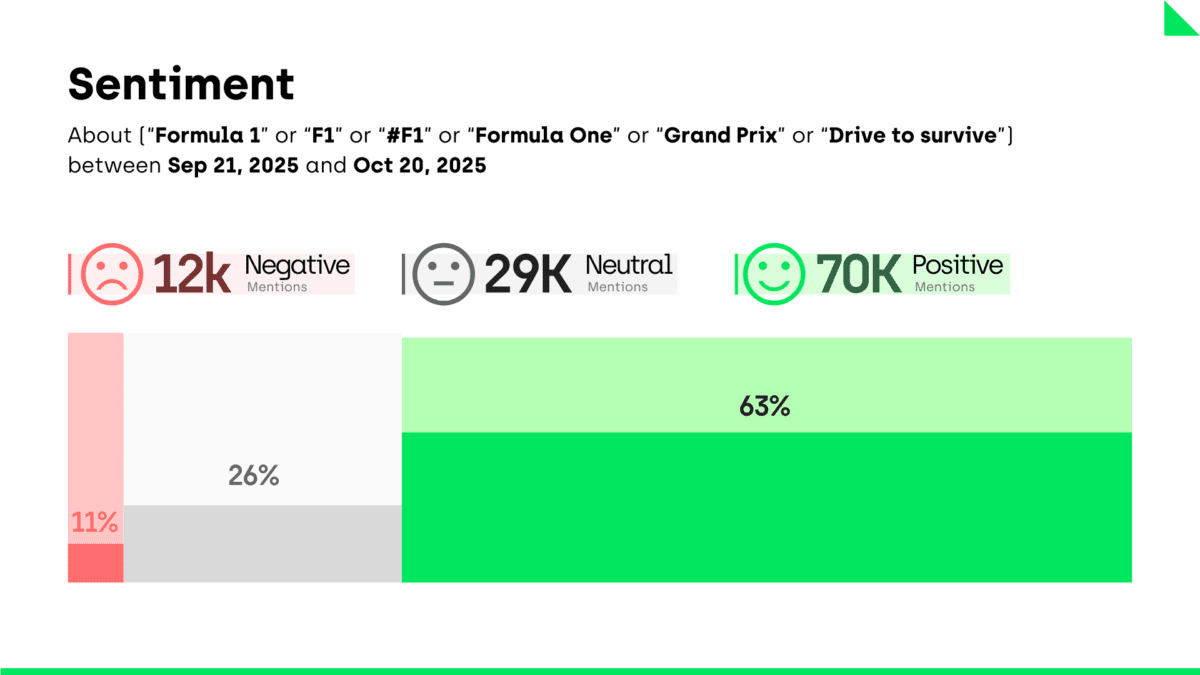
3. Sentiment analysis
Sentiment analysis evaluates whether media coverage, social mentions, and online conversations about your brand are positive, negative, or neutral.
Understanding sentiment helps you gauge reputation health and identify potential crises before they escalate. Positive sentiment indicates strong brand perception, while negative trends signal the need for reputation management.
How to track: Modern media monitoring platforms use AI-powered sentiment analysis to automatically categorize mentions. Advanced social media listening software like Onclusive Social extend this capability across hard-to-track social networks including TikTok, LinkedIn, Instagram, and Facebook, providing real-time alerts when negative sentiment spikes occur. Review sentiment distribution across different topics, spokespeople, or campaigns to identify what resonates positively with audiences and detect potential crises before they escalate.
4. Message pull-through
Message pull-through measures how often your key messages appear in media coverage. It tracks whether journalists and media outlets are amplifying the specific narratives you want associated with your brand.
This metric reveals the effectiveness of your media relations and whether your positioning is breaking through. High message pull-through means your strategic communications are working.
How to track: Define 3-5 core messages for your campaign or brand positioning. Tag media mentions that include these messages and calculate the percentage of total coverage that features them. Track which messages perform best with which outlet types.
5. Website traffic from earned media
This metric measures visitors who come to your website directly from earned media coverage, including referral traffic from media outlet links and direct traffic spikes correlated with media appearances.
PR should drive business outcomes, and website traffic is often the first step in that conversion journey. This metric proves that your media coverage isn’t just creating awareness, it’s generating action.
How to track: Use Google Analytics or similar web analytics tools to monitor referral traffic from media domains. Set up UTM parameters for press releases and pitched content when possible. Look for traffic spikes that correlate with major media placements.
6. Leads and conversions from PR
This tracks the number of marketing-qualified leads or sales conversions that can be attributed to PR activities, from gated content downloads after media coverage to demo requests following thought leadership articles.
This is your most direct connection to revenue impact. When you can show that PR activities generated qualified leads or closed deals, you speak the language of executives and prove tangible business value.
How to track: Implement conversion tracking in your analytics platform with PR-specific source attribution. Create unique landing pages for PR campaigns. Work with your sales team to identify which leads came through PR channels and track them through your CRM.
7. Thought leadership coverage
Thought leadership coverage measures how often your executives or subject matter experts are quoted, featured, or bylined in media coverage, particularly in tier 1 and industry-specific publications.
Executive visibility builds credibility and positions your organization as an industry authority. Thought leadership coverage often drives partnership opportunities, recruitment success, and competitive advantage.
How to track: Monitor coverage that features your executives by name, bylined articles they’ve authored, and speaking opportunities at industry events. Track the quality and reach of these placements separately from general brand mentions.
8. Social media engagement
Social media engagement measures how audiences interact with your content through likes, shares, comments, and clicks across social platforms.
Engagement goes beyond vanity metrics like follower counts to reveal authentic audience interest. High engagement rates signal that your content resonates and can amplify your earned media reach exponentially.
How to track: Use native platform analytics (Twitter/X Analytics, LinkedIn Analytics, etc.) or social media management tools. Calculate engagement rate by dividing total engagements by reach or impressions. Track which content types and topics drive the highest engagement.

9. Domain authority & backlinks
Backlinks measure the number and quality of external websites linking to your content. Domain authority indicates your website’s credibility and ranking potential in search engines.
PR activities that generate high-quality backlinks from authoritative media outlets improve your SEO performance and organic search visibility. This creates compounding value from your PR efforts.
How to track: Use SEO tools like Moz, Ahrefs, or SEMrush to monitor backlinks from media coverage and track changes in your domain authority score. Identify which PR campaigns or content assets generate the most valuable links.
10. Earned Media Value (EMV)
Earned media value estimates the cost equivalent of your earned coverage if you had paid for that same exposure through advertising.
While EMV has limitations and shouldn’t be your only metric, it provides a tangible number that helps stakeholders understand the scale of your PR impact in financial terms.
How to track: Media monitoring platforms typically calculate EMV automatically using factors like ad rate data, outlet reach, and prominence of placement. Use EMV as a supplementary metric alongside more direct business impact measurements.
Why PR metrics matter for your business
Measuring PR performance isn’t just about proving your team’s worth, it’s about making smarter strategic decisions that drive business growth. Effective PR measurement supports the three fundamental principles of successful communications: credibility, consistency, and connection.
Budget justification: When you demonstrate clear ROI through metrics, securing budget becomes easier. Executives speak the language of numbers, and PR metrics translate your work into terms they understand and value. This builds credibility with stakeholders who control resources.
Strategic decision-making: Metrics reveal what’s working and what isn’t. Instead of guessing which tactics to prioritize, you can allocate resources based on data showing which activities deliver the strongest results. Consistent measurement enables you to identify patterns and refine your approach over time.
Campaign optimization: Real-time tracking allows you to adjust campaigns mid-flight. If sentiment trends negative or message pull-through is weak, you can pivot your approach before completing the entire campaign. This agility strengthens your connection with audiences by ensuring your messaging remains relevant and resonant.
Risk identification: Monitoring metrics like sentiment and share of voice helps you spot emerging issues early. A sudden spike in negative mentions or declining share of voice signals the need for intervention, protecting the credibility you’ve worked to establish.
How to build a PR measurement framework
Creating an effective measurement framework ensures you’re tracking the right metrics consistently and using insights to improve performance. This process mirrors the four stages of effective public relations: research, planning, implementation, and evaluation.
Start with business objectives, not media objectives. Before selecting metrics, understand what your organization needs to achieve. Is the goal to enter a new market? Launch a product? Improve reputation after a crisis? Your metrics should directly connect to these business priorities. This is the research phase, gathering intelligence about what success looks like for your stakeholders.
Select metrics aligned to goals. Choose 5-8 core PR metrics that map to your objectives. Don’t try to track everything. Focus on measurements that will actually inform decisions and demonstrate impact. If your goal is lead generation, prioritize conversion metrics over metrics like impressions. This planning stage determines which outputs, outtakes, and outcomes you’ll monitor.
Choose appropriate tools. Invest in media monitoring and analytics platforms that can track your chosen metrics accurately. Look for solutions that provide comprehensive measurement across earned, owned, and social media. Platforms like Onclusive Social offer advanced capabilities including AI-powered sentiment analysis, real-time crisis detection, and competitor trend tracking across all major social networks; giving you actionable insights beyond basic metrics. The right tools should not only collect data but transform it into intelligence that drives decision-making.
Establish a reporting cadence. Determine how often you’ll review metrics (weekly for active campaigns, monthly for ongoing monitoring, quarterly for strategic review) and who needs to see reports. Create dashboard templates that make it easy to spot trends and anomalies. This implementation phase puts your measurement plan into action.
Analyze and iterate. Metrics only create value when you act on them. Hold regular reviews to identify patterns, discuss underperforming areas, and adjust strategies. Build a culture where data informs every PR decision. This evaluation stage closes the loop, turning insights into improved future performance.
Common mistakes in PR measurement
Even with the right PR metrics, teams often stumble in implementation. Avoid these pitfalls:
Focusing on vanity metrics: Impressions and reach numbers look impressive in reports, but they don’t prove business impact. Prioritize metrics that connect to outcomes like leads, conversions, and reputation improvement.
Industry bodies explicitly advise against using AVEs as a proxy for value, urging communicators to connect measurement to stakeholder outcomes and organizational impact instead.
Not linking to business outcomes: Every metric should answer the question “so what?” If you can’t explain how a metric relates to business goals, don’t track it.
Inconsistent tracking: Switching measurement methods mid-campaign or failing to track metrics regularly makes it impossible to identify meaningful trends or prove progress.
Ignoring qualitative context: Numbers tell part of the story, but context matters. A decrease in media mentions might be fine if sentiment improved and message pull-through increased. Always analyze metrics together, not in isolation.
Making PR metrics work for you
PR measurement doesn’t have to be complicated, but it does need to be strategic. By focusing on metrics that matter—those that connect your PR activities to tangible business outcomes—you transform how stakeholders perceive and value your work.
Start by identifying your top business objective for the next quarter. Then select 3-5 metrics from this guide that directly measure progress toward that goal. Implement consistent tracking and schedule your first monthly review to analyze results and adjust your approach.
The PR teams that succeed are those that can prove their impact through data. With the right metrics and measurement framework in place, you’ll not only demonstrate value—you’ll create more of it.